The catalogue
All works
58 works on the shelf · 29 stories with weight · 24 ideas & inner work · 5 writing & craft
Stories With Weight29
Narrative that stays with you.
Featured
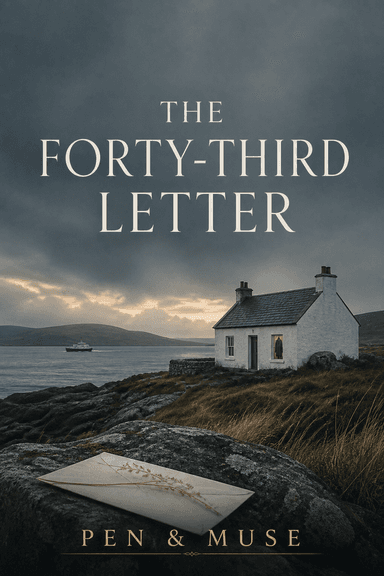
The Forty-Third Letter
A Novel of Grief, Correspondence, and Maternal Attention
After the death of her mother, Sorcha returns to the remote Atlantic island where she grew up to catalogue the family house and settle the estate.About the work
£4.99Read · Living edition
Dead Miles
When recovery driver Dean Harker accepts a lucrative late-night callout on the M6, he expects a routine breakdown and desperately needed money.
£4.99Read · Living edition
The Deletion Code
In the hyper-connected metropolis of Neo-Kobe, digital diver Bennett Walker enters Senator Halloway’s neural-link and discovers something impossible:…
With membershipLiving edition
North Harbour
After serving eight years in prison for an armed robbery that went wrong, Ryan Kearney returns to his coastal hometown of North Harbour.
£4.99Read · Living edition
Dead Reckoning
You come to Threshwick to do what you always do: read the accounts, write the report, recommend a path out of a failing marina. It should be routine. Professional. Contained.
With membershipLiving edition
The Last Call List
Ten years ago, Evan Mercer talked people back from ledges for a living. Then his sister Lena died in a road accident, and he walked away from the job and never quite rebuilt his life.
With membershipLiving edition
The Fold
Nine thousand, four hundred metres below the surface of the Pacific, Helion Systems built the most beautiful thing humanity had ever made. They called it The Fold. Dr.
£4.99Read · Living edition
The Firefly Run
The Firefly Run is a bleak, atmospheric survival journey set in a world slowly being consumed by something beautiful and deadly.
With membershipLiving edition
The Shadow of the Coldfells
A chilling tale of forgotten memories and ancient evils resurfacing.
With membershipLiving edition
The Guest Room
Claire Hewitt has always kept a tidy life. A good husband. A beautiful home. A spare room she never quite knew what to do with.
With membershipLiving edition
Blood and Roses
In the decaying court of King Henry VI, ambition and anxiety fester in the shadows, as courtiers whisper of the king's failing health and grip on power.
£7.99Read · Living edition
Echoes in Greyport
Greyport remembers and forgets with equal intensity. Detective Pike knows this better than anyone.
With membershipLiving edition
Echo Falls
Detective Miles Corbin arrives in Echo Falls as an outsider. He won't leave that way — if he leaves at all.
With membershipLiving edition
Dawn Without Noise
Freya Cassell blew the whistle once. She thought it was over. It wasn't.
With membershipLiving edition
The Confession Broker
People sell their secrets for cash on a platform called Voxlet. Someone is listening — and editing what they hear.
With membershipLiving edition
Omegas Second Door
A relentless, pressure-cooker survival thriller set in the ruins of collapsed infrastructure, where the real danger isn't what's hunting you — it's what's quietly studying you.
With membershipLiving edition
Dead Air
It's the graveyard shift at Municipal Radio. The host — a former investigative journalist now reading zoning ordinances into the dark — gets a call.
With membershipLiving edition
The Resonance Architect
Something is using sound as a weapon. And it knows your name. The Resonance Architect begins with a town-wide tremor — a low, unnatural hum that only certain people can hear.
With membershipLiving edition
Mythic Britain
Britain didn’t fall. It was rewritten. You play a data-scavenger moving through the ruins of a civilisation held together by myth, metrics, and managed lies.
With membershipLiving edition
Fallout London
Wake up with no memory in the rain-soaked ruins of a broken London — and realise that survival is only the beginning.
With membershipLiving edition
No Gods Left Watching
The world has not ended — it has simply been left alone. The voices that once bound the mountains have fallen silent. The old pacts are cracking.
With membershipLiving edition
The Watchers Tribunal
With membershipLiving edition
The Cathedral of Numbers
With membershipLiving edition
Senses of Change
Senses of Change is a living, sensory-driven experience that invites you to witness a world in motion—not through human eyes, but through instinct.
With membershipLiving edition
Fragments of the X-Genesis
In the cold, silent expanse of deep space, a lone recovery agent aboard the Stygian Drift receives an impossible order: retrieve the Genesis…
With membershipLiving edition
The Honeymoon Files
The Honeymoon Files Maya and Lucas arrive in Lisbon on their honeymoon, newly married and unguarded, carrying backpacks, a shared notebook, and the…
With membershipLiving edition
The Ghost of Transit 7
"The tunnels whispered of ghosts, but the real monsters wore Ministry gray and breathed poison."
£7.99Read · Living edition
Hackney Wick Rules
In the shadows of Hackney Wick, survival isn’t measured in money — it’s measured in respect, loyalty, and the choices you make when there are no good…
£4.99Read · Living edition
Ideas & Inner Work24
Thoughts that sharpen how you live.
The One-Person Empire
The One-Person Empire is a practical manifesto for building a scalable business without a large team.
With membershipLiving edition
The Art of Becoming Unstuck
'The Art of Becoming Unstuck,' offers a profound and practical guide to overcoming inertia and paralysis.
With membershipLiving edition
The Capacity Treaty
The Capacity Treaty is a practical guide to personal sovereignty, self-governance, and the disciplined management of limited time, energy, attention, and resources.
With membershipLiving edition
The Geometry of Influence
The Geometry of Influence is a guide to understanding and shaping the complex systems that govern modern life.
With membershipLiving edition
Reputation Architecture
Reputation Architecture reframes professional reputation as an operational asset rather than a vanity metric or soft skill.
With membershipLiving edition
The Independent Online Store Success Blueprint
This comprehensive guide, 'The Independent Online Store Success Blueprint,' is designed to transform aspiring entrepreneurs from hobbyists into successful e-commerce business owners.
With membershipLiving edition
The Empirical Mind
There are maps of the world, and then there are maps of the mind. Most people never realise they are navigating by outdated charts.
With membershipLiving edition
Engineer Your Life
This book is designed for individuals struggling with modern distractions and the feeling of being unable to focus.
With membershipLiving edition
The Golden Ratio Pyramids
The pyramids were never just tombs. The Golden Ratio Pyramids makes the case — chapter by chapter, measurement by measurement — that the structures…
With membershipLiving edition
Infinite Leverage
With membershipLiving edition
Creators Black Book
The new creator economy rewards systems, not just talent.
With membershipLiving edition
The Unseen Architect
A practical guide to conscious creation — The Unseen Architect reframes the idea of "magic" not as mysticism, but as a mastery of inner focus, intention, and energetic alignment.
With membershipLiving edition
What If? History rewired
History is not a mirror — it's a curation. What If?: History Rewired asks what happens when you look behind the comfortable consensus and take the cracks in the record seriously.
With membershipLiving edition · Listen
The Echoes Of Orion
With membershipLiving edition
Atomic Focus
With membershipLiving edition
Limits to Love
Building Confidence and Connection in the Preschool Years The preschool years are where everything begins to take shape — language, self-control,…
£7.99Read · Living edition
The Permission Trap
Why Waiting to Be Chosen Is Holding You Back — and How to Take Authority Over Your Life Most people don’t fail because they lack talent, discipline, or ideas.
£7.99Read · Living edition
The Invisible Contract
The Invisible Contract You've done everything "right." You've visualised. You've affirmed. You've worked harder than anyone you know.
£7.99Read · Living edition · Listen
The Fifteen Minute Life
The Fifteen Minute Life tears apart the destructive myth of the total overhaul.
£3.99Read
Writing & Craft5
Tools and practices for making.
The Storyteller's Toolkit
This book serves as a practical and accessible toolkit for aspiring and established writers, aiming to demystify the craft of fiction writing.
£7.99Read · Living edition
The Authors Map
A rigorous, systems-oriented guide for writers who are done waiting for inspiration and ready to engineer results.
With membershipLiving edition
Atomic Writing
A hands-on craft lexicon designed to strip the mystery out of writing and replace it with repeatable, immediately usable technique.
With membershipLiving edition
The Promptable Architect
Most people treat AI like magic. You type a sentence, get an answer, and for a moment it feels revolutionary. Then you add a second feature. Then a third.
£3.99Read
Famous & Foundational Writing Styles
Stop treating writing like magic. Start building it like engineering.
£4.99Read · Living edition
Beyond the works
Enter the series
After the books and living editions, the larger editorial arcs shaping the Pen & Muse world.

The Unseen Architect — Article Series
The Unseen Architect brings order to the invisible forces shaping your outcomes—emotion, intention, belief, and the language that binds them. Across 20 dispatches, you’ll learn how “creation” happens continuously, and why alignment matters more than willpower or vibes. Each article gives you a practical way to steer from what you feel, rather than being steered by it.

The Great Distortions I — How Reality Gets Bent
Across 16 dispatches, The Great Distortions Series traces how helpful internal models, language, metrics, and narratives can quietly drift into controlling substitutes. The through-line is the same failure mode: coherence feels like truth when contact with reality thins. This matters because the cost is not just error—it’s stalled learning, brittle trust, and decisions that look rational while becoming ungrounded.

The Physics of Better AI Images
Pen & Muse’s “The Physics of Better AI Images” unifies 14 dispatches around one shared idea: realism is an emergent result of constraints, not just better prompts. By treating image-making like a coherent causal system—geometry, optics, lighting, sensor behavior, and imperfect capture—you gain a way to debug “AI-ness” instead of chasing aesthetics. This matters because the fastest improvements come from enforcing what must stay consistent.

The Sense-Making Series Volume I — Becoming the Person Who Sees the Pattern
In an age of endless noise, the ability to make sense of complexity is rare and powerful. This series distills the core practices of sense-making, from isolating signals to articulating insights that move people. Join the journey to become the person who sees the pattern and shapes understanding.

The Intellectual Capital I — Turning Thought Into Assets
Every dispatch in this series treats clarity as intellectual capital—something engineered to be reused, referenced, and applied long after the original moment. Across 15 parts, we connect methods for turning thought into assets: repeatable explanations, transferable frameworks, precision, and coherence that others can safely act on. This matters because durable understanding compounds into trust, opportunity, and ongoing demand.

The Explanation Edge I — Turning Understanding Into Leverage
Pen & Muse’s dispatch series unifies around one practical claim: explanation is leverage when it reorganizes understanding into transferable structure. Across these installments, we move from mechanism to usability, from jargon governance to measurable shift—showing how clarity changes perception, choice, and action. This matters because power doesn’t come from having ideas alone; it comes from making them carry.

The Language of Leverage Series I — How Words Multiply Value
The Language of Leverage Series I unifies 15 dispatches around a single idea: words don’t just explain—they multiply value. Across pivoting frames, naming patterns, compressing complexity, and designing quotable phrasing, these essays treat language as a real strategic system. Clear communication matters because it reduces cognitive tax, preserves ideas beyond their author, and turns insight into repeatable leverage.

The Clarity Advantage I — Why Clear Thinking Outperforms Loud Thinking
The Clarity Advantage I is a sequence of dispatches that unifies one idea: loud thinking fails when it hides uncertainty, while clear thinking earns trust and moves decisions. Across markets, writing, teaching, and leadership, clarity is treated as an operational advantage—reducing ambiguity, lowering cognitive cost, and making ideas repeatable. This matters because legibility turns insight into something readers can verify, reuse, and act on.

The Authority Signals-I — How Credibility Is Actually Built
Credibility isn’t a title you declare—it’s a system you build, signal, and compound. Across these dispatches, we trace how authority becomes legible to other people: through coherence, clean reasoning, uncertainty reduction, and the measurable responses that follow. This series matters because trust can be engineered—making better decisions, stronger follow-through, and durable belief possible.

The Great Trade-Offs Series I — The Costs Hidden Inside Every Choice
Every advancement in efficiency comes with a silent, hidden cost to our capability, trust, and creative agency. This series maps the trade-offs inherent in our modern pursuit of convenience, scaling, and speed, helping you distinguish between the friction that hinders you and the friction that builds you. These dispatches serve as a diagnostic toolkit for those looking to reclaim their decision-making power from the automated defaults of the status quo.

The Great Human Conditions I — States That Shape Experience
15 dispatches about the human conditions that shape how we perceive, decide, and relate—often before we realize we’re doing it. Across states like uncertainty, envy, shame, grief, belonging, fatigue, and discipline, a single thread holds: interpretation and internal signals quietly steer experience. Understanding that steering matters because it gives us leverage—diagnose the condition, name what’s happening, and choose the next move with more accuracy.

The Great Questions Series I — The Questions That Don’t Go Away
The Great Questions Series Volume I gathers fifteen dispatches on the problems that keep reappearing—about truth, trust, attention, freedom, meaning, and the limits of measurement. What unifies the series is a shared method: defining terms precisely, tracing consequences, and separating real agency from the signals that mimic it. These questions matter because they shape how you decide when the goalposts move and the answers aren’t settled for you.

The Great Tensions Series I — The Forces That Never Resolve
The Great Tensions Series traces how two seemingly opposing forces can be orchestrated—through design, timing, and feedback—so they produce reliability instead of tradeoffs that burn you later. Across 15 dispatches, each tension becomes a usable framework for making better decisions under uncertainty. It matters because most failures are not moral—they’re architectural, repeating patterns we can learn to adjust.

The Great Ideas Series II : Human Behaviour & Perception
Volume II unites fifteen dispatches on how human perception and decision-making quietly steer what we notice, trust, and feel “sure” about. Across biases, social cues, and emotion, the throughline is the same: our minds use efficient shortcuts that can become reliable—then slip into systematic error. Understanding that mechanism matters because it turns certainty into something we can test, update, and live with more clearly.

The Great Ideas Series I: Core Mental Models
Volume I gathers the foundational mental models that sharpen judgement, expose distortion, and help you reason from reality rather than habit.
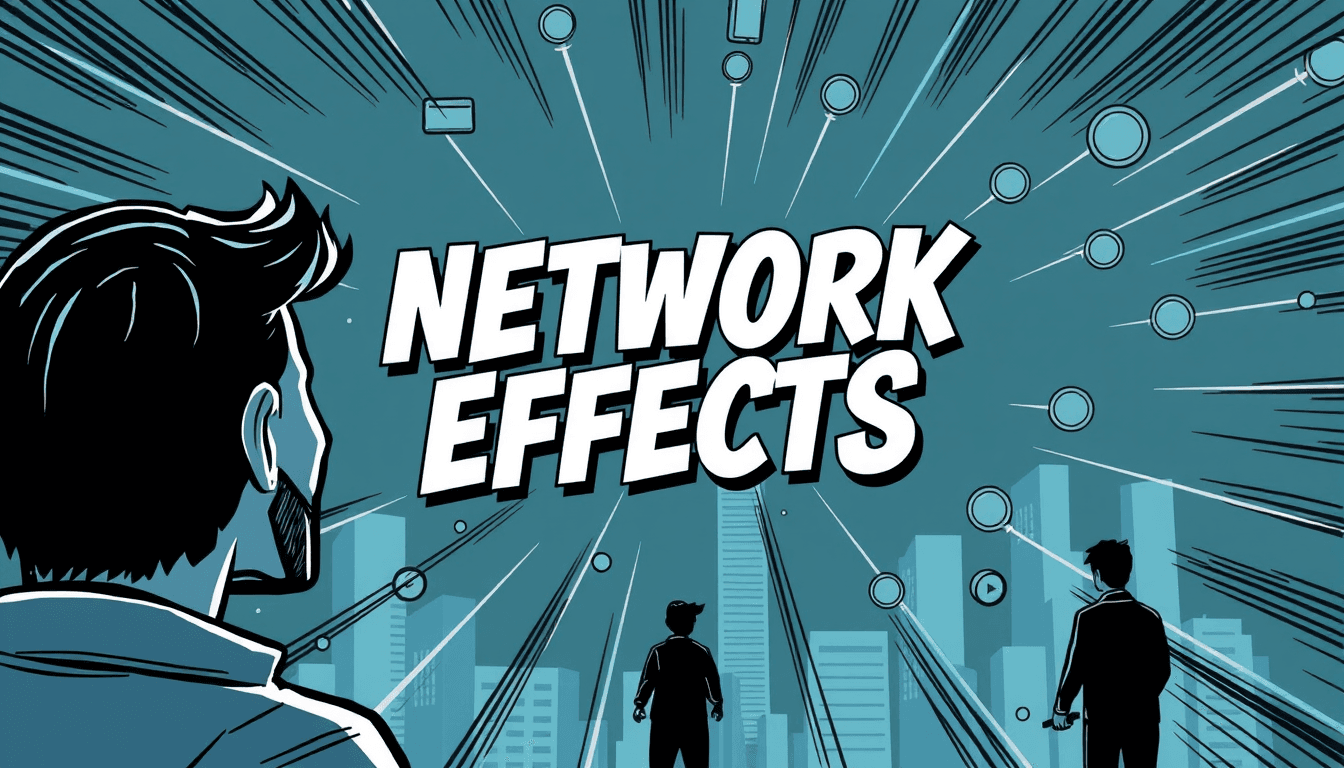
The Great Ideas Series III: Power, Systems & Reality
Volume III traces how real outcomes are shaped by power—through feedback, incentives, coordination, and the compounding logic of systems. Across network effects, path dependence, and black swan risk, the series unifies on a single question: what mechanisms make advantage grow, lock in, or break. It matters because these patterns govern decisions in markets, organizations, and everyday life—often quietly, until they don’t.

Concept Style Dispatches
A sequenced dispatch arc through related ideas and pressure points.

The Context Engine
The Context Engine unifies 14 dispatches around one practical idea: better AI isn’t built by adding more text, but by engineering the right structure for context. Across flywheels, summaries, rolling updates, and retrieval, the series shows how to keep systems lean, accurate, and dependable over time. It matters because reliability—consistent decisions, grounded claims, and controlled drift—is what turns “AI help” into builder-grade output.

AI / Technology / Future (Thoughtful, Not News)
This dispatch series explores AI, technology, and the future through a steady lens: thoughtful craft over hot takes. Across 14 parts, it unifies around one question—what still requires human judgment when generation gets cheaper. The point isn’t news; it’s usable direction for writers, makers, and builders who want coherence, trust, and completion in an answer-shaped world.

Make It Make Sense
Make It Make Sense is a dispatch series about getting unstuck by treating progress as a design problem, not a willpower problem. Across each installment, we untangle the specific loops behind distraction, overload, bad starts, and invisible progress—then offer practical systems that translate uncertainty into next actions. It matters because clearer decisions and better attention turn effort into results you can actually see.

The Economics of Attention
Attention isn’t just a mindset—it’s an economic resource that gets spent, drained, and—when engineered well—compounded. This dispatch series unifies around one question: how do we design ideas, writing, and action pathways so readers keep investing? The result is a practical set of frameworks you can use to earn trust, reduce friction, and turn understanding into behaviour.
The Compounding Creator
The Compounding Creator is a dispatch series on building a creator brand that grows by design—not by chasing the next topic. Each part shows how to choose compounding niches, go deep, and weave new ideas into systems and an archive that makes readers (and your authority) stronger over time. It matters because when your work connects, every post increases the value of what came before.

Reality Isn’t Stable
Reality Isn’t Stable gathers 10 dispatches that treat the world as something you can’t read off directly—only model through interaction, measurement, and scale. From quantum context to perception and selfhood, the through-line is that “what is real” depends on the constraints and questions your systems are able to ask. That matters because it turns confusion into a method: if stability is conditional, clarity comes from testing conditions, not insisting on absolutes.

Frozen → Flow: A Path from Stuck to Sustainable Commitment
Frozen → Flowing traces a guided path from emotional stuckness to a survivable commitment system. The through-line is simple: when starting feels unsafe, the answer isn’t more pressure—it’s smaller action, clearer naming, and pre-decided structure. Together, they matter because they turn “I can’t” into a workable response you can repeat on real days.

The Polymath’s Workshop
The Polymath’s Workshop invites you to move beyond the boundaries of specialization and recover the lost art of integrated inquiry. Through the lives and methods of figures like Leonardo da Vinci, Hypatia, and Ada Lovelace, this series maps a rigorous architecture for connecting disparate disciplines. By treating synthesis as a trainable skill rather than a talent, you can build a personal framework that turns observation and wide-ranging study into a unified, creative practice.

Asymmetry
Asymmetry is a seven-part series on how progress is often driven by a few leverageable moves—not by linear increases in effort. Across each dispatch, the through-line is simple: outcomes are noisy, but the right asymmetries in information, constraints, and positioning compound into much larger effects. This matters because it replaces vague self-improvement with decision systems you can test, stop, and scale.
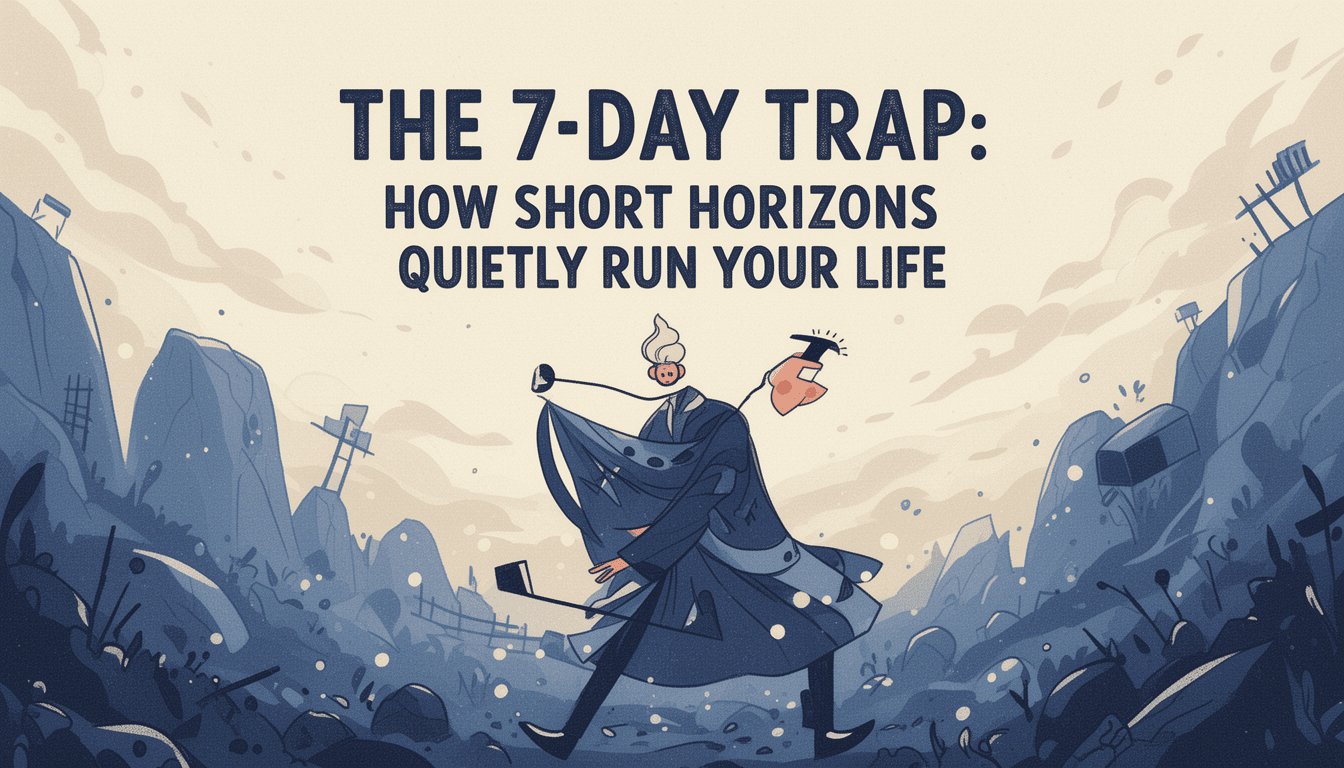
Time Horizons
Time Horizons traces how your decisions change when the future becomes a real place to plan for—rather than a vague hope. Across seven dispatches, it connects short-horizon traps, compounding mechanics, urgency, resets, and strategic waiting into one practical question: what time scale are you optimizing? That matters because your calendar is rarely neutral; it quietly decides what kind of life you end up compounding.

Constraints That Win
Unlimited options are not the engine of creativity, but rather the silent thief of momentum. This series explores how self-imposed boundaries act as a strategic catalyst, moving you from the paralyzing burden of infinite choice to the high-velocity state of intentional production. By mastering the art of constraint, you learn to sharpen your output and build a reputation for decisive, high-quality work.

Ownership
True independence requires moving beyond the fleeting visibility of rented platforms to build a durable, owned infrastructure. This series explores how to reframe your work as a collection of reusable assets, controlled feedback loops, and direct relationships. By distinguishing between discovery and continuity, you can transform your output from temporary content into lasting leverage.

Identity Engineering
Identity Engineering brings seven dispatches together around one idea: identity is constructed through repeatable evidence, not proclaimed conviction. Across behavior loops, environmental cues, and change sequencing, the series shows how beliefs update when actions become consistent and legible. This matters because it turns “who you are” into something you can design—without losing stability.

Digital Behaviour
Digital Behaviour unifies seven dispatches on how attention actually moves on screens—from the first glance to the last click. Together, these pieces treat online communication as a sequence of earned moments shaped by context, friction, and timing, not a simple matter of “more content.” The result is practical guidance for designing clarity, trust, and next steps that fit real behavior.

Language
A sequenced dispatch arc through related ideas and pressure points.

Writing / Story / Narrative (Interesting Angles)
A sequenced dispatch arc through related ideas and pressure points.
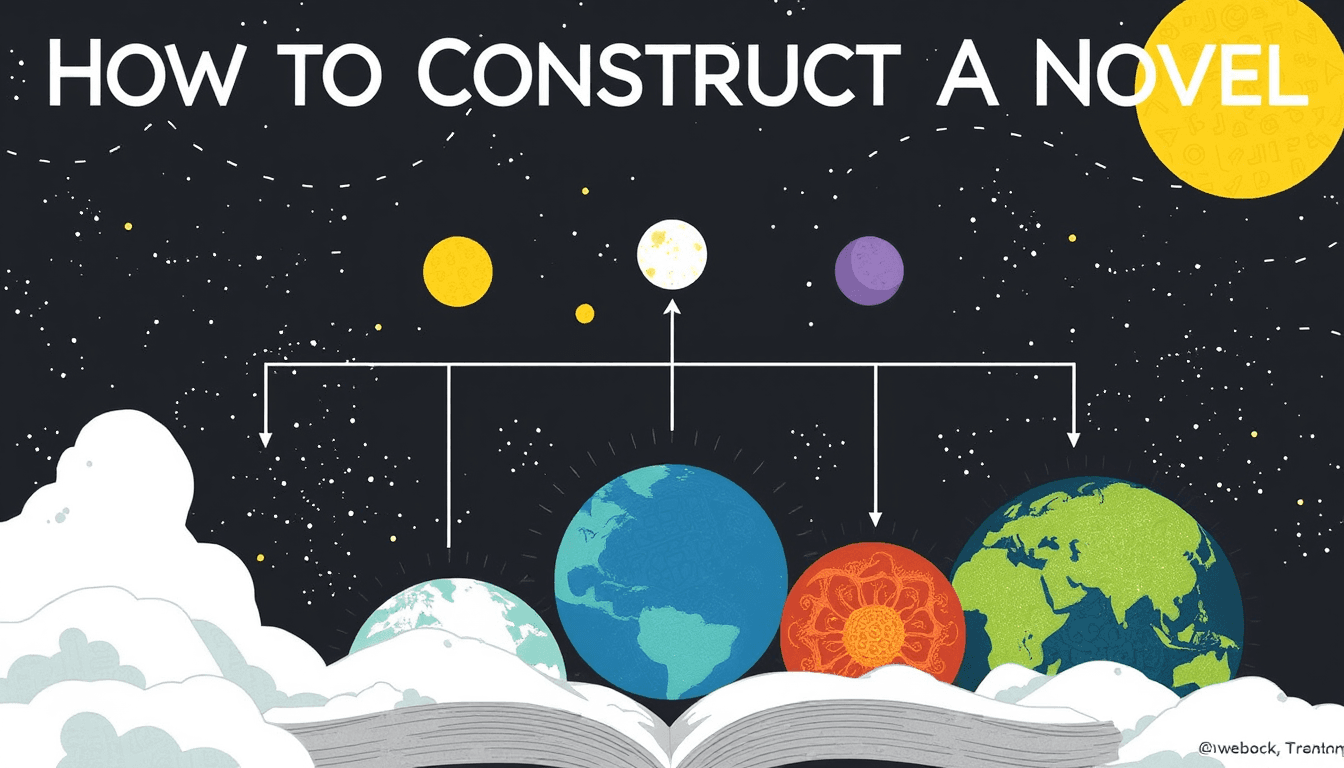
Premium / Paywalled Article Ideas (Long Form)
A sequenced dispatch arc through related ideas and pressure points.

Life/ Career/ Entrepreneurship
A sequenced dispatch arc through related ideas and pressure points.

The Catalysts of Change
It explores the pivotal concepts that shaped history, aligning with the brief to inspire through world-changing ideas.

The New Value Crisis
The New Value Crisis traces a modern confusion: the growing distance between what is valuable and what is merely visible. Across work, culture, expertise, and identity, the series examines how attention, fluency, monetisation, and familiarity have begun to stand in for deeper measures of worth. It is an unsettling map of a world where recognition is easier to manufacture than judgment is to trust.

The Attention War You’re Already Losing
A sequenced dispatch arc through related ideas and pressure points.
What's Real Anymore?
A sequenced dispatch arc through related ideas and pressure points.

The Geometry of Thought
Directly addresses the brief's call for geometry and connects to da Vinci's lifelong obsession with proportional systems.

The Quiet Architects
The Quiet Architects traces how lasting change is built—not by singular heroes, but by the rules, tools, feedback loops, and “grammar” underneath visible outcomes. Across four dispatches, we examine the systems that make progress repeatable, scaleable, and durable in everyday life. It matters because when you can see the architecture, you can design it—and protect better results when people and seasons change.

The Intellectual Capital Series Volume II — Building Assets Out of Thought
A sequenced dispatch arc through related ideas and pressure points.

Missing Words
A sequenced dispatch arc through related ideas and pressure points.
The Quiet Revolution
Calm and distinctive, it directly addresses the schedule's brief by focusing on ideas that changed the world through subtle, systemic shifts.

Memory & Mind
A sequenced dispatch arc through related ideas and pressure points.

Meaning in the Age of Noise
A sequenced dispatch arc through related ideas and pressure points.

North Harbour
A sequenced dispatch arc through related ideas and pressure points.

Invisible Systems
A sequenced dispatch arc through related ideas and pressure points.
Attention Mechanics
A sequenced dispatch arc through related ideas and pressure points.
Mental Load and Productivity
A sequenced dispatch arc through related ideas and pressure points.

Motion vs. Progress
A sequenced dispatch arc through related ideas and pressure points.