Clarity is leverage: subtract friction until your truth becomes repeatable, ownable, and actionable.


Previous · Part 4
The Architecture of Recognition: Why Naming Patterns Shifts Power
Next · Part 6
The Architecture of Permission: How Wording Greases the Wheels of Action
This builds on Part 4: The Architecture of Recognition: Why Naming Patterns Shifts Power
Continue with Part 6: The Architecture of Permission: How Wording Greases the Wheels of Action
Soundtrack
Track not found in the current store library.
Use `id:` for an exact match, or `title:` with optional `artist:` for a readable reference.
&w=3840&q=75)
Part 5 of The Language of Leverage — Volume I
The
Authority of the Unadorned Sentence
Scroll to see why simplicity strikes harder
We have been conditioned to believe that complexity is the cousin of competence. In academic halls and boardroom presentations alike, there is a pervasive myth: if the sentence is long, the thought must be deep; if the vocabulary is ornate, the position must be authoritative.
But leverage is rarely found in the abstract. It is found in the ability to move an idea from your mind into another’s without losing momentum. When you drape a simple truth in heavy, decorative prose, you aren't adding weight—you are adding friction.
The Kinetic Energy of Clarity
Simple language functions like a sharpened blade. It requires less effort to swing, and it penetrates deeper. When you strip away the qualifiers, the hedge words, and the academic jargon, you are left with the raw kinetic energy of your proposition.
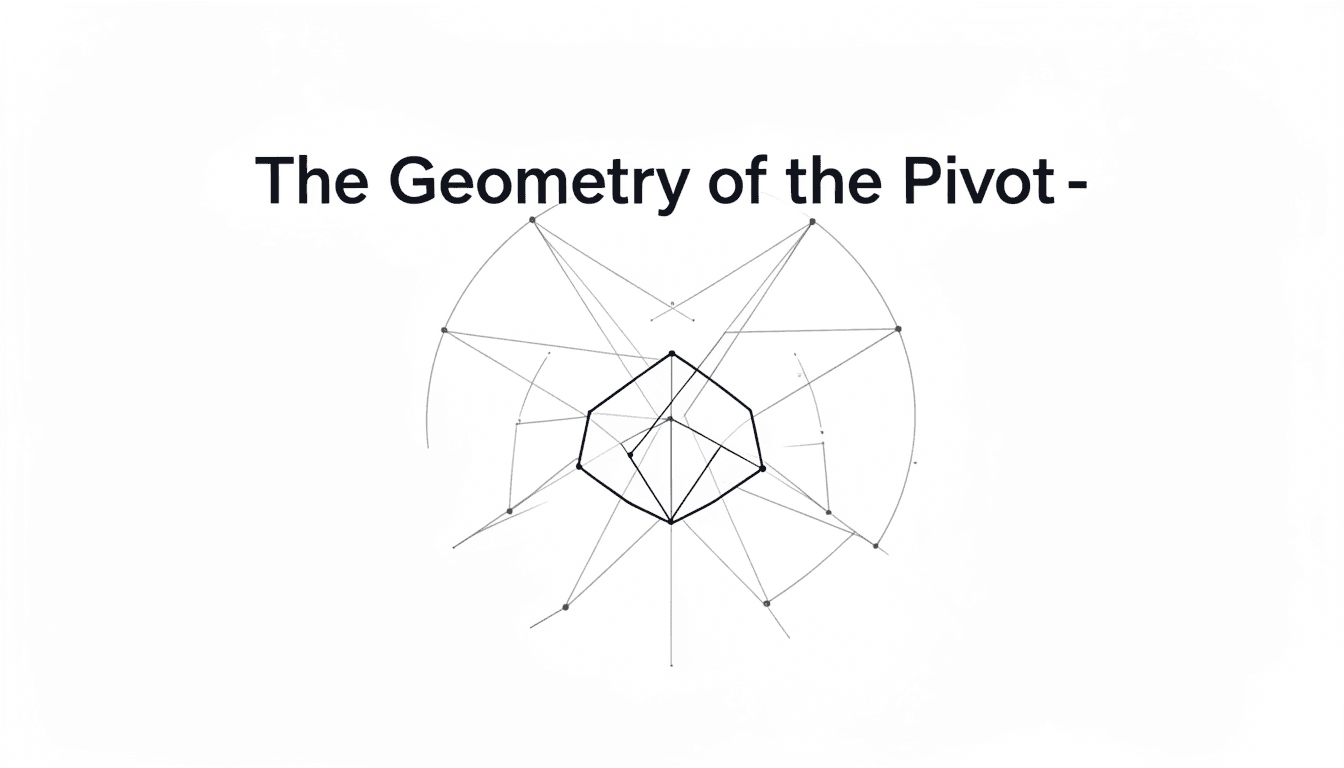
Consider the difference in impact between two common ways of framing a strategic pivot:
"We are currently in the process of re-evaluating our strategic positioning to ensure that we are adequately addressing the shifting landscape of the market environment."
"We are changing our strategy because the market has moved."
The first version invites the reader to analyze your intellect; the second version invites the reader to acknowledge the reality. The first reduces your force by forcing the reader to hunt for your meaning. The second amplifies it by leaving them nowhere else to look.
The Myth of "Serious" Tone
Many fear that simple language sounds naive or beneath the gravity of their work. They mistake "seriousness" for "formality."
Formality is a costume; seriousness is a weight. True authority is not demonstrated through the complexity of your syntax, but through the courage of your conclusions. When you speak in plain, unadorned sentences, you signal that you have nothing to hide—no gaps in logic to paper over with industry buzzwords.
Diagram: Complex Language leads to Distraction; Complex Language leads to Ambiguity; Ambiguity leads to Diluted Impact; Simple Language leads to Trust; Simple Language leads to Speed; Speed leads to High Leverage.
Diagram: Complex Language leads to Distraction; Complex Language leads to Ambiguity; Ambiguity leads to Diluted Impact; Simple Language leads to Trust; Simple Language leads to Speed; Speed leads to High Leverage.
Practicing the Reduction
To increase the force of your communication, you must become a brutal editor of your own output. Use this process to strip the "fluff" from your professional writing.
The Leverage Template
If you find yourself struggling to anchor a complex idea, return to this structure. It forces you to link cause and effect without the safety net of complexity.
[Current Reality] is [State].
[Action] will [Result].
We do this because [Evidence/Reason].
Reflecting on Your Voice
The transition from "smart-sounding" to "useful" is the most significant leap a professional can make. It requires trusting your ideas enough to let them stand on their own merits.
Think of a recent email or report you sent that felt "heavy."
What was the one core message you were trying to hide behind all that extra language?
The Daily Audit

If this resonates, see how to apply it to your own work with the interactive Dispatch agent.
Be first to like this dispatch