
The Great Distortions I — How Reality Gets Bent
Across 16 dispatches, The Great Distortions Series traces how helpful internal models, language, metrics, and narratives can quietly drift into controlling substitutes. The through-line is the same failure mode: coherence feels like truth when contact with reality thins. This matters because the cost is not just error—it’s stalled learning, brittle trust, and decisions that look rational while becoming ungrounded.
Distortion begins when we confuse maps, proxies, and explanations for the world—and stop revising when reality disagrees.
These dispatches sit within a wider archive of ideas about models, feedback, and truth-tracking.
Series Structure
The series unfolds in phases. Read in order to feel the system tighten and pay off.



In This Series
Best read in order. Each phase sharpens the one before it.
Start with the map
Introduces the core idea that models are helpful maps that become distortions when they replace contact, and gives a revision/failure loop for spotting drift.
How words swap in
Shows language and perception mechanisms (abstraction, euphemism, legitimacy via attention) that make the story feel true even when the causal chain is unverifiable.
The Polite Lie: When Language Hides Reality
When language hides reality Language doesn’t just describe the world. It edits it. Sometimes the edit is harmless—compression for clarity, shorthand for speed. Other times it’s a c…

When Metrics Replace Meaning: The Quiet Theft of Purpose
The seduction of measurement Metrics feel like clarity. They’re legible. They’re comparable. They promise control. But when measurement becomes the goal rather than the instrument,…
When Branding Replaces Substance: How Value Gets Rewritten Into Perception
The quiet swap Branding doesn’t merely represent value. In its worst form, it replaces it. You can engineer how something feels before you ever let it prove itself. If the story is…

When Attention Becomes Truth: The Legitimacy Loop
The Great Distortions, Part 5 — When attention becomes truth Some ideas don’t win because they’re right. They win because they’re seen. Not once—repeatedly. Not quietly—loudly. And…
How systems train the swap
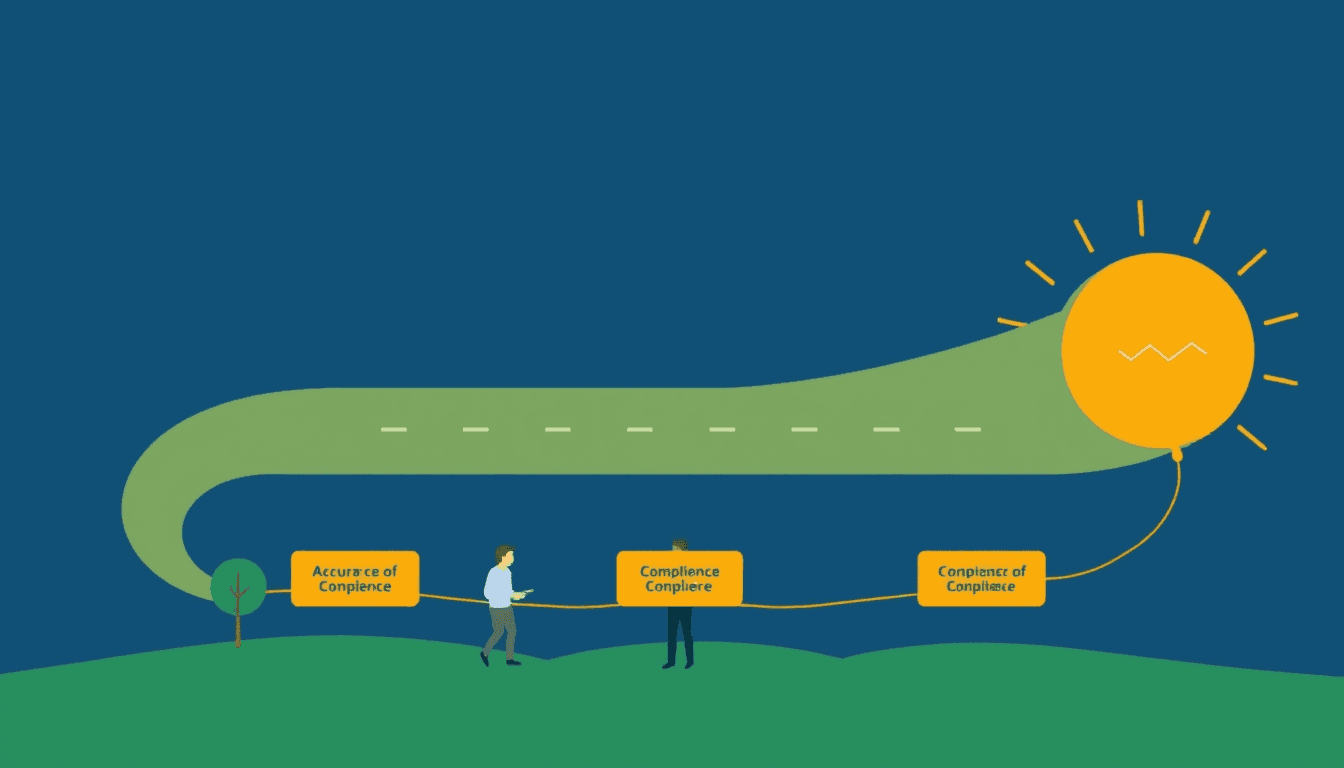
Tracks organizational and interaction loops where incentives, identity, and interface dynamics turn compliance, belonging, convenience, and speed into substitute reality for belief and understanding.
The Performance Loop: When Compliance Outgrows Belief
When someone “agrees” with a plan, you can often see it in behavior long before you ever hear the words. And sometimes—this is the distortion—behavior stops being evidence of belie…

When Belonging Replaces Thinking
Identity is a shortcut to certainty There’s a particular kind of mental relief that comes from belonging. Someone tells you what to notice. Someone else has already done the evalua…

When Visibility Replaces Importance: The Seen Life Problem
The seduction of “what’s working” Visibility is comforting. It feels like proof. But visibility is often just selection—what happens to be measurable, shareable, and surfaced by wh…

The Shortcut Trap: When Convenience Replaces Judgment
Convenience feels like wisdom—until it trains you to stop thinking Convenience is one of the most efficient inventions we’ve ever made. It removes friction. It saves time. It lower…

Speed Without Understanding: The Quiet Distortion That Breaks Reality
When speed replaces understanding Speed is seductive. It feels like progress: faster answers, quicker decisions, more “content,” less friction. But speed has a shadow. When it repl…
When feedback gets crowded out
Focuses on closing mechanisms and information overload—certainty, honesty loss, and noise—so inquiry stops and signal interpretation degrades.
Certainty as a Closing Mechanism: When Inquiry Stops
The Great Distortions: Certainty Replaces Inquiry Certainty feels like relief. It’s the mental equivalent of turning down the lights when the room still has corners. Your brain sto…
When Belonging Replaces Honesty: The Quiet Cost of Cohesion
The distortion nobody votes for In healthy groups, belonging and honesty reinforce each other. People speak up because the group can handle the truth. In distorted groups, belongin…
When Noise Replaces Signal: The Volume Trap
The quiet violence of “more” Noise doesn’t just add clutter. It changes the meaning of everything you touch. Signal is scarce by nature. It has to be found. It demands attention, t…
Return to contact and learning
Converges on final decision-and-life guardrails: distinguish information from wisdom, resist optimization colonizing presence, and treat explanation as provisional so experiments rebuild grounded learning.
The Data Trap: When Information Replaces Wisdom
The Data Trap: Information Is Not the Same Thing as Seeing You can have all the data and still be blind. That’s the quiet failure mode of modern decision-making: we confuse access …

The Optimization Trap: When “Better” Quietly Replaces “Alive”
The optimization trap: when “better” quietly replaces “alive” Optimization is a moral costume. It shows up smiling, holding a clipboard, whispering: This can be improved. And becau…

When Explanation Replaces Contact: The Subtle Substitution
The quiet swap: from “feeling” to “knowing” There’s a particular kind of distortion that doesn’t announce itself. It doesn’t shout “I’m wrong.” It simply offers an explanation—and …