
The Language of Leverage Series I — How Words Multiply Value
The Language of Leverage Series I unifies 15 dispatches around a single idea: words don’t just explain—they multiply value. Across pivoting frames, naming patterns, compressing complexity, and designing quotable phrasing, these essays treat language as a real strategic system. Clear communication matters because it reduces cognitive tax, preserves ideas beyond their author, and turns insight into repeatable leverage.
Clarity is leverage: subtract friction until your truth becomes repeatable, ownable, and actionable.
These dispatches sit within a broader archive of language frameworks and reusable communication systems.
Series Structure
The series unfolds in phases. Read in order to feel the system tighten and pay off.



In This Series
Best read in order. Each phase sharpens the one before it.
Compress the signal
Introduces clarity as compression and pivotable framing, then shows how well-structured phrasing travels across audiences.
The Art of Intellectual Compression
We live in an age of information abundance, yet we suffer from a deficit of utility. Most people treat language as a vessel for adding detail, rather than a tool for removing frict…
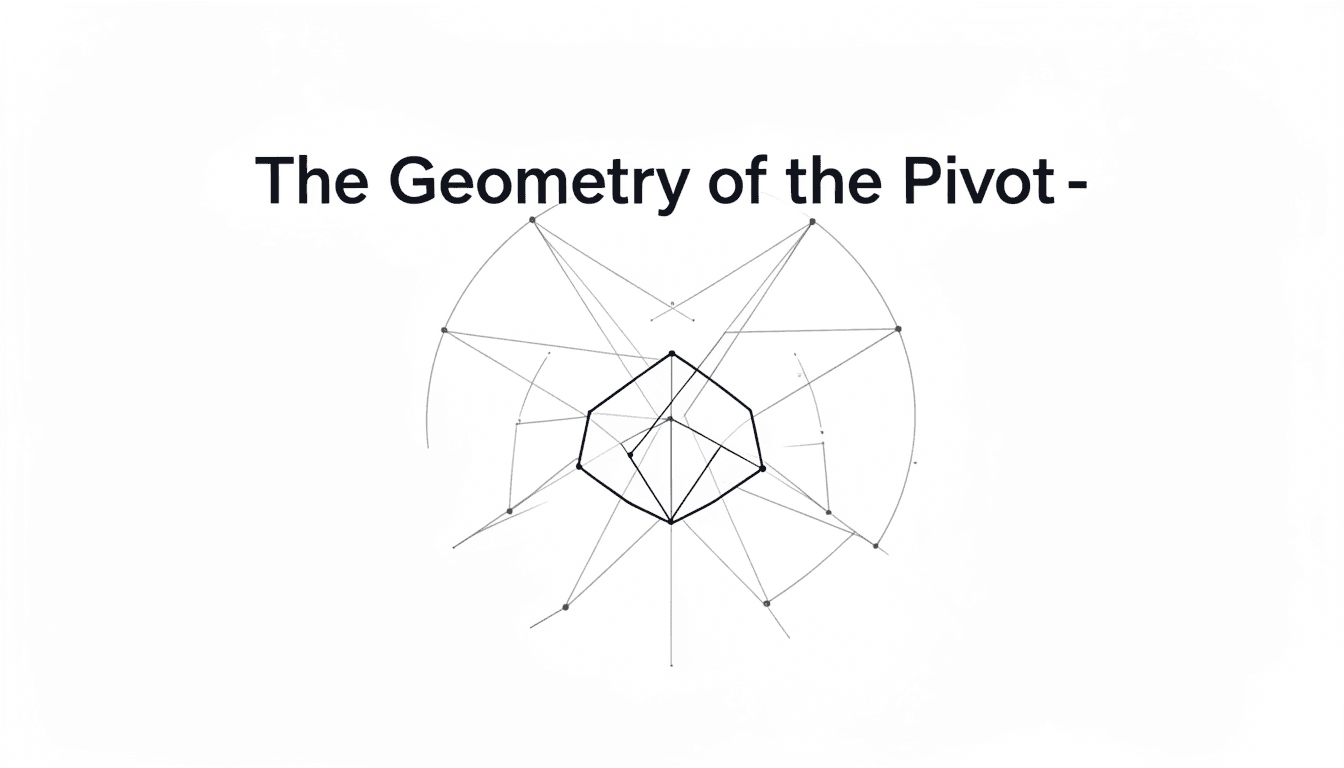
The Geometry of the Pivot
Most people treat communication like a delivery system — a way to pass information from one person to another. But at higher levels of thinking, that’s not what’s really happening.…

The Viral Architecture of Language
We have all seen it: a singular phrase—a "mental hook"—that leaps from a lonely whitepaper into the lexicon of entire industries. It becomes the shorthand for a way of working, a s…
Name what moves
Builds the habit of identifying patterns and translating them into actionable work through precise, low-friction wording.
The Architecture of Recognition: Why Naming Patterns Shifts Power
We live in a world of high-velocity noise. Most people experience their lives as a series of disconnected, chaotic events—a "this happened, then that happened" existence. They are …

The Authority of the Unadorned Sentence
We have been conditioned to believe that complexity is the cousin of competence. In academic halls and boardroom presentations alike, there is a pervasive myth: if the sentence is …
The Architecture of Permission: How Wording Greases the Wheels of Action
Action is rarely a failure of will. More often, it is a failure of syntax. When a project stalls, we blame the "resistance" of the task or the "procrastination" of the individual.…
Package for adoption
Turns insight into quotable, repeatable language while adding diagnostics and frameworks for turning ideas into outcomes.
The Currency of Quotability
In an era of infinite content, explanation is a commodity. Everyone has a point to make, a system to share, or a theory to prove. Yet, most ideas die at the point of origin because…
The Grave of Good Ideas
Value is not an objective constant. It is a potential energy that requires a kinetic trigger to be released. Too often, we treat our ideas like buried treasure, expecting the world…

The Optic of Phrasing: How You Direct the Reader’s Gaze
We often mistake language for a vessel—a simple container meant to carry an idea from our mind to another’s. We treat it like a delivery truck, hoping the cargo arrives intact. Bu…

The Economics of a Better Explanation
Most professional friction isn't caused by bad intentions. It is caused by the invisible tax levied on every unclear thought. When you struggle to explain your work, your product, …
Own the territory
Shifts from correct framing to defensible vocabulary and compounding clarity, eliminating performance and positioning the communicator as default authority.
The Architecture of the Correct Question
We are often taught that success is found in the elegance of the solution. We iterate, we polish, and we architect elaborate systems to solve for the variables in front of us. But …

The Weight of Clean Language
In an era of performative eloquence, silence is often mistaken for emptiness. We equate word counts with value and complexity with intelligence. Yet, the most potent communicators …

The Architecture of the Recursive Phrase
We often mistake branding for a logo or a colour palette. But in the world of ideas, your most potent asset isn't visual; it is the recurring linguistic thumbprint you leave on the…

The Performance Trap: Why Smarter Isn't Sharper
We have all sat across from someone who speaks in tapestries. They are articulate, their vocabulary is precise, and their delivery is polished to a mirror sheen. Yet, ten minutes l…

The Compounding Interest of Clarity
The Architecture of Distance We often treat explanation as a transactional cost—a necessary tax paid to get the point across so we can move on to the "real" work. But in the archit…