
The Authority Signals-I — How Credibility Is Actually Built
Credibility isn’t a title you declare—it’s a system you build, signal, and compound. Across these dispatches, we trace how authority becomes legible to other people: through coherence, clean reasoning, uncertainty reduction, and the measurable responses that follow. This series matters because trust can be engineered—making better decisions, stronger follow-through, and durable belief possible.
Authority is the repeated reduction of uncertainty, made legible enough to be followed.
This series sits within Pen & Muse’s broader dispatch archive on credibility, decision-making, and narrative mechanics.
Series Structure
The series unfolds in phases. Read in order to feel the system tighten and pay off.



In This Series
Best read in order. Each phase sharpens the one before it.
What real authority signals
Establishes the anti-posturing foundation and introduces authority as something earned through legible sense-making that compounds over cycles.
Authority Is Recognised, Not Claimed
There is a particular kind of person who announces their expertise before they demonstrate it. They lead with credentials. They preface their contributions with context designed to…

Why The Room Trusts One Person
--- The Gravity of Dependability Walk into any room with multiple people — a meeting, a dinner, a conference panel — and within minutes, something invisible happens. Attention set…

The Authority Flywheel — How Credibility Compounds Itself
The Cycle Nobody Talks About Most people think authority is a destination. A title, a credential, a threshold you cross. But anyone who has watched someone become authoritative — r…
Make competence legible
Turns credibility into repeatable communication mechanics (structure, clean reasoning, certainty tied to clarity) and shows how audience response becomes informal proof.
Visible Structure: How Expertise Becomes Legible
Competence That Can Be Seen Expertise isn’t only something you have. It’s something other people can find. And the key difference is legibility. When your thinking shows up as a cl…

Prestige Gets a Glance. Explanation Earns Belief.
The Difference Between Prestige and Trust Prestige is a signal that says, “Look at me.” Trust is a signal that says, “You can rely on me.” Both can attract attention—only one las…

The Quiet Proof: How Audience Response Becomes Informal Authority
Why Market Signals Matter Authority rarely announces itself. More often, it accrues quietly—through the way people respond when you’re in the room, and what they do immediately aft…
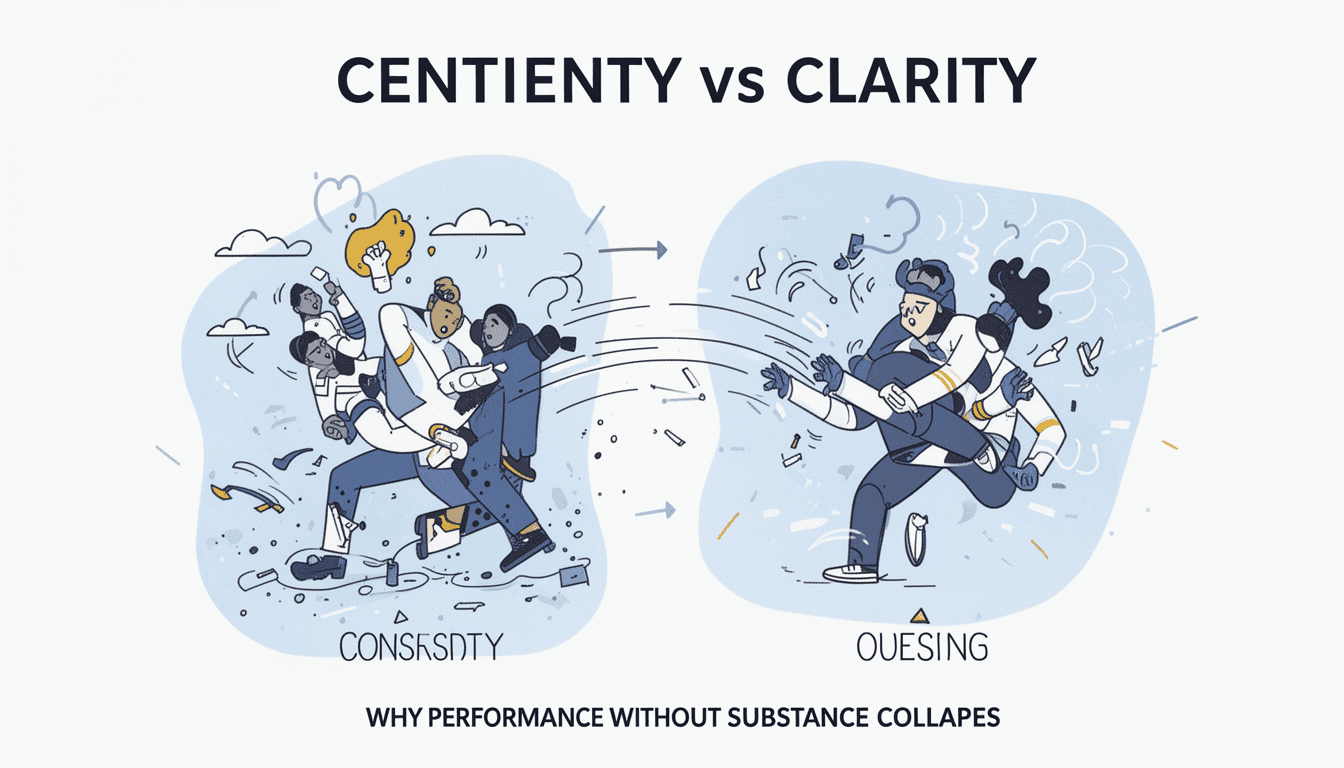
Certainty vs Clarity: Why Performance Without Substance Collapses
When confidence helps—and when it exposes you Confidence is a signal. But like any signal, it can either mean competence or mean performance. In a room full of smart people, certai…

The Credibility of Clean Thinking — Why Reasoning Feels Reliable
The credibility of clean thinking Some people can sound confident while saying almost nothing. Others can say very little—and still feel trustworthy. The difference isn’t volume.…
Translate into reusable belief
Shifts from being understood once to becoming a default translator—naming, articulation leverage, and explanation that stores as portable mental models.
The Interpreter Effect: When Naming Becomes Ownership
Why People Remember the Interpreter Authority often starts with a pattern. But what makes that pattern stick in public memory is almost never the pattern itself. It’s the interpret…
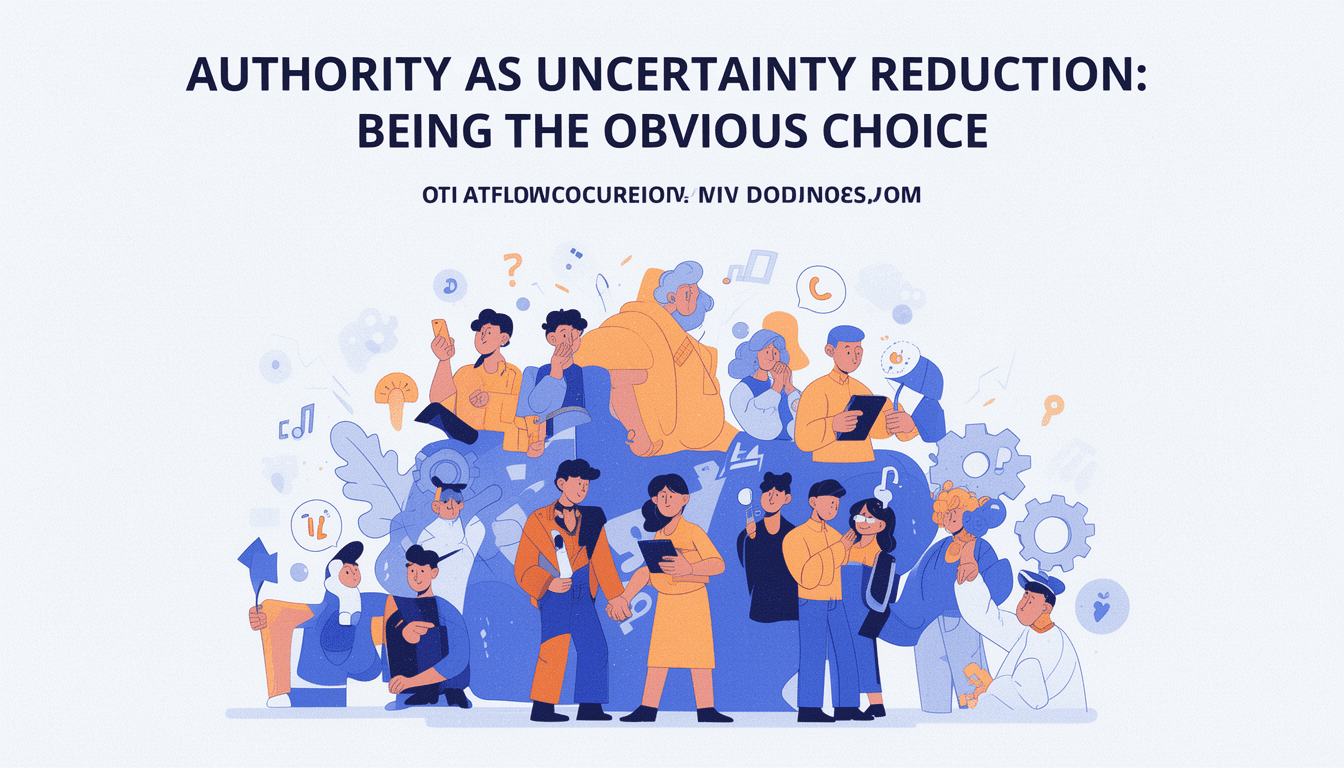
Authority as Uncertainty Reduction: Being the Obvious Choice
Being the Obvious Choice Spectacle can impress. But authority almost always does something quieter: it reduces uncertainty. Not by showing off. Not by persuading you to feel. By ma…

Tiny Assets: How Each Clear Explanation Builds Future Trust
How Authority Compounds Authority doesn’t only come from big moments—big credentials, big launches, big declarations. It also comes from something quieter and more durable: the way…

The Problem With Borrowed Authority
The Problem With Borrowed Authority Credentials and associations can be useful. They can also become a kind of social shortcut—one that looks like evidence, but behaves like camouf…

When You’re Almost There: Articulation Beats More Inputs
In the “credibility game,” there’s a point where more research stops helping. You’re not missing information. You’re missing leverage—the kind that turns what you know into somethi…
Earn the right to be followed
Closes with the emotional/practical safety conditions for following judgments and the competitive edge of noise reduction that comes from clear, bounded recommendations.
The Trust Threshold — How Audiences Feel Safe Following Your Judgement
The Trust Threshold Credibility isn’t a single approval. It’s a threshold state—an emotional and practical switch that flips when the audience believes: I can risk following this p…

The Filter Is the Value — Why Noise Reducers Get Chosen First
There's a particular kind of person who walks into a room and the room gets quieter. Not because they demand silence — but because everyone senses that the fog is about to lift. Th…