
Language
A Pen & Muse dispatch series in 7 parts. Best read in order, starting with Part 1.
In This Series
Best read in order. Each dispatch builds on the one before it.
How English Quietly Absorbed the World
The Global Soft Power You Don’t Notice English didn’t conquer the world with armies. It arrived with incentives. It showed up in classrooms. In software. In shipping labels. In job…

The Architecture of Constraint: Why Legal Language Demands Its Own Dialect
We treat language as a tool for connection, a fluid medium meant to bridge the gap between two minds. But there is a corner of our vocabulary where this fluidity is treated as a de…
House vs. Home: The Language of Belonging
--- There are two words that occupy the same street but live in different worlds. A house is a structure. Walls, a roof, a door. You can buy it, sell it, rent it. It sits on a map …

The Phonology of Trust: Why Some Names Carry More Weight
Language is rarely just a vessel for information. When we name a brand, a project, or a venture, we aren't just tagging an entity; we are engaging in a subconscious negotiation wit…
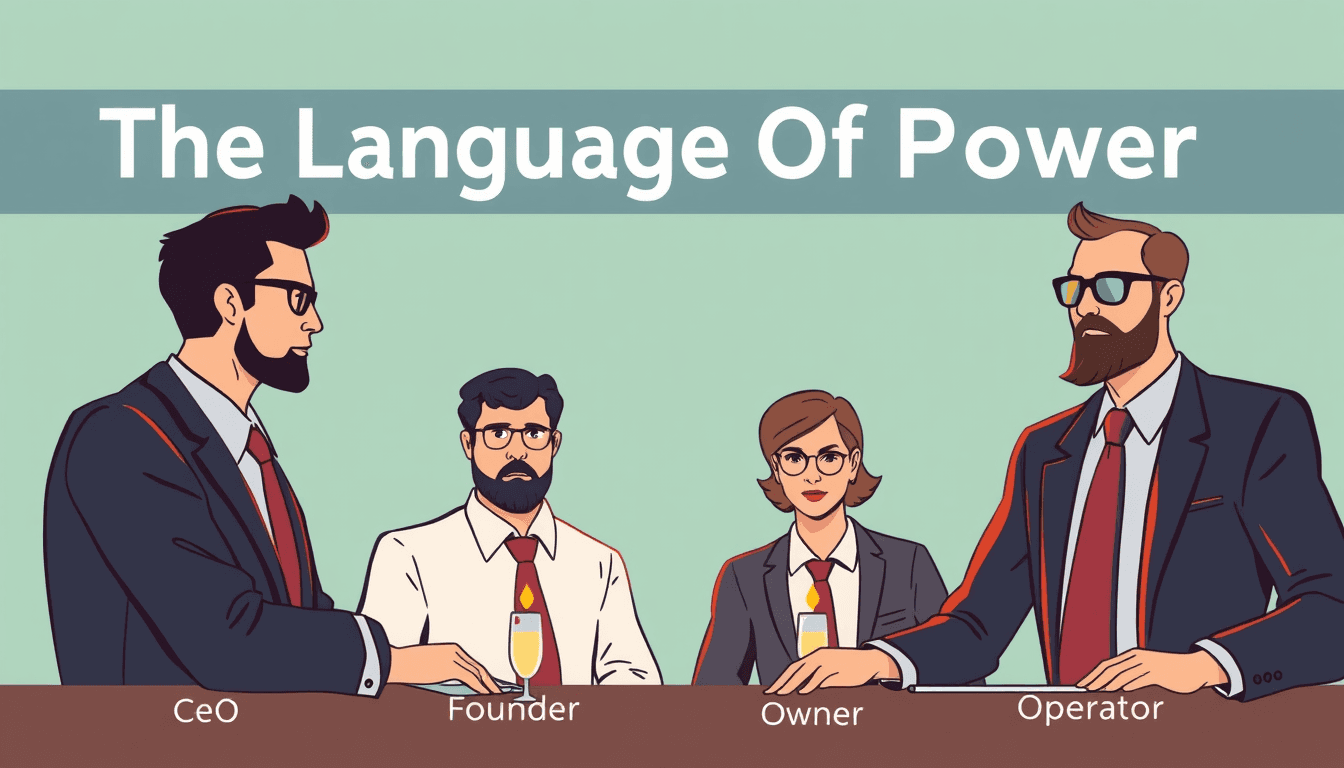
The Language Of Power - CEO vs Founder vs Owner vs Operator
Language is never just a label. In the boardroom and the trenches alike, the words we assign to our roles function as linguistic architecture; they dictate how we view the horizon …
The Precision of the Blade vs. the Dullness of the Spoon
We often mistake clarity for a lack of complexity. True simplicity is a feat of architectural reduction—stripping away everything that does not serve the load-bearing truth of the …

The Bifurcated Tongue: Why English Speaks in Two Voices
English is not a single language. It is a masquerade. Beneath the surface of every sentence lies a tension between two distinct identities—the visceral, earthy Germanic roots and t…