
The Intellectual Capital I — Turning Thought Into Assets
Every dispatch in this series treats clarity as intellectual capital—something engineered to be reused, referenced, and applied long after the original moment. Across 15 parts, we connect methods for turning thought into assets: repeatable explanations, transferable frameworks, precision, and coherence that others can safely act on. This matters because durable understanding compounds into trust, opportunity, and ongoing demand.
Engineer explanations so they survive without you—and compound as reusable capital.
These dispatches sit within a broader archive of writing, reasoning, and asset-building frameworks.
Series Structure
The series unfolds in phases. Read in order to feel the system tighten and pay off.



In This Series
Best read in order. Each phase sharpens the one before it.
Turn clarity into an asset
Establish the core premise—rewrite ideas so they’re reusable after the moment—and sharpen it with precision, structure, and an asset-ready definition.
Every Clear Explanation Becomes an Asset
Every Clear Explanation Becomes an Asset You don’t “publish” an idea once. You release it into a system. And systems don’t care how good your intent was. They care what survives: l…
Explanations as After-Publication Infrastructure: Trust, Reach, Opportunity
Thoughts That Work While You Sleep The writing doesn’t stop when it’s posted. Good explanations keep doing three quiet jobs long after the initial reader is gone: they earn trust, …
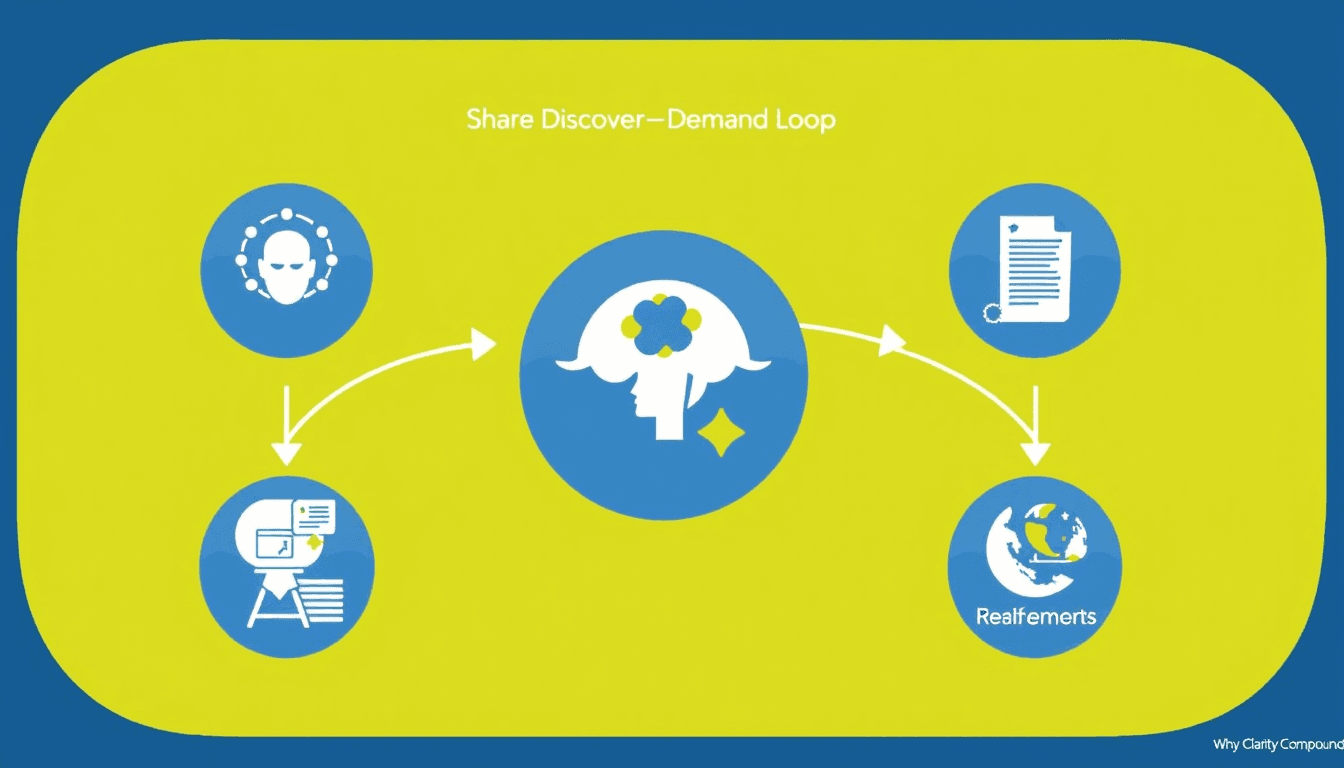
Why Clarity Compounds: The Share–Discover–Demand Loop
Why Clarity Compounds Clarity isn’t just a kindness to your reader. It’s an advantage that keeps paying you back—after the post is gone, after the conversation ends, after you’ve m…

Precision as Longevity: How Sharp Thinking Becomes Reusable Capital
The Asset Value of Precision Precision isn’t a style choice. It’s an economic strategy for ideas. When you think sharply, you don’t just produce something clearer today—you produce…
Make it portable over time
Shift from publishing to building, then add tests and mechanics (repeatability, durability, quotability, and legibility) that keep explanations valuable across audiences and re-reading.
Publishing vs. Building Intellectual Property Capital: The Durable Difference
From Content to Capital Most people publish. The rare few build. Publishing is an event. Capital is a structure. This Part 5 is the pivot: the difference between creating something…

The Repeatability Test: How Ideas Stay Valuable Across Time, Audiences, and Channels
Part 6: The Repeatability Test Here’s the uncomfortable truth: most ideas die quietly. Not because they were wrong—because they weren’t repeatable. Repeatability is what lets an id…

How Ideas Turn Into Position: Becoming a Reference Point
How Ideas Turn Into Position You don’t “gain authority” by declaring it. You gain it by repeating a clear articulation until other people start to use your phrasing as shorthand. A…

Build Once, Clarify Forever — Conceptual Framing That Keeps Paying
Strong ideas are rarely expensive. The expensive part is repetition. But there’s a smarter pattern: build once, then clarify forever. Not by rewriting the same piece endlessly. By …

The Durability Test: What Makes Explanations Reusable and Marketable
Why Some Writing Keeps Working Some explanations don’t just inform. They keep getting cited, reused, taught, and sold—long after the original author has moved on. That durability i…
Repeat until you become a reference
Convert durable explanations into position and market pull by making them quotable, trust-generating infrastructure with long shelf life and protected meaning.
The Compounding Return of Being Quotable
The Compounding Return of Being Quotable Memorable ideas don’t spread because they’re correct. They spread because they’re quote-worthy. A quotable insight travels with frictionles…

Clarity as Reputation Infrastructure: How Legibility Becomes Transferable Trust
Clarity as Reputation Infrastructure Trust is rarely built in one dramatic moment. It’s built the way banks build balance sheets—by repeated, boring accuracy. And in knowledge work…

The Long Shelf Life of Useful Thinking: Why Some Ideas Don’t Expire
The quiet truth about intellectual assets Most writing decays. Not because it was bad. Because it was time-bound—tied to a moment, a trend, a specific audience mood, a particular t…
Clarify for conversion and demand
Close the loop by using explanation to reshape problems, improve framing ROI, and culminate in a proof-of-capability library that compounds ongoing demand.
When You Clarify the Problem, You Expand the Market
When Explanation Creates Demand Most people think demand comes from a better solution. But in many markets, demand is created earlier—at the level of the problem. Not “what you sol…

The Hidden ROI of Better Framing: Why Explanation Converts and Stays Valuable
The hidden ROI of better framing If your work isn’t converting, it’s tempting to hunt for louder marketing. But often the leak is earlier. Not demand—translation. Better framing is…

The Proof-of-Capability Library: How Coherent Work Becomes Ongoing Demand
How coherent, precise outputs become ongoing proof of capability Most people think a “library” is a storage problem. It isn’t. A library is a credibility machine. Not because you s…