Tensions aren’t problems to solve—they’re levers to calibrate, or they’ll calibrate you.

Previous · Part 9
The Hidden Tax of Efficiency: How Resilience Disappears When Buffers Do

Next · Part 11
Loyalty vs Honesty: When Truth Threatens Belonging
This builds on Part 9: The Hidden Tax of Efficiency: How Resilience Disappears When Buffers Do
Continue with Part 11: Loyalty vs Honesty: When Truth Threatens Belonging
The tension you can’t “solve”
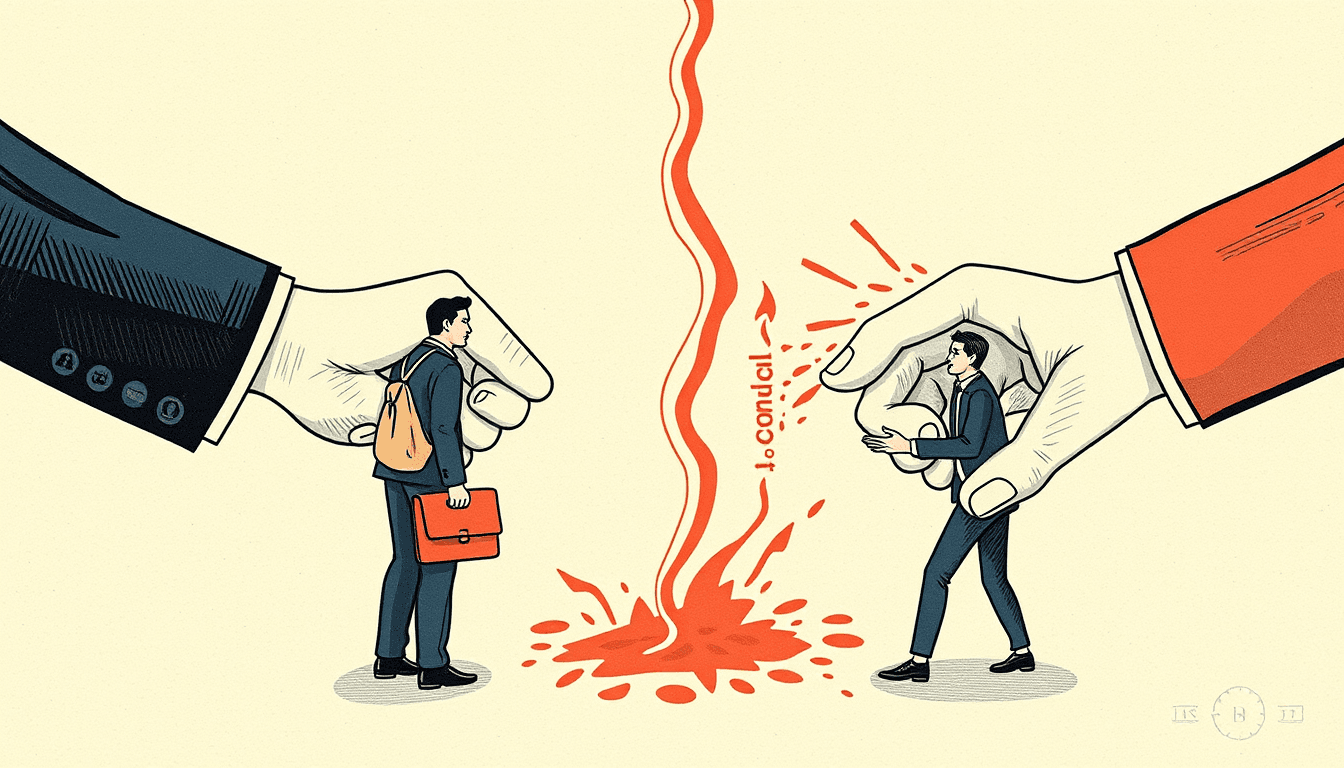
Control and trust aren’t opposites you choose once. They’re operating modes you cycle through—sometimes within the same week, sometimes within the same project.
The mature question isn’t “Should we control more or trust more?”
It’s “Where does this system need supervision, and where does it need autonomy?”
Control: oversight as risk management
Direct oversight works when the biggest threat isn’t effort—it’s misalignment.
If small errors compound fast, or if the cost of being wrong is high (money, safety, reputation), then control functions like a seatbelt: boring, frequent, effective.
What control actually buys you
- Better calibration early, before momentum locks in mistakes.
- Consistency in execution when variation is expensive.
- Speed under constraint, because decisions don’t wait for consensus.
The hidden tax of control
Control doesn’t just slow bad behavior. It also slowly teaches people what you reward: compliance, not judgment. Over time, controlled systems can become excellent at producing the appearance of correctness while missing the underlying reality.
Trust: delegation as creativity with accountability
Trust becomes rational when the biggest threat isn’t misalignment—it’s throughput of good decisions.
If competent people can interpret goals reliably, then autonomy increases the number of experiments happening at once. And more experiments means more chances of discovering the real edge.
Continue reading with a subscription
Explorer and Immersion subscribers get full access to all premium dispatches, series, and long-form guides.
If this resonates, see how to apply it to your own work with the interactive Dispatch agent.
Be first to like this dispatch