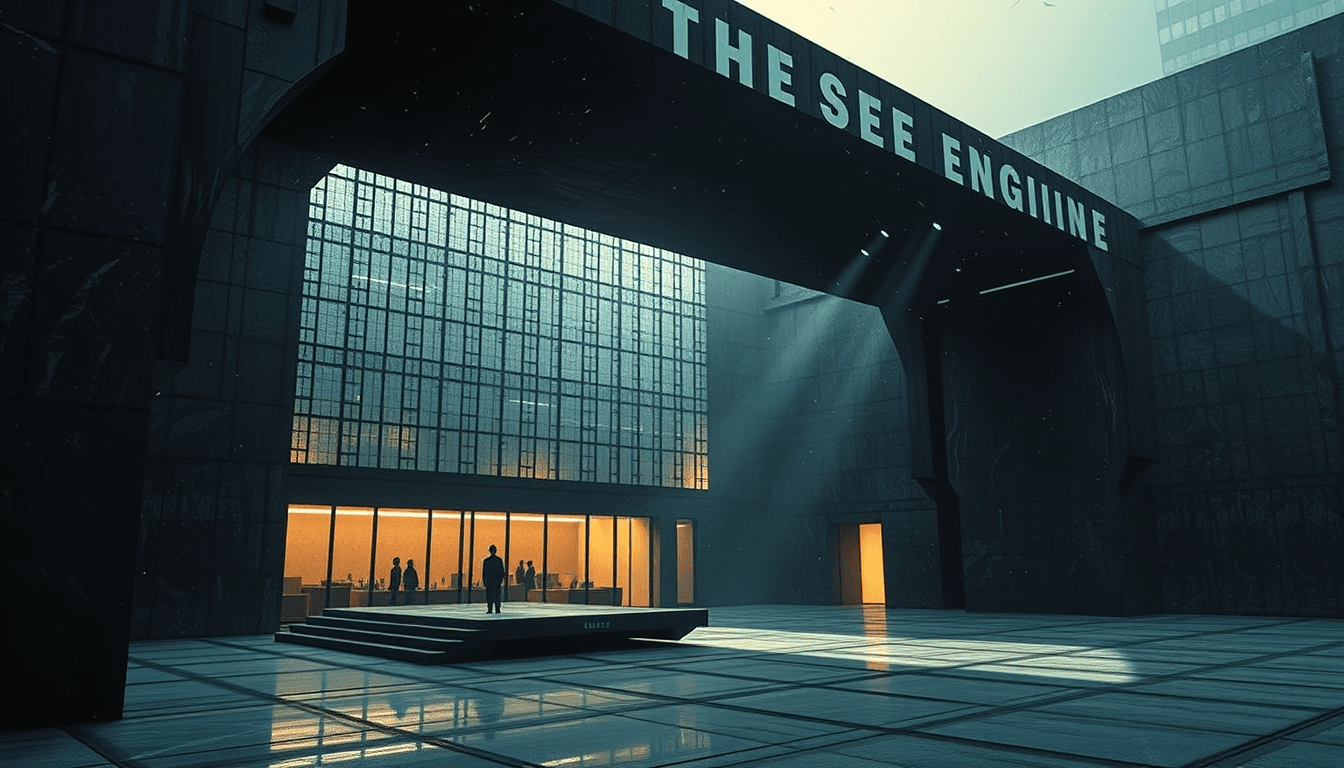
Real transformation is engineered in the background—where rules, rituals, and infrastructure quietly do the work.


Next · Part 2
The Thousand Small Steps
Continue with Part 2: The Thousand Small Steps
We are trained to look for the face.
The founder.
The reformer.
The inventor in the workshop.
The leader at the podium.
The person history can point to and say: there, that was the cause.
It is a satisfying story. It gives change a shape. It gives us someone to admire, blame, quote, and remember.
But lasting transformation rarely belongs to a single figure. More often, it belongs to the system that made the figure possible — the rules, tools, incentives, habits, standards, and shared beliefs that shaped what could happen next.
This is the first movement of quiet architecture: learning to see what sits beneath the visible event.
Not the lightning strike.
The conditions that made the storm.
The Architecture of Influence
Consider the language you are reading now.
English was not designed by committee. It was not launched by a founder. No monarch sat down and approved its grammar, slang, borrowed words, and strange exceptions.
It grew.
Trade pulled in new terms. Migration reshaped sound. Technology created fresh needs. Culture made some phrases fashionable and others obsolete. Millions of people, across centuries, made tiny choices that became shared convention.
No single person authored English.
The system did.
System as Architect
- ·Language
- ·Cities
- ·Markets
- ·Education
- ·Technology standards
- ·Cultural norms
A result looks like the work of one person, but depends on shared rules, repeated behaviour, and invisible coordination.
This is the nature of quiet architecture.
It works through structure, not command.
Through pattern, not proclamation.
Through repeated use, not one grand announcement.
A system does not need to make a speech. It only needs to make some actions easier than others.
The Hero Is Usually Standing on a Platform
We do not need to erase the hero from the story.
People matter. Vision matters. Courage matters. A single person can still change the direction of a room, an organisation, or a nation.
But the hero is rarely acting in empty space.
They are standing on a platform built by others: laws, tools, norms, roads, institutions, rituals, technologies, expectations. Some visible. Most not.
Lasting change is less often created by lone genius than by systems that make new behaviour possible.
People can spark change, but systems decide whether that change spreads, survives, and becomes normal.
- —A language evolves through shared use, not central design.
- —The electrical grid made countless inventions practical at scale.
- —Cultural norms shift when stories, incentives, and repeated behaviours begin to reinforce one another.
To understand real transformation, we must study the architecture around the actor, not only the actor.
The mistake is not celebrating individuals.
The mistake is stopping there.
The Grid Beneath Our Feet
The electrical grid is one of the clearest monuments to systemic power.
We may remember the names attached to electricity. We may picture inventors, demonstrations, patents, and rivalries. But mass electrification was not simply a matter of invention.
It required standards.
Voltage had to be managed. Transmission had to be coordinated. Generators, distributors, builders, regulators, and manufacturers all had to work inside compatible rules.
The lightbulb mattered.
But the lightbulb became world-changing because a system allowed it to plug into ordinary life.
Diagram: Scientific discovery leads to Useful invention; Useful invention leads to Shared standards; Shared standards leads to Infrastructure; Infrastructure leads to Mass adoption; Mass adoption leads to New everyday behaviour; New everyday behaviour leads to Lasting transformation.
Diagram: Scientific discovery leads to Useful invention; Useful invention leads to Shared standards; Shared standards leads to Infrastructure; Infrastructure leads to Mass adoption; Mass adoption leads to New everyday behaviour; New everyday behaviour leads to Lasting transformation.
This is where quiet architecture becomes powerful.
It turns isolated brilliance into common practice.
The same pattern appears everywhere. A laptop is not only a product. It is the result of supply chains, protocols, operating systems, chip standards, shipping routes, legal agreements, design conventions, and user habits.
We hold the finished object.
We rarely see the web that made it possible.
The Unseen Curriculum
Some systems are made of wires and standards.
Others are made of expectation.
Cultural norms may be the most pervasive systems we live inside. They tell us what counts as polite, ambitious, strange, admirable, rude, successful, or shameful.
They are not always written down. Often, they are taught by atmosphere.
A raised eyebrow.
A rewarded behaviour.
A repeated story.
A silence around certain subjects.
A phrase everyone uses without thinking.
This is the unseen curriculum of a culture.
It teaches not by lesson, but by repetition.
Changing a norm is not like flipping a switch.
It is more like redirecting a river. The flow changes when the banks change. The banks change when enough pressure, time, and design begin to work together.
A society expands its circle of empathy when its stories change, its laws change, its institutions change, and its everyday interactions begin to reinforce a new default.
Not all at once.
But not by accident either.
What Systems Actually Do
A system is not just a collection of parts.
It is a pattern of relationships.
The parts matter, but the relationships decide the behaviour. Put the same people inside a different set of rules, incentives, and expectations, and they often act differently.
That is why quiet architects pay attention to design.
Not design as decoration.
Design as consequence.
Who made this decision?
Who deserves credit?
Who is responsible?
What did the leader intend?
The person lens is useful.
The system lens is deeper.
The quiet architect lens asks what keeps happening even when the cast changes.
The Three Traits of Systemic Change
Systemic change has a different texture from dramatic change.
It is less cinematic. Less quotable. Less eager to announce itself.
But it has three traits that make it powerful.
1. It Accumulates
Systemic change usually gathers force through repeated adjustments.
A new practice becomes easier. A better tool becomes common. A better rule removes friction. A new phrase gives people language for something they already felt.
Each shift may look small.
Together, they move the world.
This is why the “eureka moment” is often misleading. Discovery may feel sudden, but the conditions behind it are usually long in the making.
2. It Survives
A system is stronger than a single node.
If one person leaves, the pattern may continue. If one tool fails, another may replace it. If one part bends, the network can absorb the shock.
This is why a well-designed system can outlast its founders.
It does not rely on constant charisma.
It relies on structure.
3. It Hides
We notice outputs.
Clean water.
Working roads.
Stable money.
Accepted ideas.
Reliable power.
Peaceful transfers of power.
A shared sense of what is normal.
But we rarely notice the hidden coordination that makes them possible.
When systems work well, they almost disappear.
The Stage Matters More Than the Spotlight
We celebrate the app, but forget the open-source library.
We admire the skyscraper, but overlook the building codes, material standards, labour practices, insurance models, and inspection regimes.
We praise the public figure, but miss the organisers, institutions, rituals, and social mood that made their rise possible.
The spotlight is bright.
The stage is doing more work.
Change looks like a dramatic act performed by an exceptional person.
Change looks like a system of conditions that makes certain actions possible, repeatable, and contagious.
This shift matters because it changes how we respond to the world.
If we believe change comes only from extraordinary people, we wait for them.
If we understand systems, we start looking for levers.
How to See the System
To see the system, ask different questions.
Not only: Who is in charge?
Ask: What is being rewarded?
Ask: What is being made easy?
Ask: What is being made costly?
Ask: What behaviour keeps repeating?
Ask: What rules are visible, and what rules are only felt?
What outcome keeps repeating?
Who benefits when it repeats?
What behaviour is rewarded?
What behaviour is punished or ignored?
What tools, rules, habits, or stories support the pattern?
If one person left, would the pattern continue?
What small change would alter the flow of behaviour?
These questions pull attention away from the headline and toward the architecture.
They help us see why certain problems survive good intentions. They also show why some changes spread with surprising ease.
When the system is ready, a small act can travel far.
When the system resists, even a heroic act can vanish.
The Quiet Architect’s Move
The quiet architect does not ask only, How do I persuade people?
They ask, What environment would make the better behaviour natural?
That is a different kind of power.
Less theatrical. More durable.
Are you dealing with a person problem or a system problem?
- ✓Have the direct conversation.
- ✓Clarify the expectation.
- ✓Improve the individual decision.
- ✗Study the incentives.
- ✗Change the default.
- ✗Redesign the process.
- ✗Adjust what gets rewarded.
If the same pattern survives different people, you are not looking at a personality issue. You are looking at architecture.
This applies at every scale.
A family.
A workplace.
A city.
A market.
A culture.
The size changes, but the principle holds: repeated behaviour usually has a structure behind it.
A Different Kind of Credit
Quiet architecture rarely produces instant applause.
The work can be slow. The credit can be thin. The results may be absorbed into ordinary life so completely that people forget they were designed at all.
That is not failure.
That is often the mark of success.
The most profound changes are not always the ones that seize the spotlight. Sometimes they are the ones that reshape the stage itself.
The new default.
The shared protocol.
The invisible agreement.
The better path made easier to walk.
Where in your life are you treating a system problem like a person problem?
Look for a pattern that keeps repeating, even when people change.
To become a quiet architect is to shift your gaze.
Past the figurehead.
Past the event.
Past the invention.
Toward the rules of the game.
Toward the feedback loops.
Toward the shared structures that decide what can grow.

The Takeaway
If you want to understand lasting change, look beneath the visible story.
The hero may matter.
But the system decides whether the hero becomes history.
If this resonates, see how to apply it to your own work with the interactive Dispatch agent.
Be first to like this dispatch