Podcast · Episode 5
Narrative Promises: What Kind of Story Are You Asking Us to Enter?
Alex and Sam explore the quiet expectations created by genre, opening chapters, point of view and tone. They consider when those expectations become meaningful promises, how stories can surprise without feeling dishonest, and how writers can revise toward a clearer relationship with readers.
Alex & Sam · About 9 min
Listen here and keep browsing. Your place is saved. Autoplay continues through this programme; switch it off in the player.
Building on earlier episodes
Read the conversation
Alex
A Narrative Promise Begins Before the Plot Explains Itself
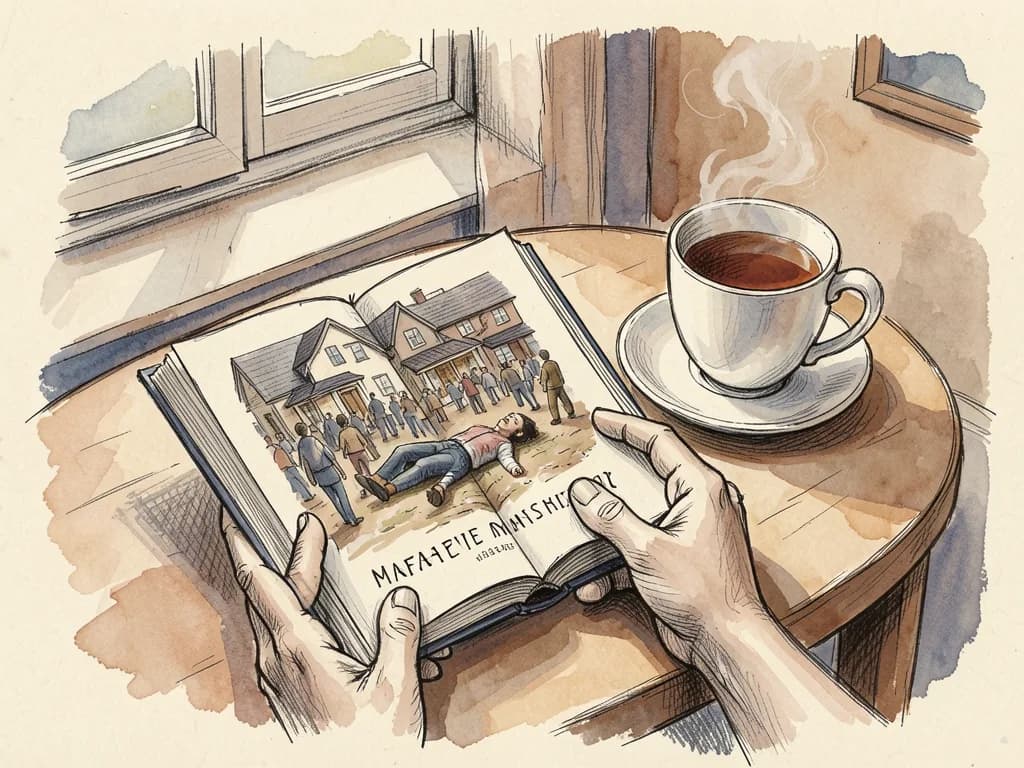
Imagine opening a novel expecting a locked-room mystery. There’s a dead body, a house full of suspects, and a detective examining the teacup. Then, three chapters later, the murder is quietly forgotten and the book becomes a family comedy. You might enjoy it. You might also check the cover for signs of administrative error.
Sam
That feeling is the subject today: the narrative promise. Not a legal contract, and not a requirement that a story behave predictably. It’s the experience a story begins to offer, often before it has explained itself.
Alex
A promise can be about plot, certainly. Will the theft be solved? Will these people reconcile? But it can also be about attention. Are we here for danger, intimacy, wonder, satire, or the slow observation of an ordinary life?
Sam
And readers start making those judgements almost immediately. The cover contributes, the title contributes, but the opening voice is usually where the story says, ‘This is how I’d like you to listen.’
Alex
Which means a narrative promise isn’t simply an answer to the question, ‘What happens?’ It’s closer to, ‘What kind of experience will make these details matter?’
Sam
Exactly. A romance may promise that a relationship will be emotionally central, even if the couple spends much of the book misunderstanding each other. A thriller may promise pressure and danger, even during a quiet conversation over soup.
Alex
Genre Guides Attention Without Dictating a Formula
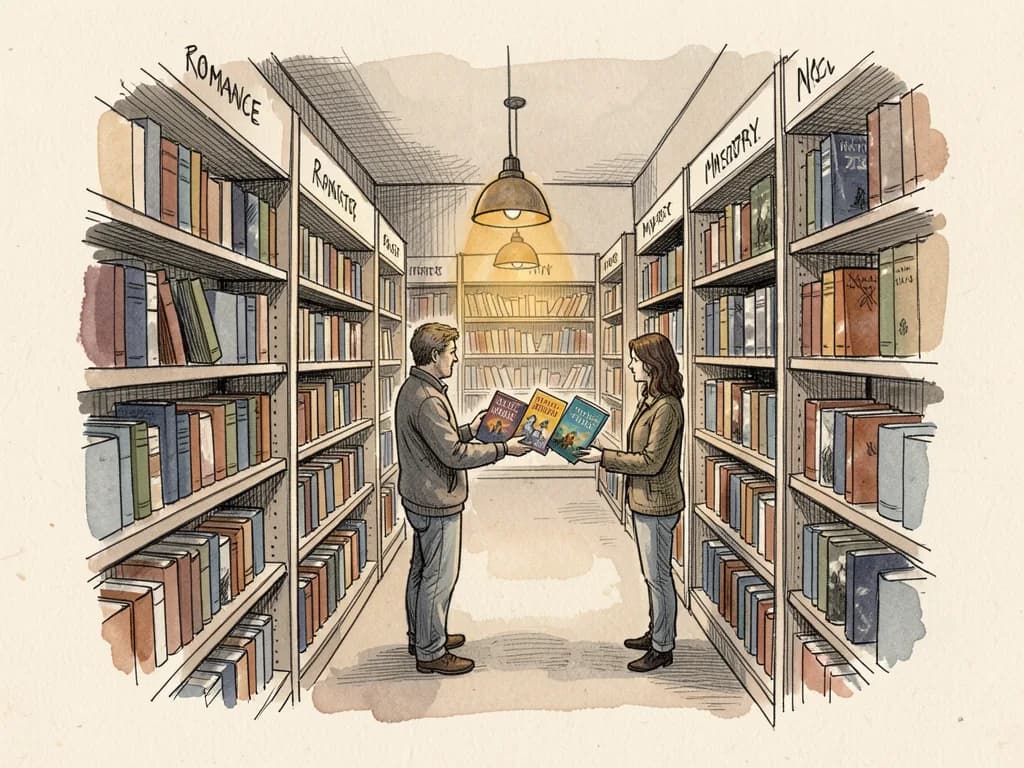
Genre is the broadest version of that welcome. It gives us familiar ingredients, but it doesn’t prescribe one recipe. A fantasy can promise a changed relationship to the world; it doesn’t have to deliver a map, a prophecy and one extremely burdened farm boy.
Sam
Genre expectations become useful when they help a reader understand what to value. In a mystery, a seemingly minor contradiction may deserve attention. In literary fiction, a repeated gesture may matter less as evidence than as a sign of emotional strain.
Alex
But that doesn’t mean every mystery detail must become a clue. We discussed this in Episode 2: emphasis creates expectation, but the payoff might be emotional, atmospheric or character-based rather than mechanical.
Sam
A highlighted key might open a door. Or it might reveal that someone keeps carrying access to a room they no longer enter. The important question is what the story has taught us to expect from the key.
Alex
Opening Chapters Establish Scale and the Question We Carry
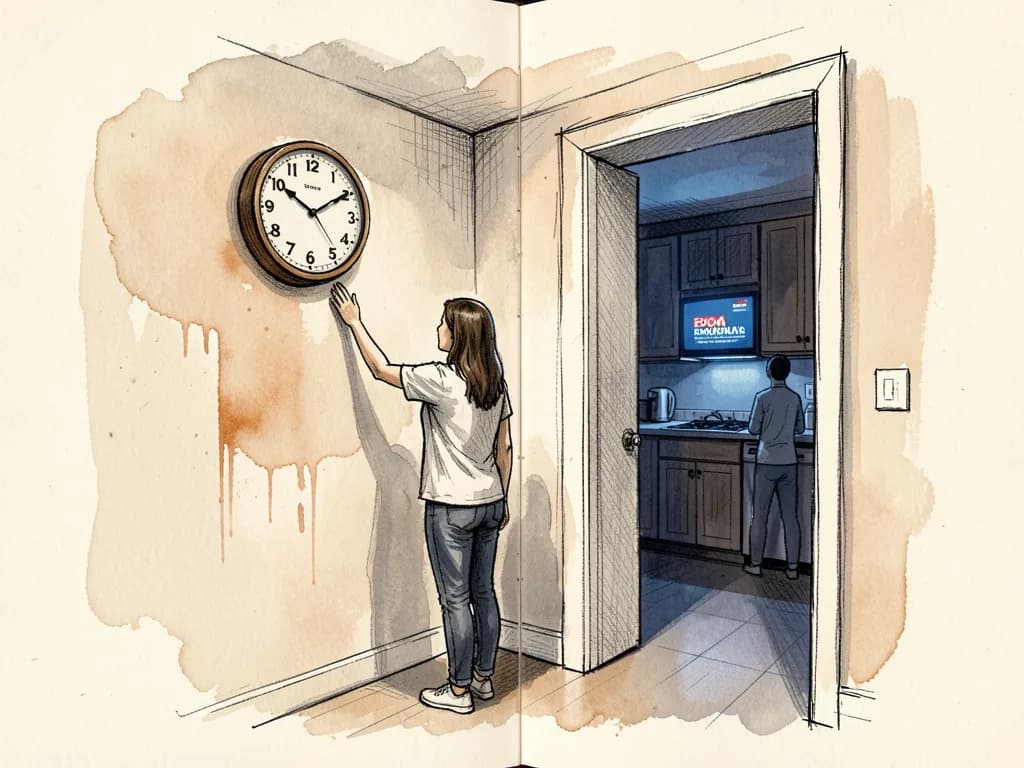
That leads to the opening chapter. Its job isn’t to explain the entire novel. It establishes the scale of attention. Are we beginning with a public crisis, a private irritation, a strange image, a person making a decision?
Sam
Picture two openings. In one, a woman spends a page noticing that her father has moved the kitchen clock. In another, the city loses power during an election night. Both can lead anywhere, but they ask the reader to lean in differently.
Alex
The clock suggests intimate disturbance. The blackout suggests systems, crowds and immediate consequence. If the first chapter lingers over the clock, then the novel suddenly treats the family as background to national events, that shift may be exciting—or it may feel like the story changed its mind.
Sam
Opening chapters also establish the kind of question we’re meant to carry. Episode 3 distinguished ‘What happens next?’ from ‘What will this person choose?’ A beginning can prioritise either, and the reader adjusts their attention accordingly.
Alex
Suppose someone receives a message from an estranged sibling. The promise might seem to be whether they reply. But if the opening has carefully shown their habits of avoidance, the deeper promise becomes whether contact can change those habits.
Sam
That connects with the unresolved question from Episode 4: what happens between them? The answer doesn’t need to be a dramatic reunion. A story may fulfil its promise by showing one person finally listening, even while the relationship remains uncertain.
Alex
Point of View Creates a Relationship to Knowledge
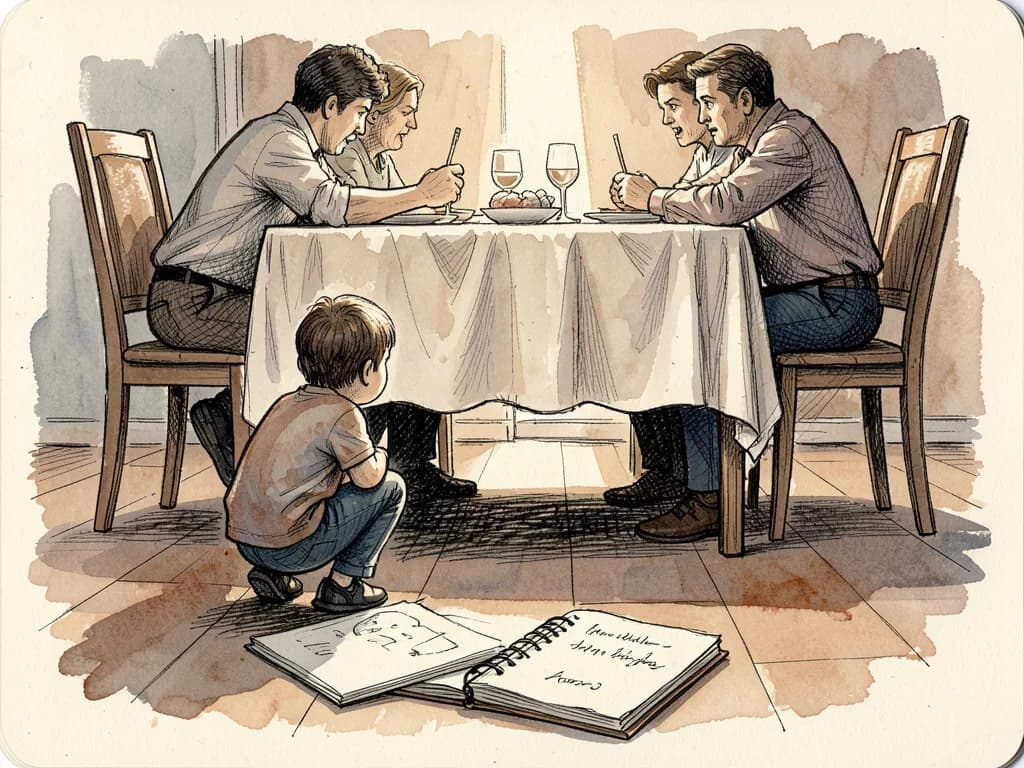
Now point of view complicates things. Choosing a viewpoint isn’t just choosing a camera position. It promises a particular relationship to knowledge: what we can know, what we can misunderstand, and whose inner life receives weight.
Sam
A close first-person narrator invites intimacy, but it may also invite limitation. If that narrator suddenly reports another character’s private thoughts with no explanation, the issue isn’t merely technical. The story has altered the terms of trust.
Alex
And an apparently omniscient voice can promise breadth. It may move from a child under a table to the adults arguing upstairs. That movement tells us the story is interested in a whole social field, not only one person’s secret.
Sam
Though viewpoint can break its own pattern deliberately. A detached narrator might suddenly reveal a private fear. That can feel powerful if the shift makes us reinterpret the distance. It feels accidental when it simply solves a problem the writer couldn’t otherwise explain.
Alex
Tone works similarly. A wry, playful voice can discuss grief without becoming shallow, but it has taught us to notice absurdity alongside pain. If the prose suddenly becomes solemn and ceremonious, the change needs to mean something.
Sam
Tone isn’t the same as mood, either. Mood can change scene by scene. Tone is more like the story’s attitude toward what it shows: tender, suspicious, amused, horrified, or some unstable mixture.
Alex
Tone Can Shift, But the Shift Must Change Meaning
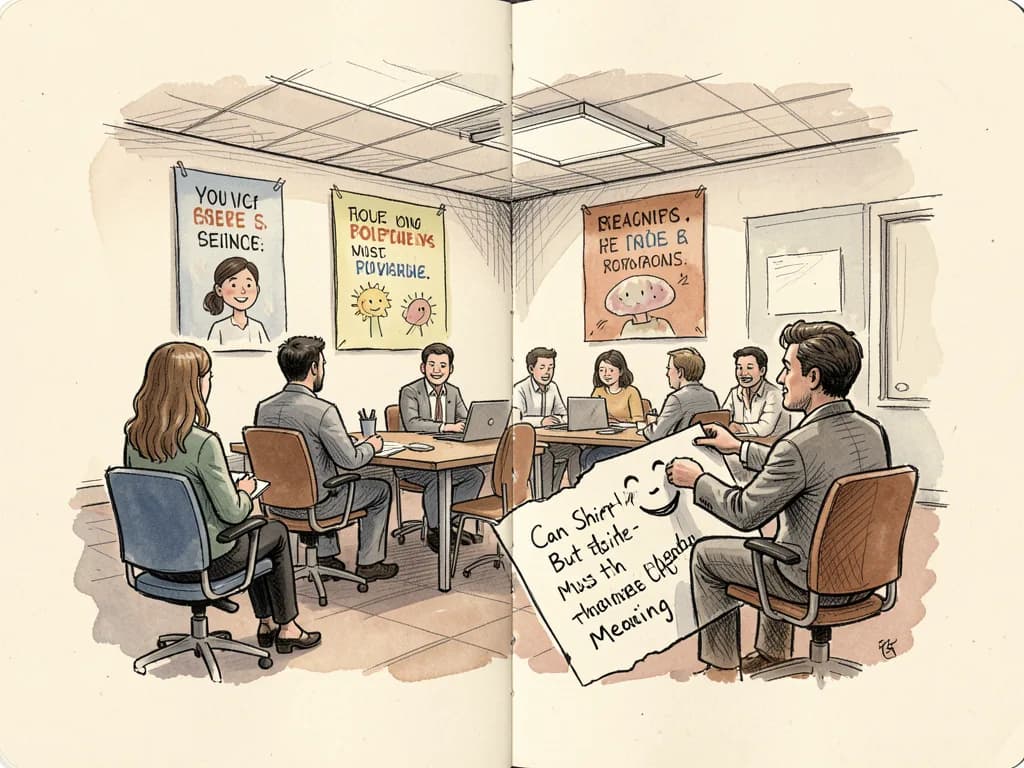
A tonal shift can be the point. Imagine a comic office novel in which the jokes gradually stop landing because the workers realise the company’s cheerful language is hiding something cruel. The reader’s discomfort is a developed promise, not a random detour.
Sam
The test is whether the shift changes our understanding of what came before. Surprise alone isn’t enough. A story can be unpredictable and still feel unrelated to itself, like someone bringing a trombone to a burglary.
Alex
So how should a writer work with promises? First, identify what the opening makes readers anticipate. Not just events, but forms of attention. What are they waiting to understand, feel or see transformed?
Sam
Then ask whether the later story responds to that anticipation. It can fulfil it, redirect it, or expose it as a mistaken assumption. But the redirection should create a new, meaningful question rather than leaving the original interest stranded.
Alex
Revision Means Identifying and Answering the Invitation
That’s the difference between a broken promise and a complicated one. If a detective story reveals that the detective has misunderstood the case, the mystery hasn’t necessarily failed. The reader’s question has changed from ‘Who did it?’ to ‘Why was this interpretation so persuasive?’
Sam
And there are stories whose promise is uncertainty itself. An atmospheric novel may not owe us a neat explanation for every image. But it still owes us a coherent experience of uncertainty—patterns, pressures and consequences that make ambiguity feel inhabited rather than unfinished.
Alex
Surprise Can Complicate a Promise Rather Than Break It
Which brings us back to the reader’s trust. Trust doesn’t mean giving the reader everything they expect. It means making the changes in expectation legible enough that surprise becomes discovery instead of paperwork.
Sam
A useful revision question might be: if someone described only my first chapter, what story would they think they were entering? Then: does the rest of the book answer that invitation, argue with it, or accidentally ignore it?
Alex
Trust Allows Ambiguity When the Experience Feels Deliberate
And for readers, noticing promises can enrich the experience without turning us into auditors. We can ask what the story is teaching us to care about, then allow it to revise that lesson.
Sam
Because the best promise is rarely ‘you will predict everything correctly.’ It’s more often ‘your attention will be rewarded, even if the reward is a changed understanding rather than a tidy answer.’
Alex
So when a story opens with a clock, a body, a joke, or a voice whispering from the dark, we can listen for the invitation beneath the information.
Sam
What kind of world is this? Whose experience matters here? What sort of change is possible? And if the story later surprises us, has it made that surprise part of the experience it promised?
Alex
That may be the most generous way to think about narrative promises: not rules that trap a story, but a relationship it begins with the reader.
Sam
A relationship that can deepen, quarrel and even change its mind—provided the change itself has been made meaningful.
Alex
And unlike the abandoned murder mystery, it should at least remember why we picked up the teacup in the first place.
Still open
- What kind of world is this?
- Whose experience matters here?
- What sort of change is possible?