Podcast · Episode 1
Episode 1: Why Stories Work — Cause and Effect
Alex and Sam explore how consequences turn a sequence into a story, why readers look for motives, and where the appeal of a neat causal explanation can mislead us.
Alex & Sam · About 5 min
Listen here and keep browsing. Your place is saved. Autoplay continues through this programme; switch it off in the player.
Read the conversation
Alex
An event that changes the next event
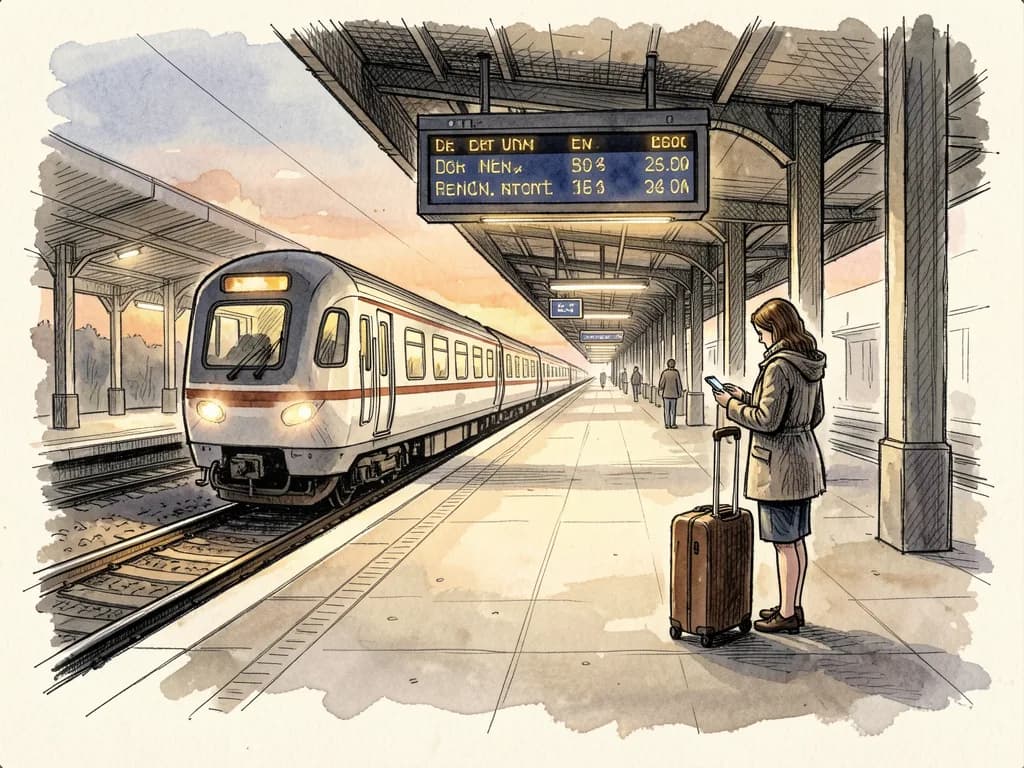
Imagine a woman misses a train. She buys a coffee. She phones her brother. Three things have happened. But do you feel a story beginning, or just someone having a rather expensive morning?
Sam
I'm waiting to discover whether the coffee matters. Though missing a train already gives me a small grievance to enjoy.
Alex
Now change the connections. She misses the train, so she cannot reach an important appointment. With no other way there, she phones the brother she has been avoiding.
Sam
Ah. The missed train has cornered her. The phone call isn't merely next; it's something the first event makes necessary.
Alex
That's our starting distinction: chronology tells us what followed. Causality tells us how one thing altered the conditions for another.
Sam
And suddenly I'm interested in two directions. Will he answer? And what happened between them? A connection creates both anticipation and curiosity.
Alex
Desire turns pressure into choice

But consequences alone aren't enough. A suitcase falls, knocks over a cup, and wets a newspaper. That's a causal chain. It might still be dull.
Sam
Unless someone desperately needs that newspaper dry. So we need a desire, not necessarily a bigger accident.
Alex
Often, yes. In our station scene, she wants to reach the appointment, but she also wants to avoid her brother. The delay brings those wants into conflict.
Sam
Which makes calling him a choice. Another person might abandon the appointment rather than ask. Her response begins to tell us who she is.
Alex
Exactly. An event creates pressure; a person responds; that response changes the situation. Character isn't only a description attached to the action. It helps produce the action.
Sam
And the appointment needn't involve saving the world. If we understand why it matters to her, a small decision can carry considerable weight.
Alex
The reader supplies the connection

Notice, though, we don't have to write 'therefore' everywhere. Imagine she watches the train leave, scrolls past several contacts, then stops at her brother's name.
Sam
I'd infer reluctance from that pause. Explaining every link could actually take something away: the pleasure of working it out.
Alex
Readers can participate by supplying connections. But they need enough to work with. A withheld explanation feels different when the story gives us a clear reason to want it.
Sam
So 'something mysterious happened' is a weaker invitation than 'she needs help from the one person she won't call'. The second gives the mystery an edge.
Alex
Yes. Suspense can come from understanding the predicament while not knowing the outcome. We see the narrowing options before we see the decision.
Sam
And order matters. Start with the phone call, reveal the missed train later, and the same causal chain becomes a small puzzle rather than a forward countdown.
Alex
A convincing story is not proof

Here's the caution: this isn't a law that every worthwhile story must obey visibly. Some stories draw their force from atmosphere, association or accumulated ordinary moments.
Sam
I'd also resist a world where everything happens for a reason. Real trains get cancelled without consulting anyone's character development.
Alex
Quite. Chance can create the predicament. What follows may still grow from choices. Causal storytelling doesn't require a universe deliberately teaching the protagonist a lesson.
Sam
There's a reading danger here too. A beautifully connected account of a business failure or a political decision can feel true because it feels complete.
Alex
But coherence isn't evidence. Outside fiction, 'this happened before that' doesn't establish 'this caused that'. Other explanations and missing circumstances still matter.
Sam
So we can enjoy the satisfaction of a causal story while asking whether the connection has actually been earned.
Alex
Ask what each moment changes
For writing, try this: take three consecutive moments and ask what each changes. Not just what happens next, but what becomes possible, difficult or unavoidable.
Sam
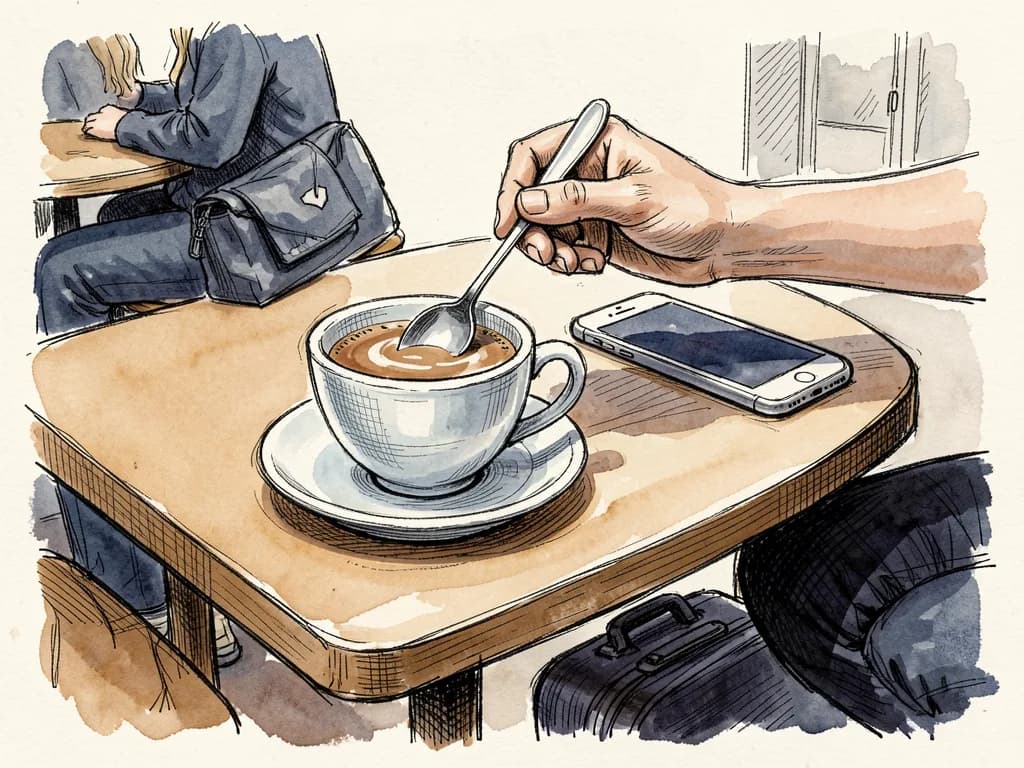
And if the answer is 'nothing', don't automatically delete it. That coffee might give us a needed breath, or show her trying to postpone the call.
Alex
Yes. It's a diagnostic, not a commandment. You might discover a missing consequence, an unnecessary incident, or a quiet moment doing another kind of work.
Sam
Our coffee has improved, then. At first it was simply a purchase. Now she might keep stirring it because once she puts the spoon down, she'll have to act.
Alex
And the story isn't really about a train anymore. It's about how an interruption brings an avoided relationship back within reach.
Sam
That's the difference I want to keep: not merely another thing happening, but the next thing happening in a world the previous moment has changed.
Still open
- Will he answer?
- What happened between them?