Podcast · Episode 2
Chekhov’s Gun: When the Gun Shouldn’t Fire
Alex and Sam examine what Chekhov’s Gun actually means, why it is often misused as a rigid storytelling commandment, and how deliberate irrelevance can make fiction feel more convincing. They distinguish planted promises from ordinary texture, explore examples involving a gun, a key and a family photograph, and finish with a practical test for deciding whether a detail earns its place.
Alex & Sam · About 6 min
Listen here and keep browsing. Your place is saved. Autoplay continues through this programme; switch it off in the player.
Building on earlier episodes
Read the conversation
Alex
A conspicuous object creates a promise
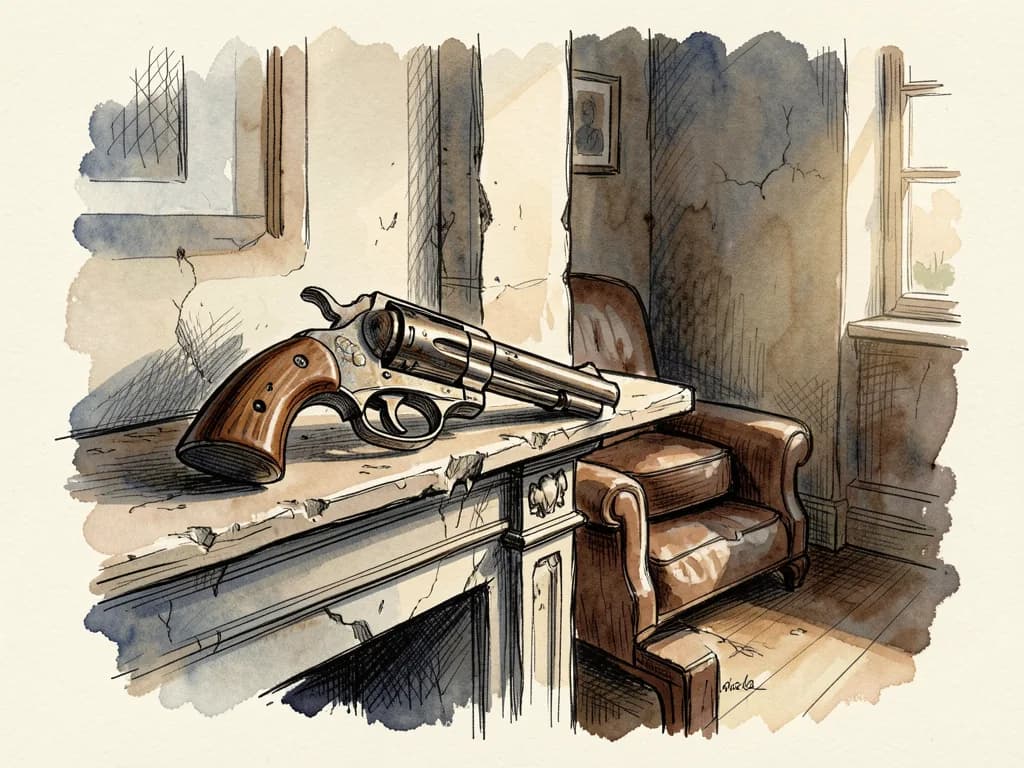
Imagine a sitting room. On the mantel is an old revolver. Nobody mentions it, but the camera—or the reader—keeps noticing it. What are we supposed to expect?
Sam
Probably trouble. The object has acquired a little spotlight, and our minds are excellent at turning spotlights into promises. We start waiting for somebody to pick it up.
Alex
That expectation is the heart of Chekhov’s Gun. In its useful form, it says that a conspicuously introduced element should matter later, because emphasis teaches the audience to watch.
Sam
But it is often repeated as if it means every object must become a weapon, every detail must return, and every loose thread must be tied with a tiny knot.
Alex
Which produces stories where a character mentions a broken toaster in chapter two, and by chapter twelve the toaster has somehow exposed the murderer.
Sam
A magnificent appliance, perhaps, but not necessarily a convincing one. The principle is about managing attention, not obeying an inventory checklist.
Alex
Payoff can change meaning, not just trigger action
So what makes an object a gun in this sense? Not merely that it exists, but that the story gives it unusual emphasis, specificity or dramatic charge.
Sam
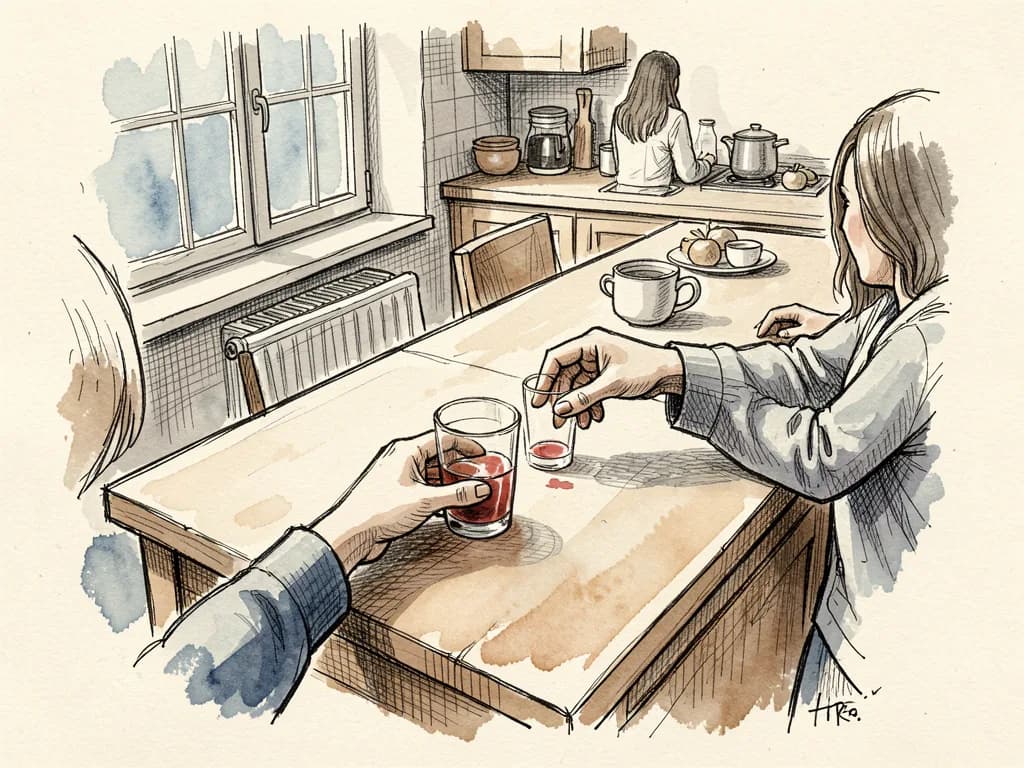
Exactly. A plain glass on a crowded table may be nothing. But if the narration lingers on the lipstick mark, the trembling hand and the glass being moved out of reach, possibilities open.
Alex
The object has changed the conditions of the scene. It may become evidence, temptation, danger—or simply reveal that someone is trying very hard not to drink.
Sam
And that last possibility matters. A planted detail does not need to produce a spectacular event. It can alter our understanding of a person or a relationship.
Alex
A photograph on a desk might later identify a hidden relative. Or it might never leave the desk, while showing us the person’s attachment to a past they cannot discuss.
Sam
The common mistake is treating payoff as a mechanical function. Writers hear “make it matter” and assume the object must unlock a door, reveal a culprit or save somebody.
Alex
Rigid payoff turns stories into machinery
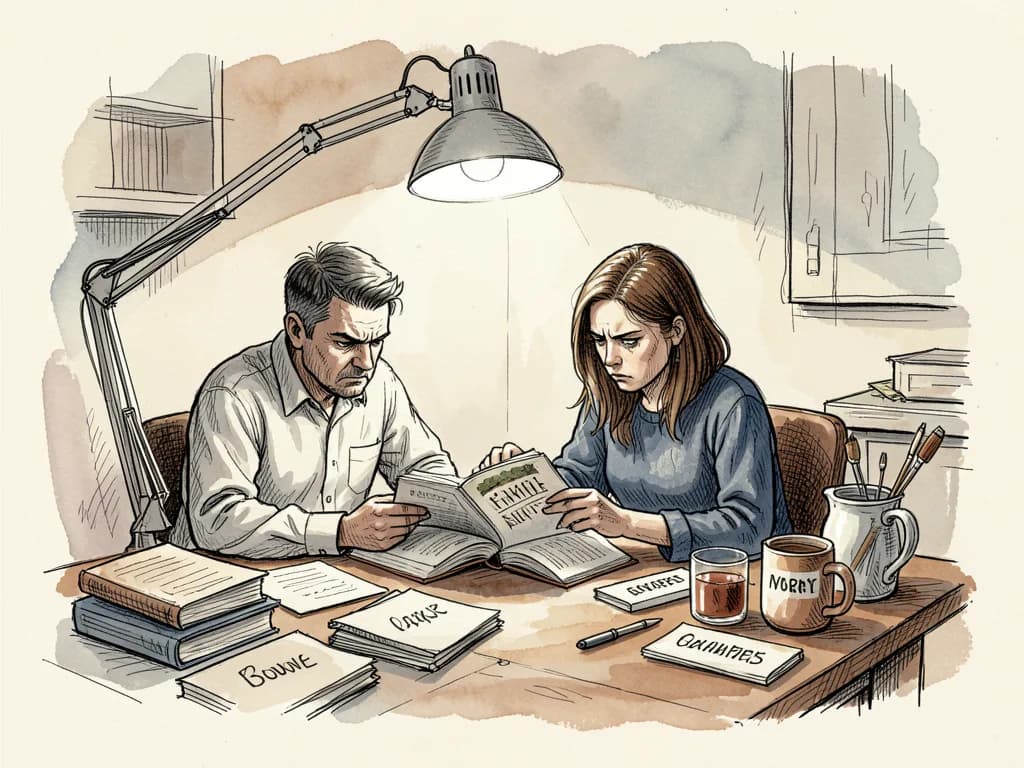
That makes stories feel engineered. Every prop starts wearing a little badge saying, “Please remember me. I am secretly important.”
Sam
And once you notice the machinery, suspense can shrink. Instead of inhabiting the scene, we become auditors, checking whether the furniture has fulfilled its contractual obligations.
Alex
There is also a difference between a promise and a possibility. A brightly described knife on a bedside table may promise danger; a bowl of oranges probably does not.
Sam
Though if the oranges are described for three paragraphs, I reserve the right to become suspicious. Attention has consequences, even when the writer did not intend them.
Alex
That is why deliberate irrelevance can improve realism. In life, we notice objects for reasons that do not become plot. A room contains unfinished intentions.
Sam
Someone buys concert tickets and then gets ill. A child rehearses an apology but never delivers it. A spare key sits in a drawer after the relationship ends.
Alex
Irrelevance can create lived-in reality
If every one of those details pays off neatly, the world can feel less like lived experience and more like a machine designed to reward attention.
Sam
Still, irrelevance must be deliberate. Random clutter is not automatically realism. The writer can choose a detail because it creates atmosphere, contradiction or emotional pressure without becoming a plot device.
Alex
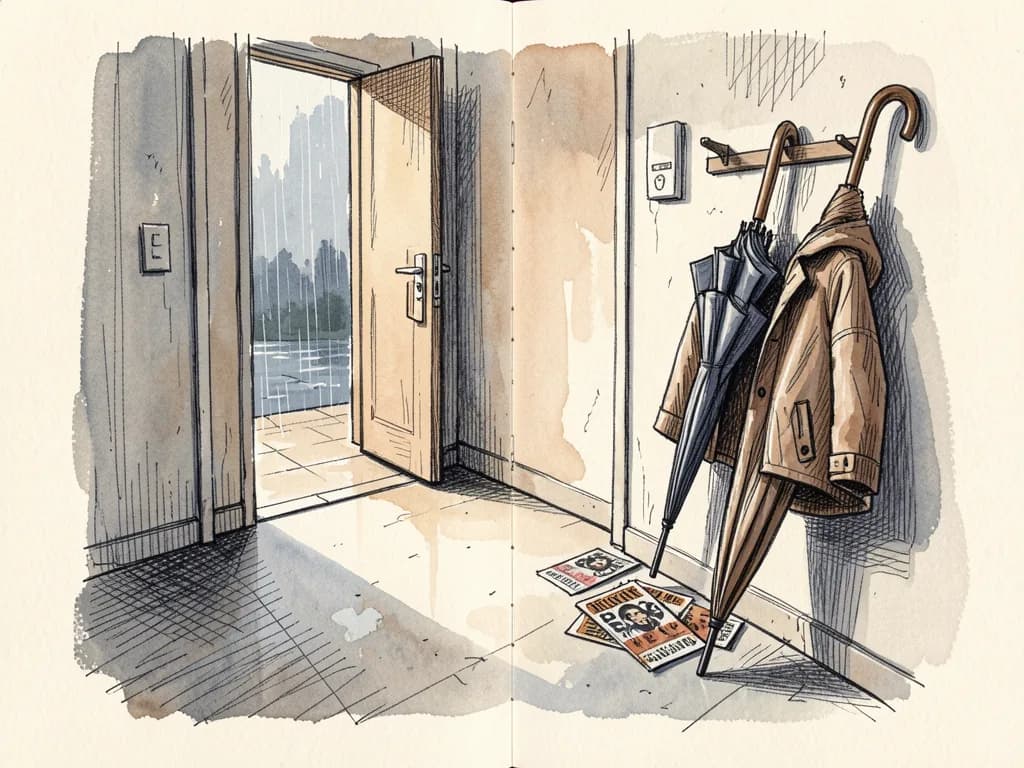
Consider an imagined crime story. The detective notices a child’s blue raincoat hanging by the door. It never identifies the criminal. But it makes the house feel inhabited, and the investigation more morally costly.
Sam
Or it might become a false lead, not because the author is cheating, but because people in the story make reasonable guesses from incomplete evidence.
Alex
That connects to what we explored in Episode 1: coherence can make a sequence satisfying, but coherence is not proof that everything was caused by a grand design.
Sam
Right. A story can use causality as a diagnostic without pretending that every event in a life has a tidy purpose. Chekhov’s Gun should receive the same treatment.
Alex
Revise the expectation, not every object
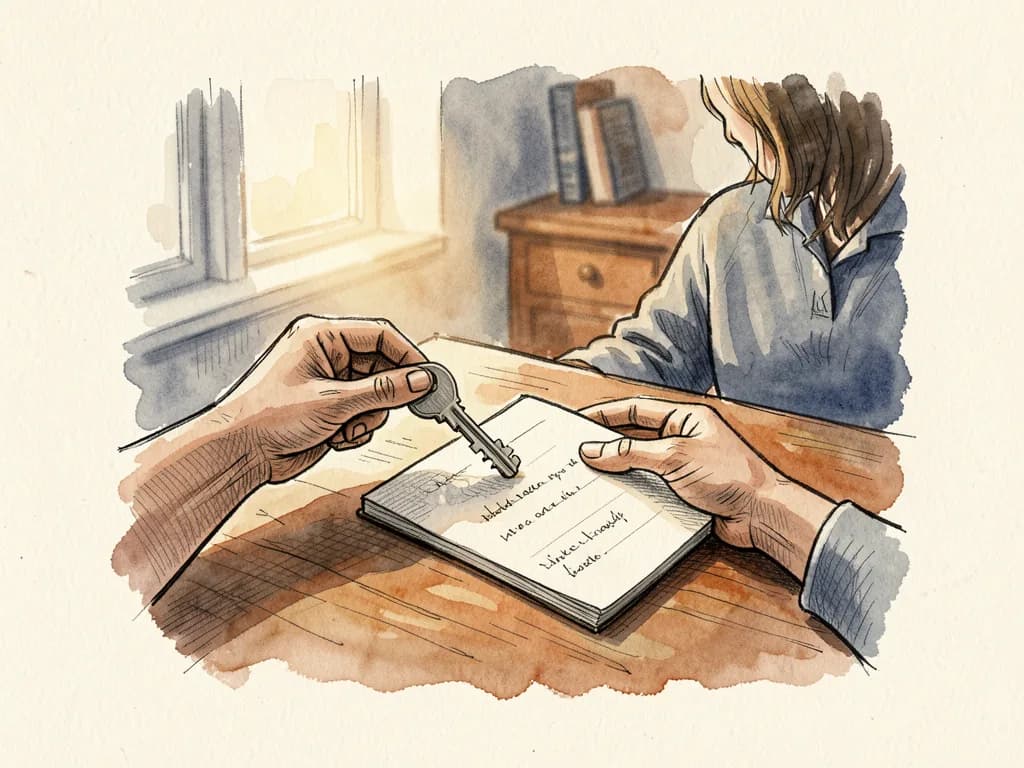
Here is a practical revision question: what expectation does this detail create, and what kind of answer does the story actually need to provide?
Sam
If the answer is “none,” you can still keep it. Perhaps it gives a character texture, makes a setting specific or creates a silence around what remains unexplained.
Alex
But if the story repeatedly points at an object, then forgets it, the reader may feel not intriguingly uncertain but accidentally abandoned.
Sam
So the gun does not always need to fire. Sometimes it needs to be unloaded, sometimes it needs to reveal who placed it there, and sometimes it should never have been highlighted.
Alex
The craft lies in knowing which promise you made. Once you control that promise, you can fulfill it, twist it, soften it—or consciously leave it beside the road.
Sam
And that is the useful version of the principle: not “everything must matter,” but “attention is meaningful.” Spend it carefully, then let the story remain larger than its mechanisms.