Reality is a conditional output of models, measurements, and scale—not a fixed backdrop waiting to be noticed.

Previous · Part 1
Observation Isn’t Passive: The Measurement Problem in Ten Quiet Moves

Next · Part 3
You Don’t See the World—You See the Model
This builds on Part 1: Observation Isn’t Passive: The Measurement Problem in Ten Quiet Moves
Continue with Part 3: You Don’t See the World—You See the Model
Time Isn’t One Thing
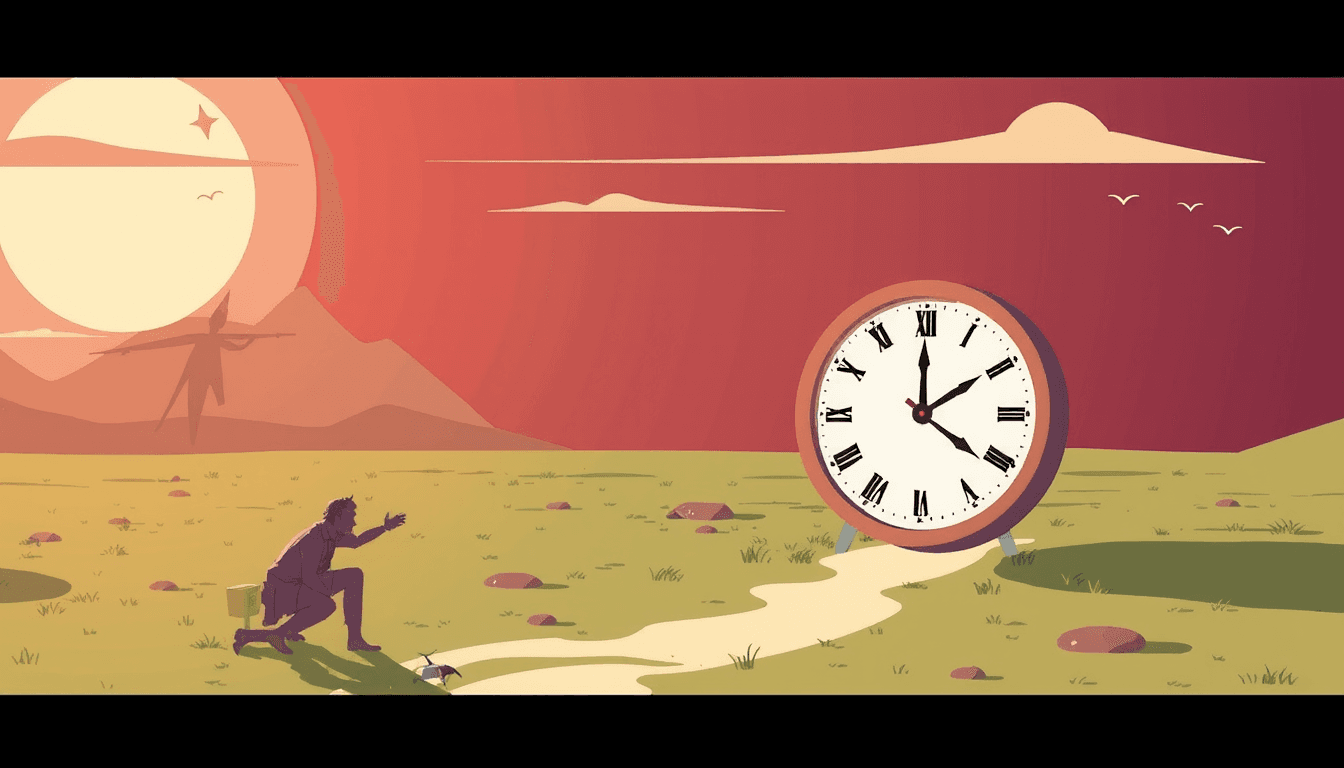
If you’ve ever felt that time is “just passing,” you’re in good company. Most of our language assumes a single, universal clock—one shared stream that everything rides along.
Physics quietly disagrees.
In this dispatch, we’ll zoom in on time dilation and the practical proof baked into modern navigation: GPS.
Not philosophy. Measurement.
The Core Shift: There’s No Universal “Now”
Here’s the uncomfortable-but-liberating frame:
There is no universal clock ticking for everyone.
Your experience of time depends on how you’re moving and where you are in a gravitational field.
That means “Now” is not a single shared coordinate. It’s more like a local outcome of your state relative to the physical universe.
What Time Dilation Actually Means (Simple, Not Simplistic)
Time dilation says: moving clocks tick differently than resting clocks.
And gravity adds its own twist: clocks in weaker gravity tick differently than clocks in stronger gravity.
So when you say “time passes,” you’re using a human shorthand. In relativity, time passing is conditional.
The Evidence You Can Touch: Atomic Clocks
Atomic clocks are built to be brutally consistent. They don’t “feel” time. They count transitions at extremely stable frequencies.
That’s why they’re ideal witnesses to relativity. If you change motion or gravity, their tick-rate changes in measurable ways.
Planes and Satellites: Relativity in the Air
When atomic clocks are flown on planes, or placed on satellites, they experience different conditions than clocks on the ground.
Unlock the full paid series
Get all 10 parts of Reality Isn’t Stable — 45 min read · 8,873 words across the full sequence.
Inside the series
Parts 1-2: Context changes what’s real
Parts 3-4: Perception as inference, not a record
Parts 5-6: Joined systems break classical stories
Parts 7-9: Models, regimes, and the limits of “nothing”
Part 10: Probability and sanity checks
Reality is a conditional output of models, measurements, and scale—not a fixed backdrop waiting to be noticed.
Membership gives access to subscriber dispatches and ongoing Pen & Muse tools. This paid series is sold separately.
If this resonates, see how to apply it to your own work with the interactive Dispatch agent.
Be first to like this dispatch