Reality is a conditional output of models, measurements, and scale—not a fixed backdrop waiting to be noticed.

Previous · Part 2
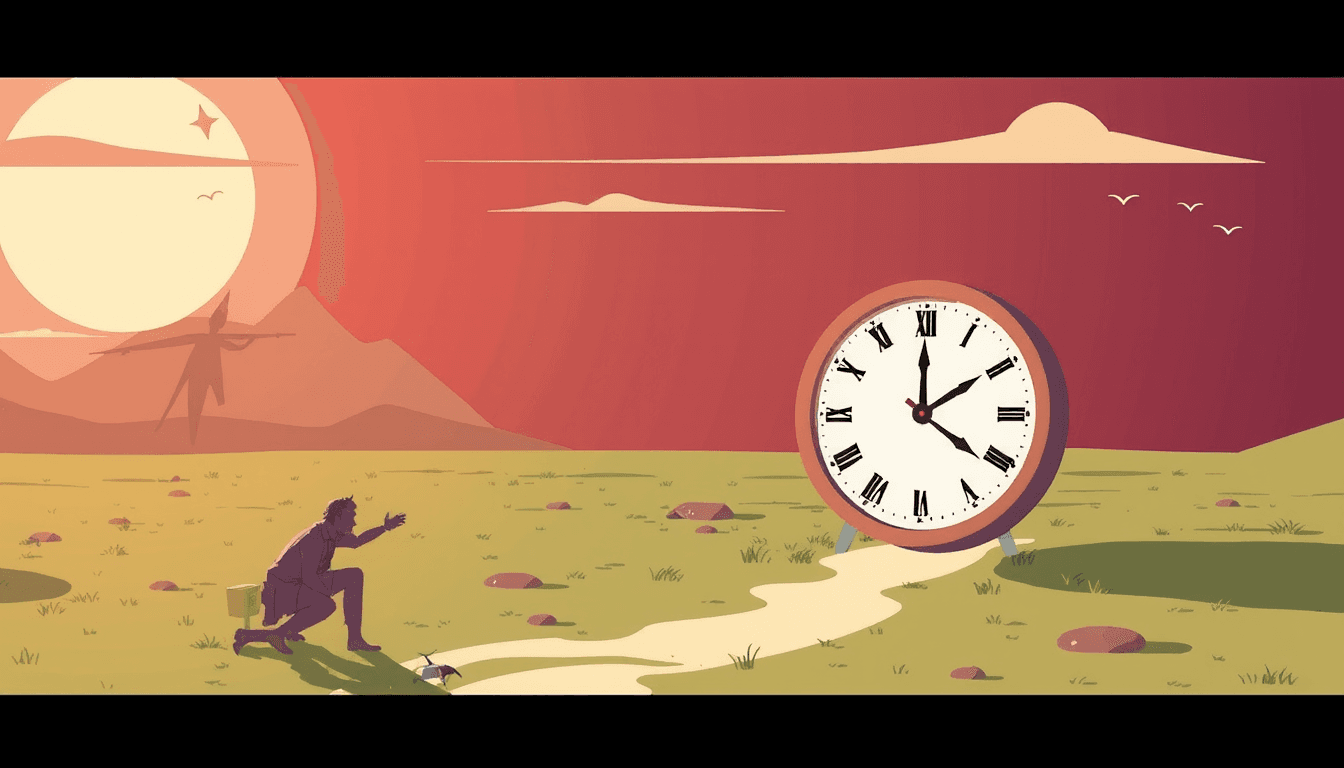
The Lie We Call “Now”: How Time Breaks Its Own Rule

Next · Part 4
Solid Isn’t Solid: The Truth of Touch
This builds on Part 2: The Lie We Call “Now”: How Time Breaks Its Own Rule
Continue with Part 4: Solid Isn’t Solid: The Truth of Touch
Your eyes don’t deliver reality. They negotiate it.
When you “look at the world,” you’re not receiving a video feed. You’re watching a reconstruction. Not because you’re deceived by some external trick—but because the brain is built to predict.
This matters because “what you see” is the interface your organism uses to navigate uncertainty—not the raw substrate of existence.
Optical illusions aren’t puzzles. They’re probes.
Consider the simplest illusion: a line that looks bent. Or a pattern that seems to move when it’s actually still. The trick is not in your eyes. The trick is in the brain’s assumptions.
Your visual system solves an engineering problem 1000 times per second:
- What is happening?
- Where is it relative to me?
- What will it do next?
- Is it safe to treat it as stable?
The illusion works because it targets the shortcuts your system relies on. It doesn’t defeat your perception by causing random errors. It defeats it by producing input that makes the brain’s best guess plausible in the wrong way.
Predictive processing: the brain completes the missing frames
A useful mental model is this: your brain continuously generates a prediction, then compares it to incoming sensory data. If the match is close enough, you experience stability. If not, you experience correction—sometimes rapidly, sometimes only after a delay.
That’s why visual experience can feel so immediate while still being reconstructed. The “now” you see is always slightly ahead of—or slightly detached from—raw input.
Unlock the full paid series
Get all 10 parts of Reality Isn’t Stable — 45 min read · 8,873 words across the full sequence.
Inside the series
Parts 1-2: Context changes what’s real
Parts 3-4: Perception as inference, not a record
Parts 5-6: Joined systems break classical stories
Parts 7-9: Models, regimes, and the limits of “nothing”
Part 10: Probability and sanity checks
Reality is a conditional output of models, measurements, and scale—not a fixed backdrop waiting to be noticed.
Membership gives access to subscriber dispatches and ongoing Pen & Muse tools. This paid series is sold separately.
If this resonates, see how to apply it to your own work with the interactive Dispatch agent.
Be first to like this dispatch