Podcast · Episode 8
Mystery Versus Confusion: The Information a Story Owes Us
Alex and Sam examine the fine line between an intriguing mystery and simple confusion. Through imagined examples involving a blue door, a missing key and an unexpected guest, they explore what information an audience needs, how mystery differs from suspense and dramatic irony, why ambiguity can be satisfying, and how a reveal should change the meaning of what came before.
Alex & Sam · About 9 min
Listen here and keep browsing. Your place is saved. Autoplay continues through this programme; switch it off in the player.
Building on earlier episodes
Read the conversation
Alex
A Mystery Needs a Legible Question
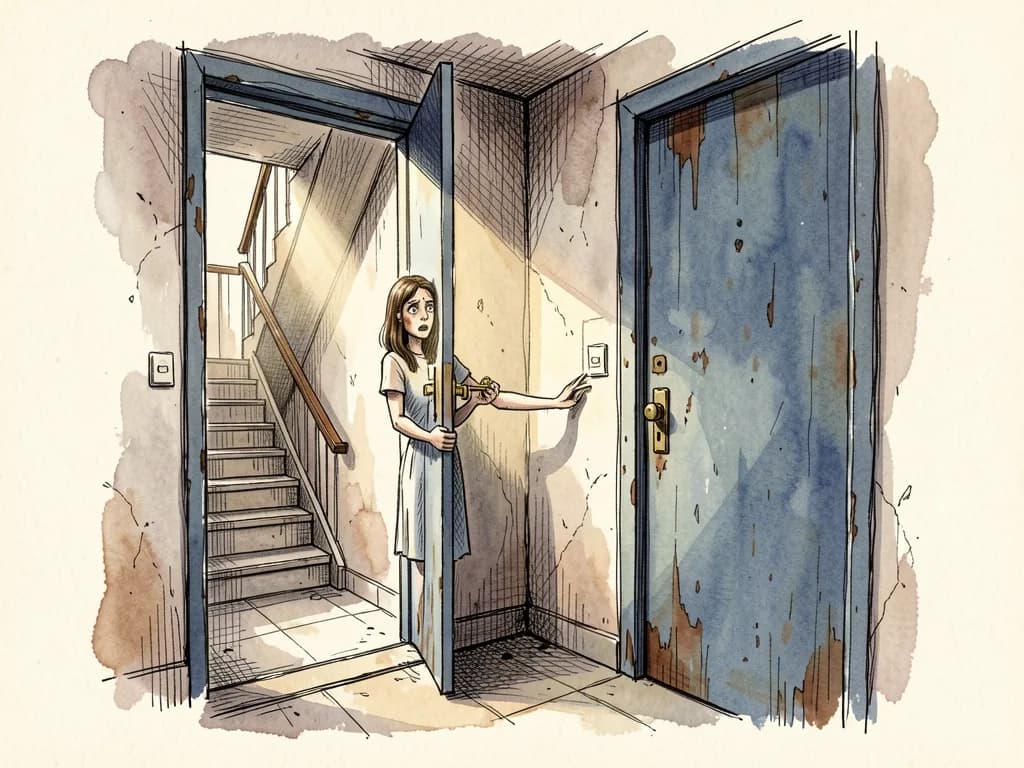
Imagine a story opens with a woman standing outside a blue door. She has a key, she’s visibly afraid, and the person inside has just called her name. We don’t know who’s behind the door. That feels like a mystery.
Sam
Now remove the key, the fear, and the name. She’s simply standing near a blue door while someone has apparently made a decision somewhere else. We may still be curious, but we don’t know what question we’re asking.
Alex
And that is the difference we’re exploring today: mystery withholds an answer, while confusion withholds the information needed to understand the question itself. One invites attention. The other makes attention feel like unpaid admin.
Sam
Mystery says, ‘There is something here you don’t yet know.’ Confusion says, ‘There is something here, but I’m not sure whether it matters, and I’d like a map before I continue.’
Alex
The distinction matters because stories often begin in uncertainty. We don’t need a full biography, a diagram of the family tree, or a labelled tour of every room. We do need a foothold.
Sam
A useful foothold might be a desire, a disturbance, or a risk. The woman wants to enter. Something has made entering dangerous. Already, the unknown has a shape.
Alex
Footholds: Desire, Disturbance and Risk
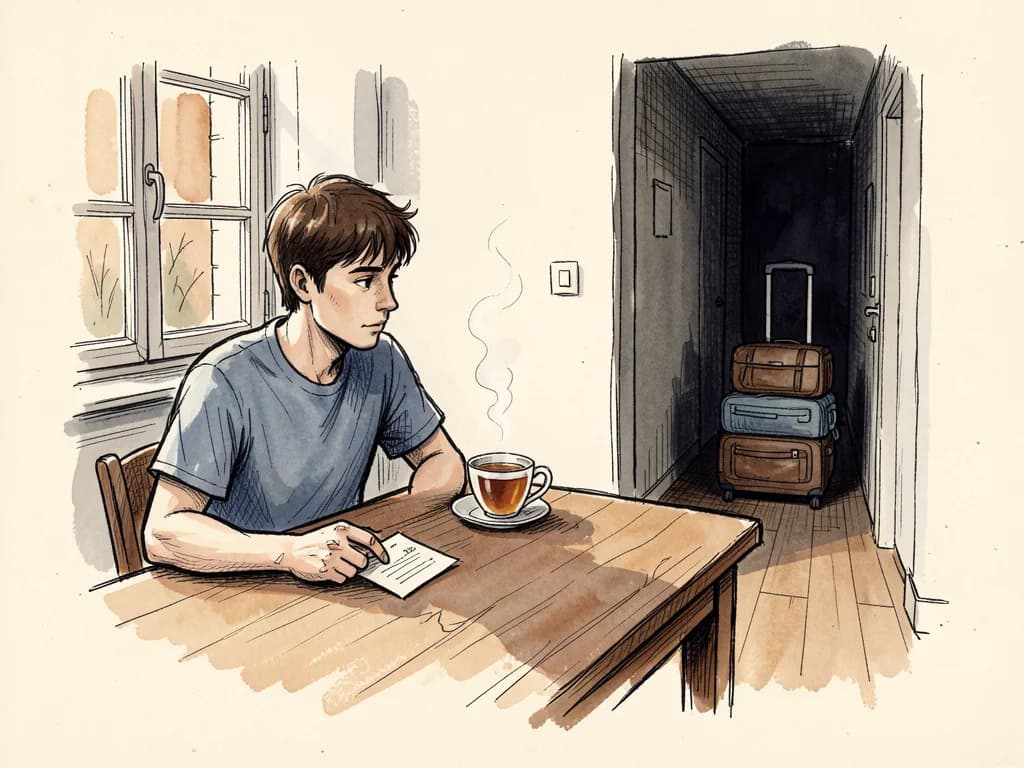
That connects with Episode 3, where we treated a dramatic question as more than ‘What happens next?’ The stronger question is often, ‘What will this person do, and what will that choice mean?’
Sam
Exactly. If the woman wants to enter but fears what she’ll find, the mystery has emotional pressure. If we don’t know whether she lives there, owns the building, or wandered in from a bus stop, the uncertainty may be decorative rather than dramatic.
Alex
So the audience doesn’t need every fact. They need to understand the situation well enough to form a meaningful expectation. We should know what kind of trouble the character is facing, even if we don’t know its source.
Sam
And we should be able to notice change. If she starts with the key in her hand and ends by putting it back in her pocket, that action means something when we understand that entering would risk a relationship, a secret, or her safety.
Alex
Without that frame, the same movement is just choreography. Key out, key in. Very tense, perhaps, if the key is beautifully lit. But the audience is not obliged to applaud the prop department.
Sam
This is where withholding can become generous or stingy. Generous withholding lets us interpret partial evidence. Stingy withholding removes the evidence and then acts surprised when we can’t solve the puzzle.
Alex
Mystery, Suspense and Dramatic Irony
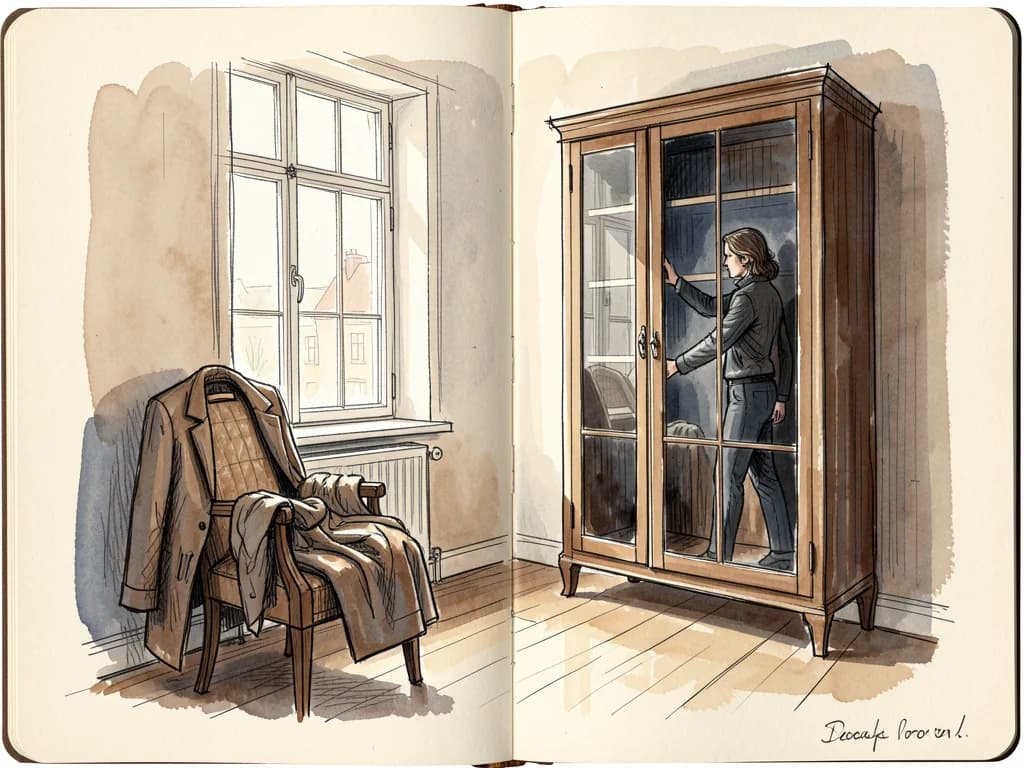
Mystery also depends on who knows what. In Episode 6, we discussed information asymmetry: different characters, and the audience, can hold different pieces of knowledge. That gap gives an action its meaning.
Sam
If we know the blue door conceals a waiting sister, but the woman thinks it is empty, we’re in dramatic irony. Her reaching for the handle becomes painful because we understand more than she does.
Alex
If neither we nor the woman know who is inside, but we share her clues and suspicions, that’s closer to mystery. We’re assembling the truth with her, rather than watching her approach a truth we already possess.
Sam
And if we know someone dangerous is inside while she cheerfully searches for her misplaced gloves, that may be suspense. The question becomes whether she will recognise the danger before acting.
Alex
The same locked room can produce three different experiences, depending on where knowledge sits. The furniture hasn’t changed. The relationship between information and choice has changed.
Sam
That helps answer a common worry: must a story explain everything quickly to avoid confusing people? No. It can delay names, causes, even the precise nature of the danger, provided the audience can track desire and consequence.
Alex
Withholding Without Making the Audience Lost
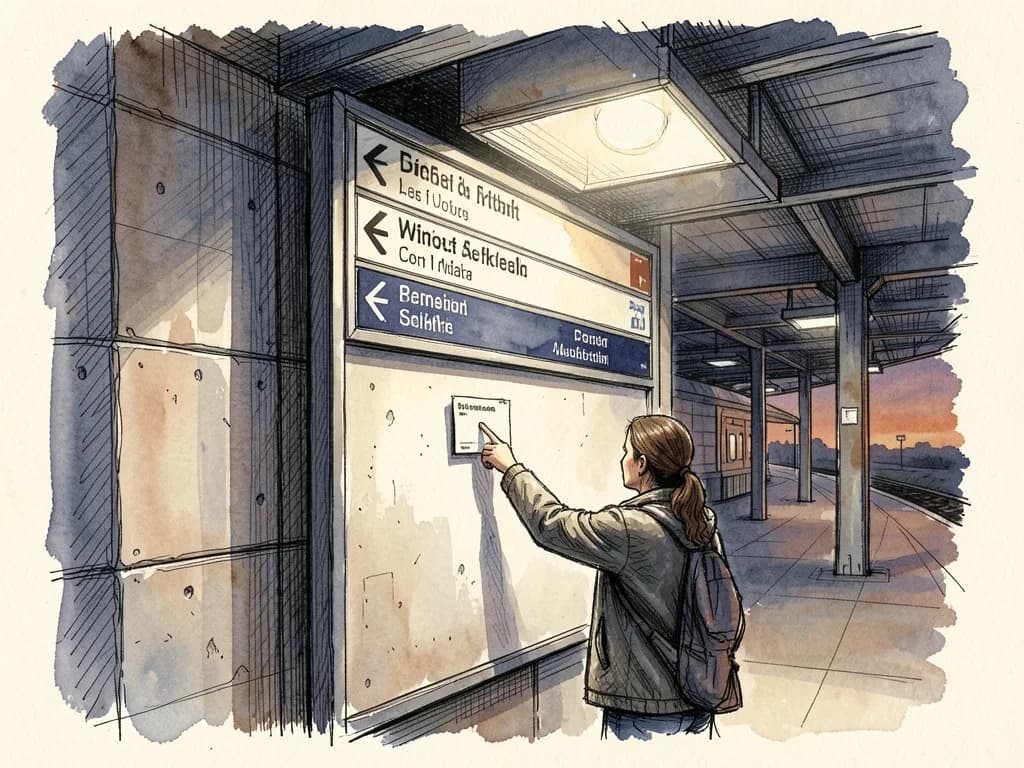
Think of a person receiving a message that says, ‘You know what you did.’ That might be a compelling opening if we understand the recipient is frightened and has been avoiding someone. It becomes weaker if we don’t know why the message arrived or why this person matters.
Sam
The phrase creates a question, but context tells us whether it is a question worth carrying. Mystery is not a magic fog machine. It needs an object of attention.
Alex
There’s also a difference between being unable to answer and being unable to imagine possible answers. A mystery lets us generate possibilities. Confusion leaves us unsure what category of possibility belongs in the room.
Sam
That’s why a reveal should not merely supply a noun. ‘It was her brother’ is information, but it may not be a payoff. The reveal needs to alter what the earlier waiting, hiding, or hesitation meant.
Alex
Suppose we learn the brother is not asking to be forgiven. He’s asking her to identify their father’s belongings before the house is sold. Suddenly the blue door is not just a threat; it is a boundary around a shared past.
Sam
And the active question changes. At first, will she enter? After the reveal, can she enter without turning the past into a courtroom? A good answer closes one uncertainty while opening a more human one.
Alex
A Reveal That Changes Earlier Meaning
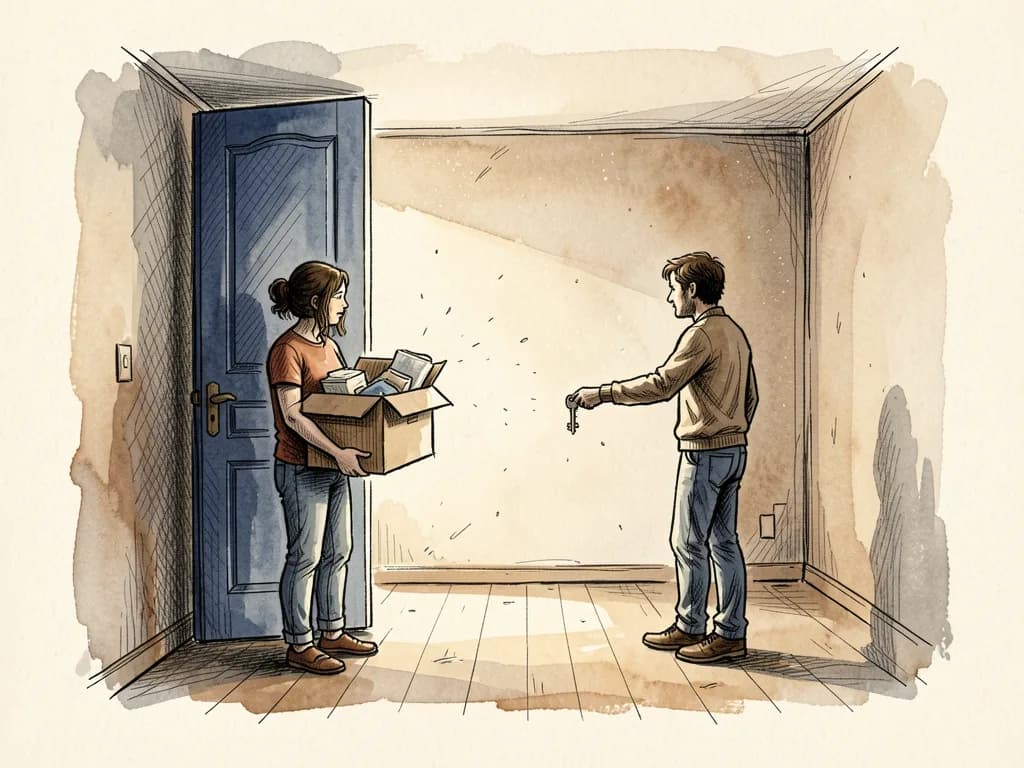
That echoes Episode 4’s idea that a payoff can be emotional or moral, not merely mechanical. The door doesn’t need to conceal a weapon for the setup to matter.
Sam
Nor does every conspicuous detail need to become evidence. Episode 2 made that useful distinction: emphasis creates expectation, but the expectation might concern character, atmosphere, or feeling rather than a plot device firing on schedule.
Alex
Still, deliberate ambiguity has to leave a remainder. We may not learn whether the siblings reconcile, but we should see what their partial understanding changes: perhaps she stays, listens, or finally hands him the key.
Sam
If the ending simply refuses to tell us what the characters wanted, what happened, or why any of it mattered, that is not automatically profound. Sometimes an open ending is a door. Sometimes it is a wall painted blue.
Alex
For writers, one practical test is to ask: what does the audience know, what can it reasonably infer, and what remains genuinely unknown? Those three categories should not collapse into one puddle of ominous nouns.
Sam
Another test is to remove the mystery temporarily and state the situation plainly. Who wants what? What might change? What does the character misunderstand? Once that foundation is clear, you can decide which facts to delay.
Alex
Testing Ambiguity During Revision
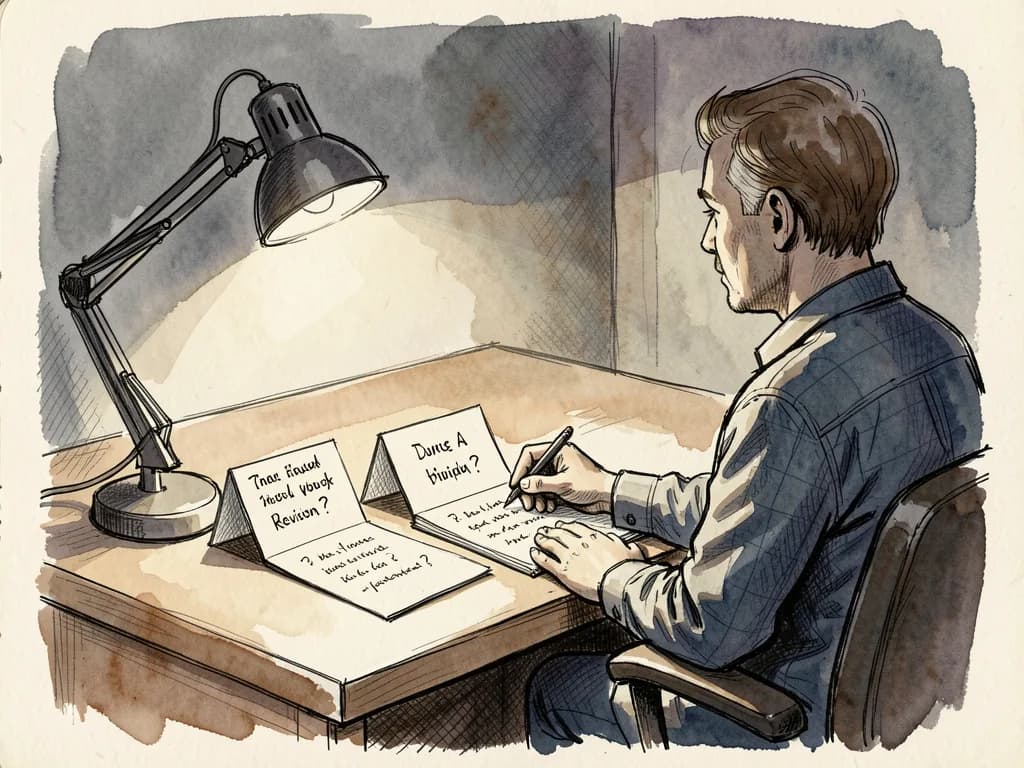
And ask what the delay does. Does it increase risk, invite interpretation, protect a point of view, or make us feel the character’s denial? If it does none of those things, the missing information may be performing no useful work.
Sam
For listeners and readers, the question can be gentler: am I intrigued because the story is giving me a pattern to follow, or am I confused because the story has not told me what kind of pattern exists?
Alex
That doesn’t mean every story must behave like a tidy investigation. Atmosphere can lead. Association can lead. A story can let us feel our way through uncertainty rather than solve it.
Sam
But even a quiet, atmospheric story usually gives us a relationship, a pressure, or a change in attention. We may not know what the blue door contains. We should know why the person keeps looking at it.
Alex
So mystery is not the absence of information. It is the careful arrangement of information: enough to make the unknown vivid, not so much that the unknown has nowhere to land.
Sam
And confusion is not simply difficulty. Difficulty can be pleasurable when we’re participating. Confusion begins when the story asks us to care before it has shown us what caring would attach to.
Alex
The satisfying ending, then, does not have to answer every question. It has to demonstrate that the unanswered questions belong to a world, to people, and to consequences we can now see more clearly.
Sam
Which brings us back to the woman and the blue door. The deepest question may not be who is inside. It may be what she is willing to know once she opens it.
Alex
That question is clear enough to carry uncertainty, and open enough to leave room for a life beyond the final scene. Mystery gives us that room. Confusion merely leaves the lights off.
Still open
- Can she enter without turning the past into a courtroom?
- Will the siblings reconcile?
- What is she willing to know once she opens it?