Podcast · Episode 9
The Principle of Consequence: What Changes After the Moment?
Alex and Sam examine why events feel meaningful when they permanently alter later possibilities. They distinguish consequence from simple sequence, explore choices and omissions, consider how objects and quiet habits accumulate significance, and ask how chance and open endings can still produce satisfying change.
Alex & Sam · About 7 min
Listen here and keep browsing. Your place is saved. Autoplay continues through this programme; switch it off in the player.
Building on earlier episodes
Read the conversation
Alex
Consequence as Changed Possibility
Here’s a simple test for a story: after something happens, can the characters still live exactly as they did before? If the answer is yes, perhaps the event was only scenery.
Sam
That sounds severe. A person can see a beautiful sunset and remain technically capable of buying groceries afterwards.
Alex
True, and stories are allowed to contain sunsets. The question is whether the moment changes a possibility: what someone can choose, risk, know, or return to.
Sam
So consequence is not just “A happened, then B happened.” It is “A altered the conditions under which B could happen.”
Alex
Exactly. That continues the distinction we made in Episode 1 between chronology and causality. But consequence adds a useful pressure test: what remains different afterwards?
Sam
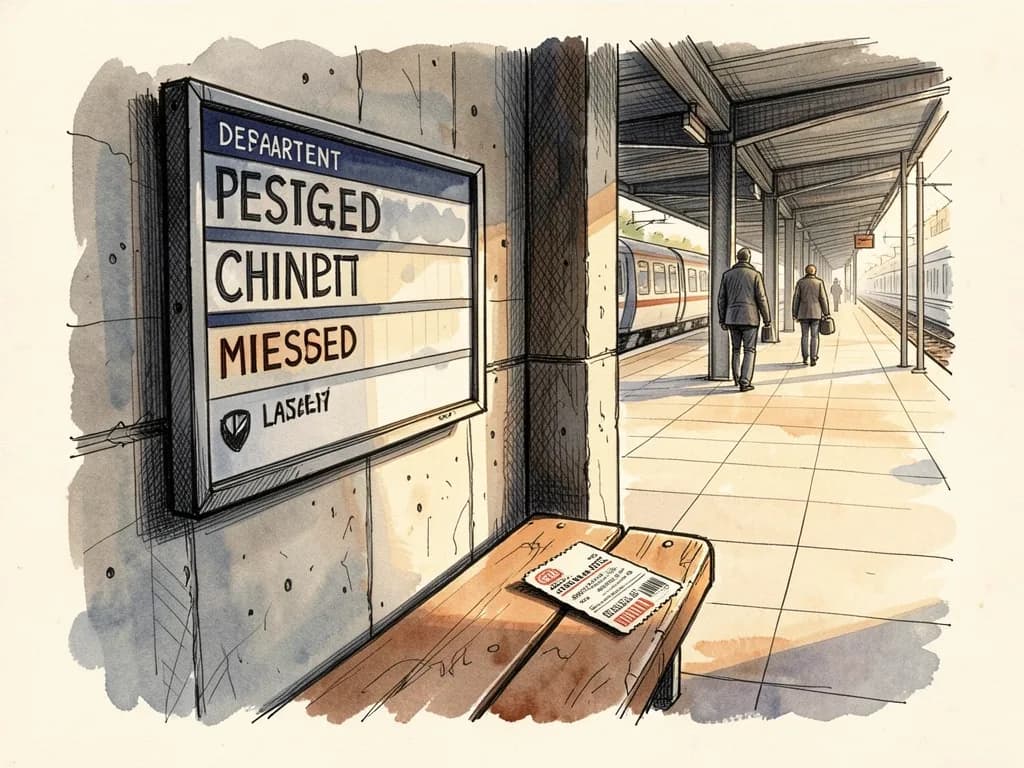
Imagine someone misses a train. The missed train matters if it threatens an appointment, exposes an avoidance, or leaves her with a decision she can no longer postpone.
Alex
And if she simply waits for the next train, with no change in desire, knowledge, or risk, we may have movement without meaning. Very punctual movement, perhaps, but narratively underemployed.
Sam
The Quiet Choice
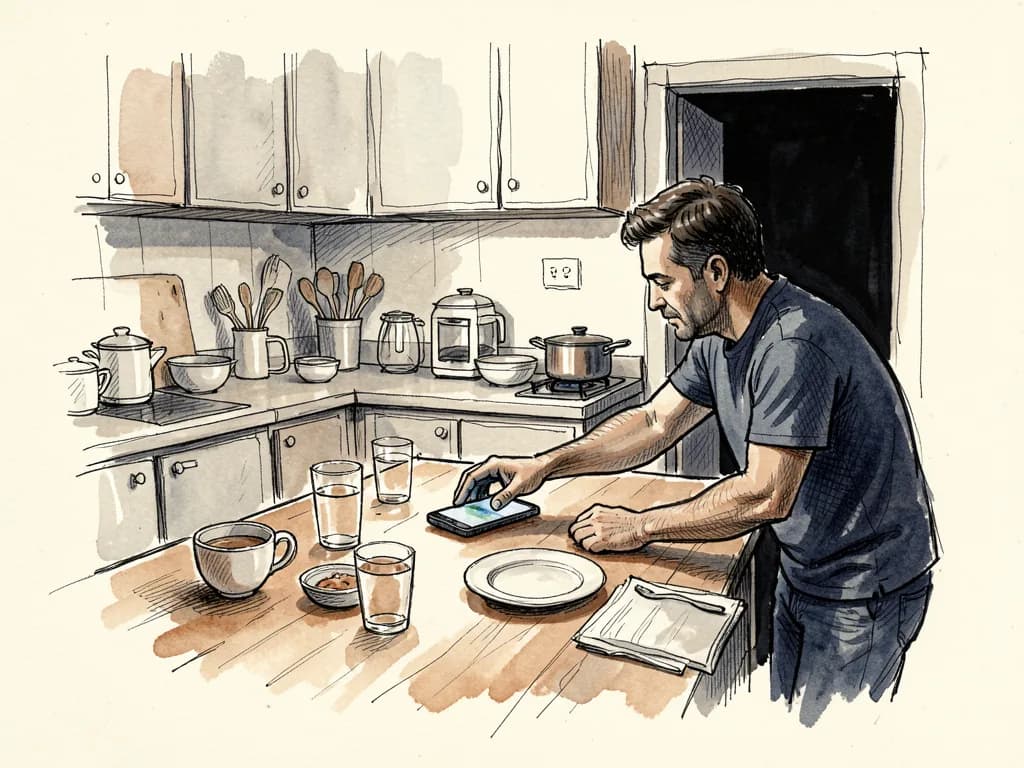
That is why a consequence can be quiet. A character may not make a dramatic choice; they may stop making the old choice automatically.
Alex
Take an imagined scene: a man always lets his sister’s calls go to voicemail. One evening he sees the call, watches it stop, and puts the phone face-up instead of down.
Sam
Nothing has been repaired. They have not spoken. But the next silence is different because he has recognised his part in producing it.
Alex
And that recognition can generate the next action. Consequence is often the pressure created by a changed self-understanding, not merely by an external obstacle.
Sam
Though we should resist turning every detail into a moral lesson. Sometimes the phone is face-up because the table is crowded and the charger is over there.
Alex
Bless you for defending clutter. A story can make an ordinary action significant without claiming that life itself arranged the furniture for symbolic purposes.
Sam
This is where setup and payoff become more interesting than simple prediction. A repeated avoidance may pay off when it changes how we interpret a later choice.
Alex
Objects That Carry Emotional Weight
Right. The payoff does not have to be a slammed door or a revealed secret. It might be the first time someone stays in the room while another person speaks.
Sam
That also explains why a highlighted object need not become a plot machine. From Episode 2, we can carry forward the idea that emphasis creates expectation, not necessarily an explosion.
Alex
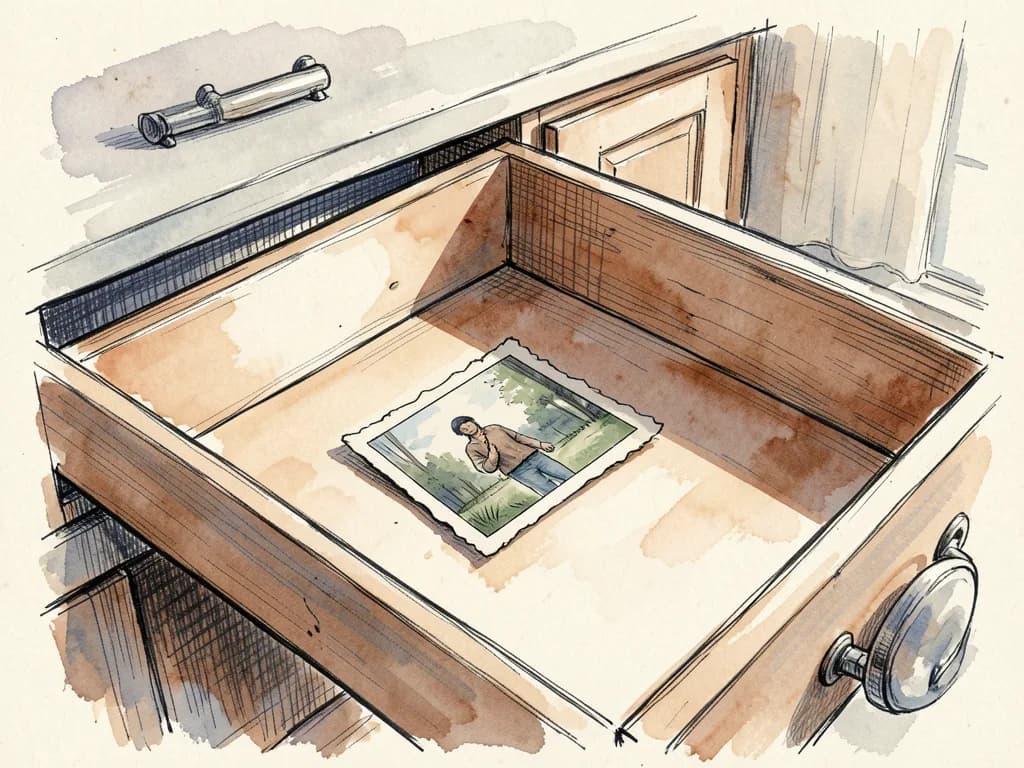
Consider a photograph kept in a kitchen drawer. It never supplies evidence. But when its owner finally leaves it behind, the absence changes what departure means.
Sam
The object has carried emotional consequence. Its function was not to fire; it was to show what the character could not yet release.
Alex
And that release may be partial. A good consequence does not always settle the whole emotional account. It changes the balance of what is possible.
Sam
There is a danger here, though. Writers can make events feel important by making them irreversible, but irreversible is not automatically meaningful.
Alex
Quite. Burning a house down is permanent. It is not automatically profound. The question is what the loss changes for this person, in this situation, with these competing wants.
Sam
And sometimes the most consequential event is an omission. Someone does not correct a misunderstanding, does not open a letter, does not ask the obvious question.
Alex
That omission narrows the future. Later, the character may still act, but not from the same position. They have allowed a possibility to become harder, costlier, or stranger.
Sam
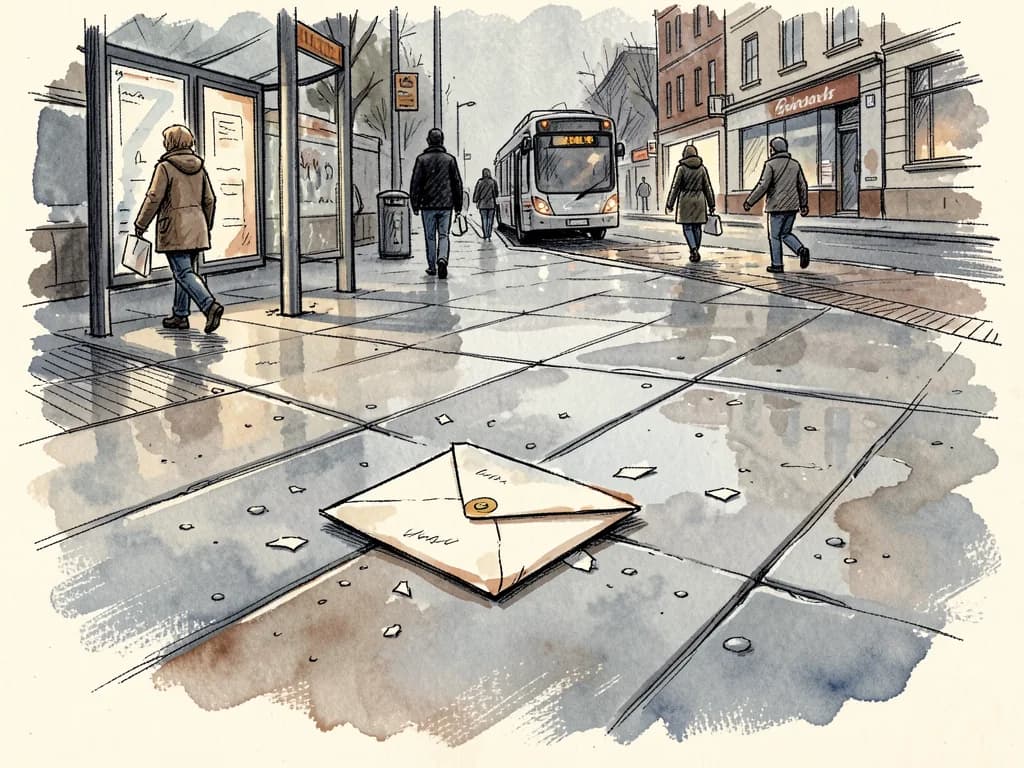
Which brings us to chance. A storm can destroy the letter. A stranger can take the wrong coat. Not every consequence is earned by a character’s choice.
Alex
Chance Without Moral Design
And that matters because coherence is not proof of design. Episode 1 warned us that a complete-looking chain can be satisfying without explaining how reality works.
Sam
In fiction, chance can still be consequential if the story shows how people respond. The accident is not a moral verdict; the response may reveal responsibility, denial, or care.
Alex
That distinction protects us from a rather bossy universe, one that apparently schedules disasters to improve everyone’s character.
Sam
It also helps with dramatic irony. If the audience knows a letter contains an apology while the character throws it away, the action carries consequences the character cannot yet see.
Alex
The later revelation should not simply say, “Surprise, you were wrong.” It should change the meaning of the earlier decision and force a new choice.
Sam
So the dramatic question evolves. In Episode 3, it might begin as, “Will she make contact?” After contact, it becomes, “Can she listen without turning the past into a courtroom?”
Alex
That is a real consequence: the answer to one question alters the question that follows. Resolution is not the end of uncertainty; it is a change in what uncertainty means.
Sam
An Ending That Changes the Question
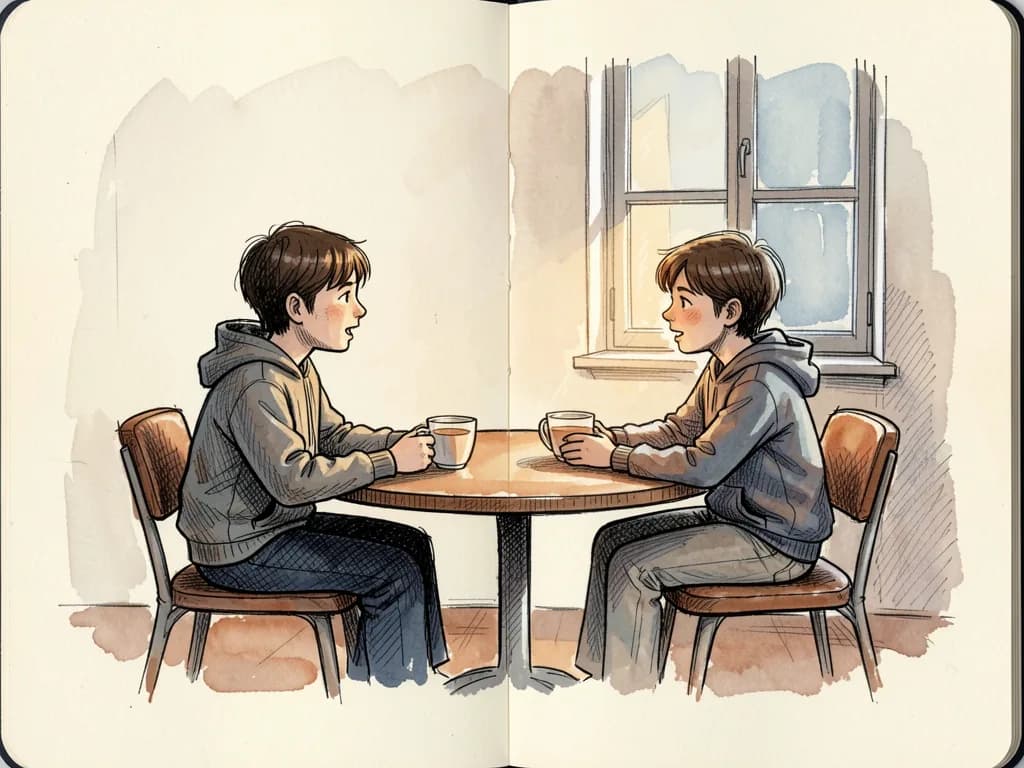
Which is why an open ending can feel complete. We may not know whether the siblings reconcile, but we can know that one of them finally tells the truth, or finally stops demanding a verdict.
Alex
The future remains open, but it is not unchanged. The story has closed a door on one pattern of behaviour and left another door—possibly an awkward one—available.
Sam
And that gives us a practical revision question: after each major moment, what is no longer possible, what has become newly possible, and who notices the difference?
Alex
I’d add one more: what does the event mean because of this character’s desire? Consequence becomes dramatic when it presses against what someone wants, fears, or refuses to know.
Sam
So we are not demanding that every scene trigger a chain reaction. We are asking whether the story remembers its events through changed choices, changed meanings, or changed relationships.
Alex
A quiet story can do that. A comic story can do that. Even a story built from atmosphere can leave us feeling that the air has shifted because someone can no longer return to their earlier way of seeing.
Sam
The principle, then, is not “make everything consequential.” It is “make the consequences legible where they matter, and let the remainder stay human.”
Alex
Yes. An event earns its weight when the future has to pass through it. Not necessarily loudly, not necessarily neatly—but differently.