When visibility becomes value, recognition stops telling us what is worth trusting.

Previous · Part 1
Why Being Good Isn’t Enough Anymore

Next · Part 3
Attention Is Not Importance
This builds on Part 1: Why Being Good Isn’t Enough Anymore
Continue with Part 3: Attention Is Not Importance
People often assume visible means capable.
Not consciously, perhaps. Most people would reject the idea if it were stated plainly. We like to believe we evaluate substance: the quality of the work, the depth of the thinking, the accuracy of the claim, the strength of the craft.
But in practice, we use shortcuts.
We trust what appears familiar. We notice what appears repeatedly. We assign importance to what keeps showing up in the places we already look.
And once someone becomes visible enough, their presence begins to do part of the persuading for them.
This is one of the quiet distortions of modern value.
The person who appears constantly in feeds, conversations, podcasts, panels, articles, recommendations, and screenshots starts to feel significant before we have evaluated whether they are good.
Visibility becomes a kind of ambient endorsement.

Not proof. Not evidence. But atmosphere.
And atmosphere is powerful.
The credibility of repetition
There is a particular kind of modern authority that does not arrive through mastery first.
It arrives through repetition.
You see someone once, and they are a stranger.
You see them five times, and they become familiar.
You see them everywhere, and they become difficult to dismiss.
At a certain point, the mind makes a subtle move: if this person keeps appearing, they must matter.
The Familiarity Credibility Loop
- ·Social media feeds
- ·Conference circuits
- ·Podcast guest networks
- ·Newsletter ecosystems
- ·Expert commentary
- ·Founder and creator culture
You are trying to understand why someone can feel authoritative before their work has been seriously examined.
This is not stupidity. It is cognitive economy.
No one has the time to investigate everything from first principles. We outsource judgment to signals. We use repetition as a proxy for relevance. We assume that if many systems continue to surface someone, some form of vetting must have happened.
But often, what has happened is not vetting.
It is circulation.
Someone was seen, so they were invited. They were invited, so they were seen more. They were seen more, so they seemed more credible. They seemed more credible, so they were given bigger stages.
The loop tightens.

Diagram: Visibility leads to Perceived credibility; Perceived credibility leads to More opportunities; More opportunities leads to More appearances; More appearances leads to Visibility.
Diagram: Visibility leads to Perceived credibility; Perceived credibility leads to More opportunities; More opportunities leads to More appearances; More appearances leads to Visibility.
At no point does this require fraud.
That is what makes it difficult to discuss honestly.
Many visible people are capable. Some are excellent. Some have earned their place through years of work that only later became obvious to the public.
But the system no longer waits for ability to prove itself before distributing attention.
Increasingly, attention arrives first.
Then ability is inferred.
The platform does not ask, “Is this true?”
Modern platforms are not designed to identify depth.
They are designed to identify response.
This distinction matters. A platform can measure whether something holds attention, provokes engagement, creates comments, invites sharing, triggers agreement, outrage, desire, envy, amusement, or recognition.
It cannot reliably measure whether something is wise.
It cannot easily detect whether an idea is incomplete, borrowed, oversimplified, poorly grounded, or quietly wrong.
The algorithm sees behaviour, not truth.
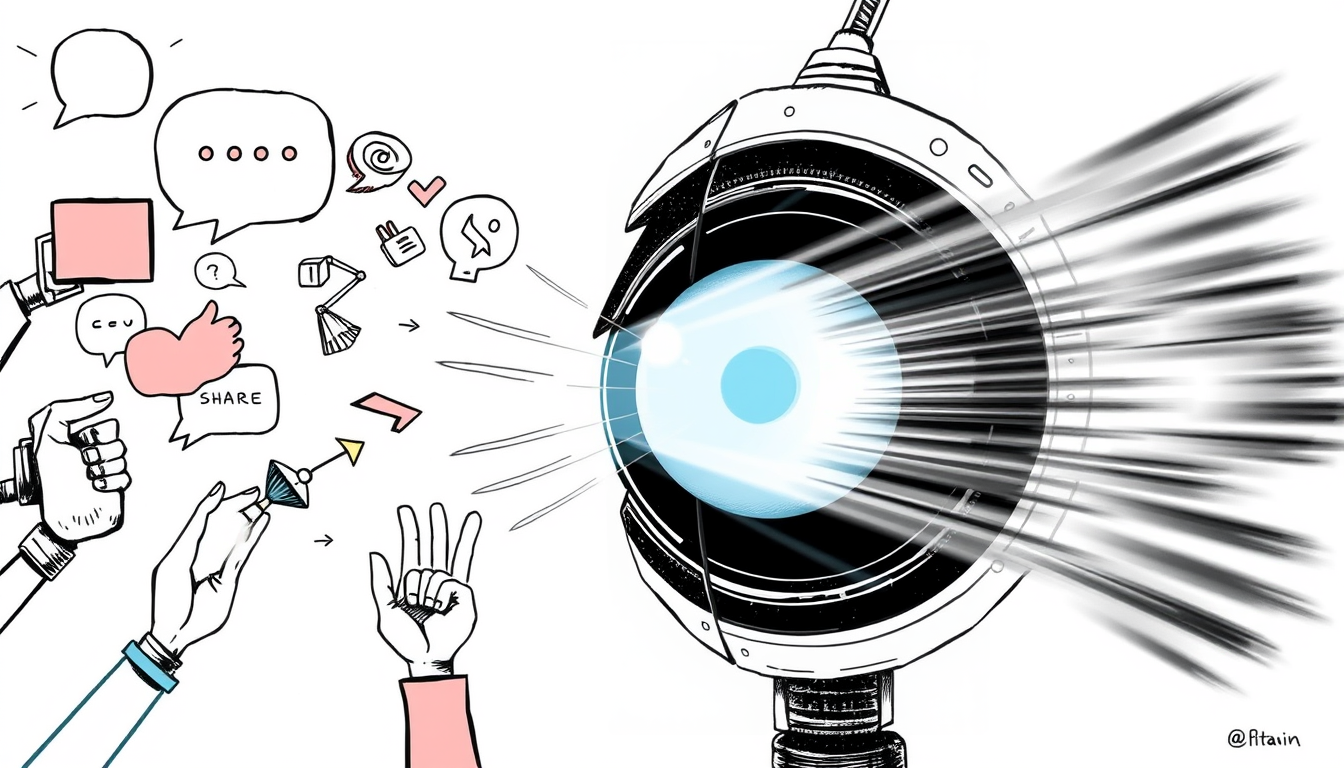
Visibility often outruns ability because platforms reward signals adjacent to value, not value itself.
They can measure engagement far more easily than accuracy, depth, judgment, or long-term usefulness.
- —Confidence is easier to detect than competence.
- —Simplicity travels faster than nuance.
- —Frequency compounds faster than mastery.
- —Controversy creates more visible behaviour than carefulness.
The people who perform well inside attention systems are not always the people with the strongest underlying ability.
This is why certain traits are disproportionately rewarded.
Consistency. Confidence. Clarity. Emotional charge. Simple claims. Strong positioning. Memorable phrasing. A face people recognise. A voice people can imitate. A point of view that can be repeated in one sentence.
None of these are bad.
In fact, many are useful.
The problem begins when they are mistaken for the whole of competence.
A clear communicator may be an expert.
A confident speaker may be right.
A popular thinker may be rigorous.
But none of those things follow automatically.
Visibility is a signal. It is not a verdict.
The new authority is atmospheric
Older forms of authority were slower, narrower, and often gatekept. They had their own exclusions and distortions. Credentials, institutions, job titles, publishers, professional networks, awards — all of them could mislead.
The past was not a clean meritocracy.
But modern authority has become more atmospheric.
It surrounds a person before it explains them.
You do not always know why they matter. You simply know that they appear to matter. Other people reference them. Their posts circulate. Their name appears in rooms. Their work is quoted. Their image becomes familiar.
Eventually, their visibility starts doing the work once done by institutional affiliation.
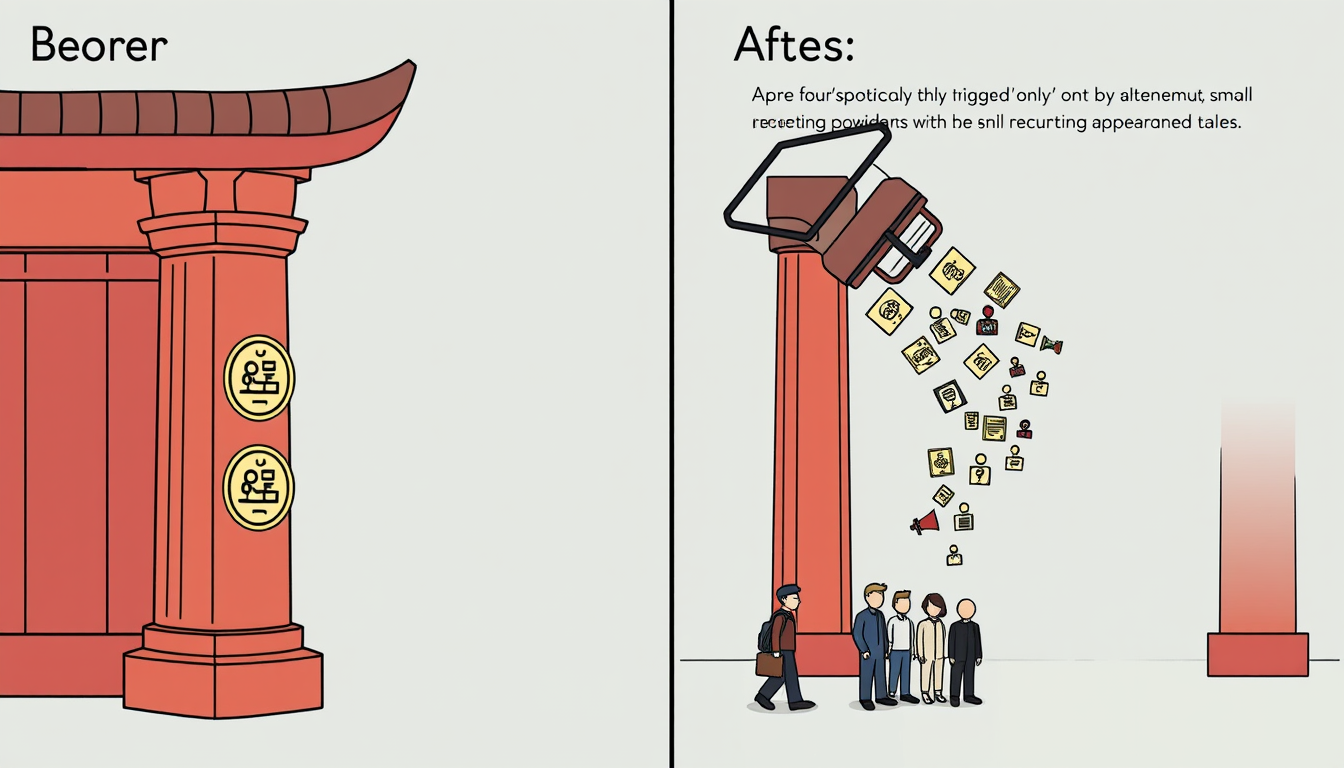
Authority was often attached to institutions, credentials, tenure, or formal recognition.
Authority increasingly emerges through repetition, recognisability, network momentum, and platform presence.
This has made authority more accessible in some ways.
People outside traditional gates can now build credibility, find audiences, and create opportunities without waiting for permission. That is real. It matters. Many brilliant people have benefited from the collapse of older filters.
But the same shift also makes authority easier to simulate.
A person can look established before they are tested.
They can become known before they are understood.
They can become trusted because they are visible in the shape of trust.
What visibility compounds
Visibility is rarely static.
Once it begins working, it often compounds.
The visible person gets invited to speak. The speaking appearance creates clips. The clips circulate. Circulation creates perceived demand. Demand creates more invitations. Each invitation becomes proof of importance.
The signal starts generating more signal.
This compounding effect is one reason the gap between visible and invisible talent can feel so brutal.
A small early advantage becomes a large later advantage.
The person who gets the first platform is more likely to get the second. The person who gets quoted once is easier to quote again. The person whose name is already in circulation becomes the safe choice for the next event, article, partnership, panel, interview, hire, or recommendation.
Not always because they are best.
Often because they are legible.
Core currency
Recognition
Primary mechanism
Repeated exposure
Common reward
Opportunity
Hidden cost
Undiscovered competence
This is why people can look suddenly successful after years of being quietly good.
It is also why others can look successful before they have been seriously tested.
The same machinery amplifies both.
The emotional cost of being less visible
For skilled people who do not naturally perform well in public, this can be maddening.
There is a specific kind of despair that comes from watching loudness outrank mastery.
Not because the visible person is necessarily bad. Not because one wants everyone else to fail. But because the rules feel misnamed.
You were told to get good.
So you got good.
You studied, practised, refined, built taste, developed judgment, learned the hard parts, paid attention to detail. You became someone who could actually do the thing.
Then you looked around and realised that the rewards were not flowing cleanly toward ability.
They were flowing toward ability plus performance.
Or performance plus timing.
Or confidence plus distribution.
Or recognisability plus just enough competence to survive the encounter.
This creates a quiet identity crisis.
If you are good but not visible, are you undervalued — or just undiscovered?
If you dislike self-promotion, are you principled — or avoidant?
If you refuse to perform, are you preserving the integrity of the work — or protecting yourself from the vulnerability of being seen?
These are uncomfortable questions because the honest answer may not flatter either side.
Some people really are overlooked.
Some are hiding behind disdain for visibility because visibility feels exposing.
Often, both are true.
Where do you currently confuse integrity with invisibility?
Look for the place where “I don’t want to play the game” may also mean “I don’t want to risk being seen.”
Visibility is not the enemy
It is tempting to turn this into a moral story.
The deep versus the shallow. The craftsman versus the performer. The serious person versus the self-promoter. The real thing versus the feed.
But that is too easy.
Visibility is not inherently fake.
Being able to communicate your work matters. Being findable matters. Being remembered matters. In a crowded environment, clarity is not corruption. Public presence is not proof of emptiness.
Visibility became a separate skill because the world became too abundant to navigate without signals.
The mistake is not learning how visibility works.
The mistake is believing it should not matter at all.
That belief may feel noble, but it often becomes a private protest with public consequences. The work remains hidden. The opportunities go elsewhere. The person with less depth but more fluency in attention gets the room, the trust, the invitation, the chance.
And once they have the chance, they may improve.
Opportunity is not just a reward for past ability.
It is also a machine for creating future ability.
This is one of the most painful parts of the loop: visibility does not merely reflect advantage. It produces it.
The difference between being seen and being exposed
Part of the resistance to visibility comes from a reasonable fear.
To become visible is to become interpretable by strangers. People can simplify you. Misread you. Compare you. Ignore you. Praise the wrong thing. Criticise the wrong thing. Reward the performance rather than the substance.
Visibility can feel like surrendering your work to a room that may not know how to hold it.
So many capable people choose a quieter bargain.
They protect the work by keeping it close.
They avoid the vulgarity of performance.
They let the craft speak for itself.
Except, increasingly, the craft is speaking in a room no one has entered.
You do not have to become loud. But you may need to become legible. The task is not to betray the work. It is to create enough surface area for the right people to recognise it.
There is a better distinction than visible versus invisible.
There is extractive visibility, and there is earned legibility.
Extractive visibility demands constant performance. It turns the self into product, thought into content, and attention into proof.

Earned legibility makes the work easier to recognise, understand, trust, and remember.

One burns the person down.
The other gives the work a door.
What the system selects for
Every system selects for something.
A university selects for certain forms of academic performance.
A corporate hierarchy selects for certain forms of political, managerial, and operational fluency.
A market selects for willingness to pay.
A platform selects for attention behaviour.
The mistake is assuming that selection equals value.
Platforms select for what they can detect. And what they can detect is usually behaviour around the work, not the work’s deeper quality.
Is this person credible, or merely familiar?
Let familiarity open the door to attention, not close the case for trust.
This applies to other people.
It also applies to ourselves.
If you are building anything in public — a body of work, a career, a practice, a company, a reputation — you cannot afford to misunderstand the selection environment.
You may wish depth were enough.
It is not.
You may hate that performance matters.
It does.
You may refuse to play the cheapest version of the game.
Good.
But refusal is not the same as strategy.
The more honest bargain
The answer is not to worship visibility.
Nor is it to retreat into private excellence and resent the world for failing to discover you.
The more honest bargain is this:
Ability matters.
Visibility matters.
They are not the same thing.
They do not always arrive together.
And in many modern systems, visibility often determines who gets the chance to prove ability in the first place.
This is the uncomfortable middle position.
It denies the fantasy that attention equals worth.
It also denies the fantasy that worth will reliably be recognised without attention.
For people who care about substance, this is the work now: not to become a caricature of self-promotion, but to make ability easier to encounter.
Not louder than necessary.
Not emptier than required.
Not optimised into a person you no longer respect.
Just visible enough that the work can enter the field of judgment.
A practical way to think about it
If visibility is a separate skill, it can be practised without being worshipped.
The goal is not to become omnipresent.
The goal is to become recognisable for the right things.
I want to be known for:
[The specific quality, idea, craft, problem, or contribution]
The people who need to recognise this are:
[Audience, community, clients, collaborators, peers, institutions]
The clearest proof I can show is:
[Work, result, case, artifact, essay, demonstration, conversation]
The simplest way to make it visible is:
[Channel, format, rhythm, introduction, portfolio, public note]
The line I will not cross is:
[What you refuse to fake, exaggerate, simplify, or perform]
This reframes visibility as translation.
Not manipulation.
Not spectacle.
Translation.
You are helping the work travel from private quality into public recognition. You are giving people handles. You are reducing the burden of interpretation. You are making it easier for others to understand why the work deserves attention.
That does not cheapen the work.
Done well, it protects it from being missed.
The final distinction
Visibility can make weak work look stronger than it is.
It can also help strong work reach the people who can value it properly.
That is why cynicism is insufficient.
The task is not to reject visibility, but to separate its signal from its substance. To notice when attention is functioning as evidence, when repetition is masquerading as proof, when confidence is being mistaken for competence.
And then, in our own lives, to stop pretending that being good and being seen are the same challenge.
They are different disciplines.
Both now shape outcomes.
If this resonates, see how to apply it to your own work with the interactive Dispatch agent.
Be first to like this dispatch