Clarity is leverage: subtract friction until your truth becomes repeatable, ownable, and actionable.

Previous · Part 5
The Authority of the Unadorned Sentence

Next · Part 7
The Currency of Quotability
This builds on Part 5: The Authority of the Unadorned Sentence
Continue with Part 7: The Currency of Quotability


Part 6 of The Language of Leverage — Volume I
The
Architecture of Permission
Why we hesitate
Action is rarely a failure of will. More often, it is a failure of syntax.
When a project stalls, we blame the "resistance" of the task or the "procrastination" of the individual. But zoom in, and you will find that the friction lies in the linguistic framing of the work itself. We write to-do lists that sound like indictments, and we frame decisions as if they are life-altering gambles.
When you change the language, you change the cognitive load. You move the work from the realm of "threatening obligation" to "navigable path."
The Three Shifts of Low-Friction Language
To move people (including yourself) toward action, you must dissolve the hidden costs in your phrasing. Use these shifts to transform intimidating objectives into inevitable steps.
Instead of focusing on the "Requirement" (e.g., "Write the report"), focus on the "Artifact" (e.g., "Draft the summary"). One feels like a weight; the other feels like an object you can hold and shape.
Designing the Path of Least Resistance
Consider the difference between a "Challenge" and an "Iteration." A challenge demands a heroic effort; an iteration demands only a revision. When you frame your work as an iteration, you grant yourself permission to move forward without the paralysis of "getting it right" on the first pass.
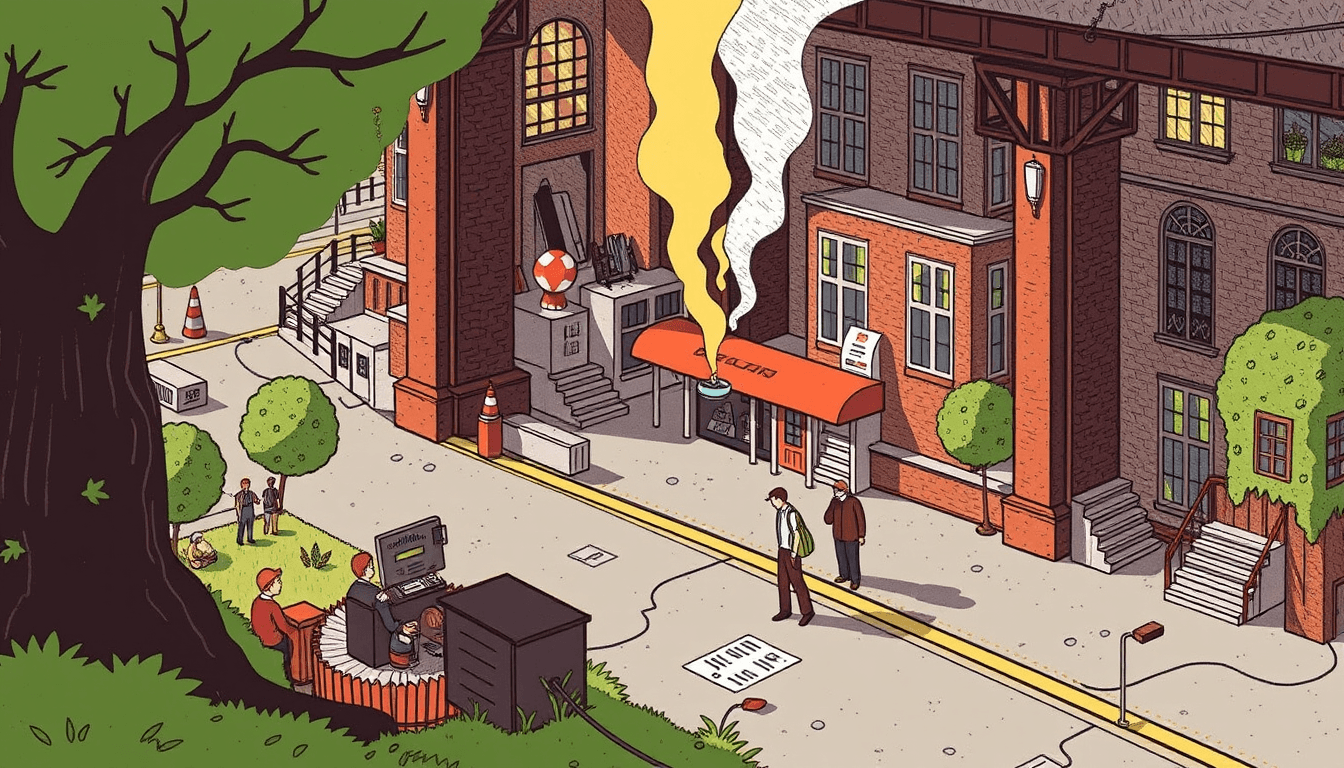
Diagram: Initial Impulse leads to Linguistic Filter; Action leads to Correction; Correction leads to Action.
Diagram: Initial Impulse leads to Linguistic Filter; Action leads to Correction; Correction leads to Action.
Audit Your Own Friction
We often unknowingly apply "friction-heavy" language to our most important work. We call it a "Big Strategy Meeting" rather than "Refining our priorities for the month." The former invites anxiety; the latter invites focus.
The Anatomy of a Permission-Based Prompt
If you find yourself stuck, use this template to reframe your next move. It turns the "impossible" into a series of obvious, low-stakes choices.
The objective is [Goal].
I will remove the pressure by framing it as a [Draft/Sketch/Experiment].
The specific, bite-sized artifact I will produce in 30 minutes is: [Name of Output].
The consequence of doing this is [Positive Outcome], and the consequence of doing nothing is [Neutral/Manageable].
What is one task currently stalling on your desk, and how can you rename it to make it feel like a low-stakes experiment rather than a high-stakes obligation?
Remember: Leverage is not about working harder. It is about describing the work in a way that makes it impossible to do anything else but begin.
If this resonates, see how to apply it to your own work with the interactive Dispatch agent.
Be first to like this dispatch