Real transformation is engineered in the background—where rules, rituals, and infrastructure quietly do the work.


Previous · Part 1
The Architecture Beneath the Hero

Next · Part 3
The Road Before the Revolution
This builds on Part 1: The Architecture Beneath the Hero
Continue with Part 3: The Road Before the Revolution
We love the lightning strike.
The sudden invention.
The genius in the garage.
The product that appears to change the world overnight.
It is a clean story. Easy to tell. Easy to sell.
But progress rarely arrives that way.
More often, it comes as a tide. Quiet. Repeated. Almost invisible while it is happening. A tool moved closer to the hand. A defect removed from the line. A bug fixed before anyone notices. A question answered in one paper, then sharpened in the next.
This is the craft of the quiet architect.
Not the person waiting for the grand breakthrough.
The person building the conditions where breakthroughs become almost inevitable.
The myth of the single moment
The lightning-strike version of progress gives us a hero and a scene.
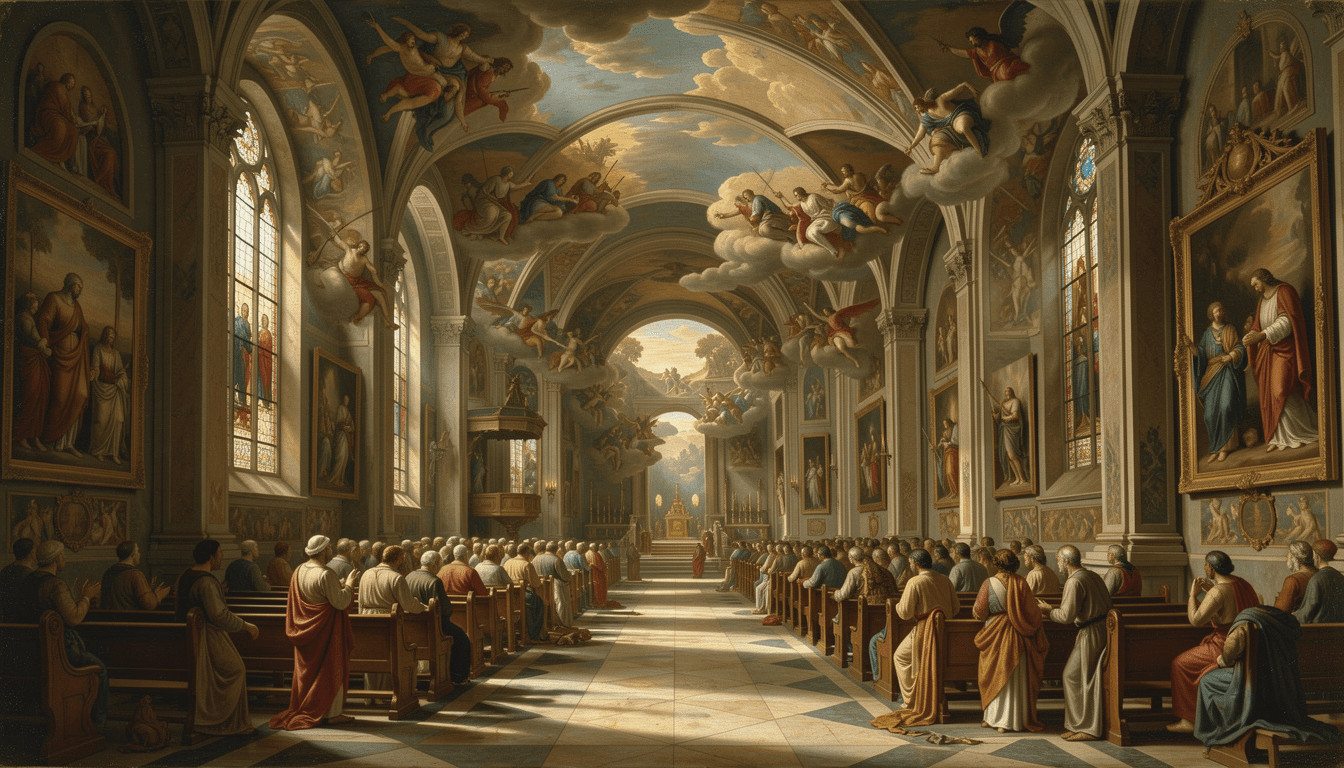
Someone sees what no one else can see.
Someone makes the impossible leap.
Someone changes the rules in one bold move.
Those moments do exist. But they are rarely as lonely or sudden as they look from the outside.
Behind the visible leap is usually a long chain of hidden adjustments. Each one too small to become a legend. Each one essential.
Progress looks like a dramatic breakthrough caused by one brilliant act.
Progress looks like a system of small improvements that finally becomes visible.
The quiet architect understands this.
They do not dismiss vision. They simply refuse to confuse vision with magic.
The assembly line of progress
Toyota did not reshape global manufacturing because of one miraculous machine.
Its deeper genius was cultural.
The Toyota Production System treated improvement as everyone’s responsibility. Workers were encouraged to notice friction, waste, delay, and error. Not in abstract terms. In physical, practical, daily terms.
A tool placed two steps away became a design problem.
A repeated defect became a signal.
A wasted motion became an invitation.
This is kaizen: continuous improvement.
Not improvement as an annual slogan.
Improvement as a working rhythm.
A single change might save two seconds.
On its own, that is almost nothing.
But across thousands of workers, millions of repetitions, and years of production, two seconds becomes a new kind of machine. Not made of steel, but of better decisions.
The breakthrough was not one invention.
It was the accumulated force of noticing.
The small change is not small at scale
A minor adjustment feels trivial when viewed once.
That is why incremental work is so easy to underestimate.
A misplaced tool.
A confusing button.
A repeated typo.
A slow approval step.
A meeting that answers no real question.
None of these look dramatic enough to deserve attention.
But systems are made of repeated moments. What happens once may not matter. What happens every day becomes architecture.
Diagram: Small Friction leads to Repeated Cycle; Repeated Cycle leads to Accumulated Cost; Accumulated Cost leads to System Drag; System Drag leads to Visible Failure; Small Improvement leads to Repeated Cycle; Repeated Cycle leads to Accumulated Gain; Accumulated Gain leads to System Lift; System Lift leads to Visible Progress.
Diagram: Small Friction leads to Repeated Cycle; Repeated Cycle leads to Accumulated Cost; Accumulated Cost leads to System Drag; System Drag leads to Visible Failure; Small Improvement leads to Repeated Cycle; Repeated Cycle leads to Accumulated Gain; Accumulated Gain leads to System Lift; System Lift leads to Visible Progress.
The quiet architect is not obsessed with smallness.
They are obsessed with repetition.
They know that repeated waste becomes culture. Repeated clarity becomes speed. Repeated care becomes quality.
The agile scaffolding
Software gives us another version of the same truth.
The popular myth is still the lone coder in the dark, building the perfect product in one inspired stretch of sleepless genius.
Reality is less cinematic, and more powerful.
Modern software is built through small loops.
A feature is scoped.
A version is shipped.
A bug is found.
A fix is made.
A user responds.
The next version improves.
Agile and DevOps did not remove creativity from software. They gave creativity a tighter feedback loop.
Build → Test → Learn → Refine
- ·Software teams shipping in short sprints
- ·Manufacturers improving production lines
- ·Scientists extending prior research
- ·Artists revising through drafts and studies
The final answer is too complex to design perfectly in advance.
A repository tells this story better than a launch announcement ever could.
Scroll through the commit history of a successful product and you will not find one single moment where everything became perfect.
You will find thousands of small corrections.
A name changed.
A button moved.
A load time reduced.
An edge case handled.
A sentence clarified.
A crash prevented.
Each commit is modest.
Together, they are transformation.
Three worlds, one pattern
The same structure appears wherever progress has to survive reality.
A worker spots a repeated motion that wastes time. The team changes the layout. The saving is small per cycle, but enormous across the whole line.
The result is not just speed. It is a culture where attention matters.
Different settings. Same motion.
Progress grows through contact. It improves because it is exposed to use, pressure, error, and response.
The quiet architect builds for that exposure.
The compound interest of effort
A 1% improvement sounds almost insulting.
It does not flatter the ego. It does not make for a stirring keynote. It does not feel like destiny.
But compounding is not impressed by drama.
Compounding rewards consistency.
Daily improvement
1%
Visible result
Often delayed
Strategic effect
Compounding gain
Required temperament
Patience, measurement, trust
Hidden advantage
Lower risk per move
A single high-risk bet can change everything.
It can also destroy everything.
The quiet architect does not reject boldness. They simply distribute it. They make many small bets, observe what happens, and let reality become a partner in the design.
This is not timid work.
It is disciplined courage.
Incremental progress is not the enemy of breakthrough.
Breakthroughs often emerge from repeated small improvements that reveal what one grand plan could not predict.
- —Toyota’s production gains came from countless small refinements across the line.
- —Modern software improves through short cycles, testing, and continuous deployment.
- —Scientific advances are built through many papers that confirm, challenge, or extend prior work.
The most reliable path to transformation is often a system that makes small improvements unavoidable.
The courage of the small step
There is a particular bravery in choosing the incremental path.
It requires working without applause.
It asks you to care about things that sound boring in public but matter deeply in practice: defects, handoffs, loops, standards, review, maintenance, measurement.
It asks you to believe that the quiet work counts before the world agrees.
That is not easy.
The grand gesture offers emotional relief. It lets us imagine that one intense act can redeem years of drift.
The small step offers something better: a way back into motion.
What the quiet architect sees
Where others see routine, the quiet architect sees design.
Where others see delay, they see a signal.
Where others see a workaround, they see an unspoken requirement.
Where others see a bug, they see a lesson from the system.
Where others see a small win, they see a future standard.
Their gift is not only patience.
It is perception.
They know that systems speak in small symptoms before they fail loudly. They know that excellence is often built by people who stop to fix what everyone else has learned to tolerate.
What small friction have you started to accept as normal?
Look for the thing you complain about often but rarely redesign.
A simple operating rhythm
The quiet architect does not need a grand theory to begin.
They need a loop.
The power is not in any single pass through the loop.
The power is in making the loop normal.
The quiet review
Here is a small practice worth stealing.
At the end of a week, project, sprint, meeting cycle, or creative push, ask three questions.
What repeated friction did we notice?
What small change would reduce it?
How will we know if the change worked?
These questions are plain on purpose.
A good improvement system should not require ceremonial language. It should make better attention easier to repeat.
When incrementalism is not enough
There are moments when small steps cannot save a broken direction.
If the foundation is false, refinement only makes the wrong thing more efficient. If the goal is confused, speed becomes waste. If the system rewards the wrong behaviour, improvement becomes theatre.
The quiet architect is not loyal to smallness for its own sake.
They are loyal to reality.
Should you improve the current system or redesign it?
- ✓The goal is still right
- ✓The main problem is friction, waste, delay, or quality
- ✓Small changes can be tested quickly
- ✓The people closest to the work can see useful fixes
- ✗The goal no longer makes sense
- ✗The system rewards the wrong behaviour
- ✗Every improvement creates a new workaround
- ✗The same failure keeps returning in different forms
Improve when the direction is sound. Redesign when the pattern of failure is built into the structure.
This is where judgment matters.
Incrementalism is powerful, but it is not a religion. Sometimes the bravest small step is admitting that the map itself has expired.
The revolution that does not announce itself
The next time something looks like an overnight success, look closer.
You will likely find the scaffolding.
The early versions.
The failed tests.
The dull meetings that removed real obstacles.
The small fixes no one celebrated.
The habits that made excellence less dependent on mood.
The people who kept improving the thing after the spotlight moved elsewhere.
The true revolution is rarely announced with a bang.
It is built in increments.
It gathers force in silence.
It becomes obvious only after it has already happened.
Take this with you
If this resonates, see how to apply it to your own work with the interactive Dispatch agent.
Be first to like this dispatch