Lasting transformation is ignited by catalysts—specific ideas or tools that compress time and amplify human capability.


Previous · Part 2
The Printing Press: An Engine That Multiplied Ideas

Next · Part 4
Zero: The Number That Made Nothing Work
This builds on Part 2: The Printing Press: An Engine That Multiplied Ideas
Continue with Part 4: Zero: The Number That Made Nothing Work
The world has always been noisy.
Storms looked like anger. Disease looked like punishment. Comets looked like omens. A failed harvest could be blamed on the gods, the king, the stars, or the neighbour with strange habits.
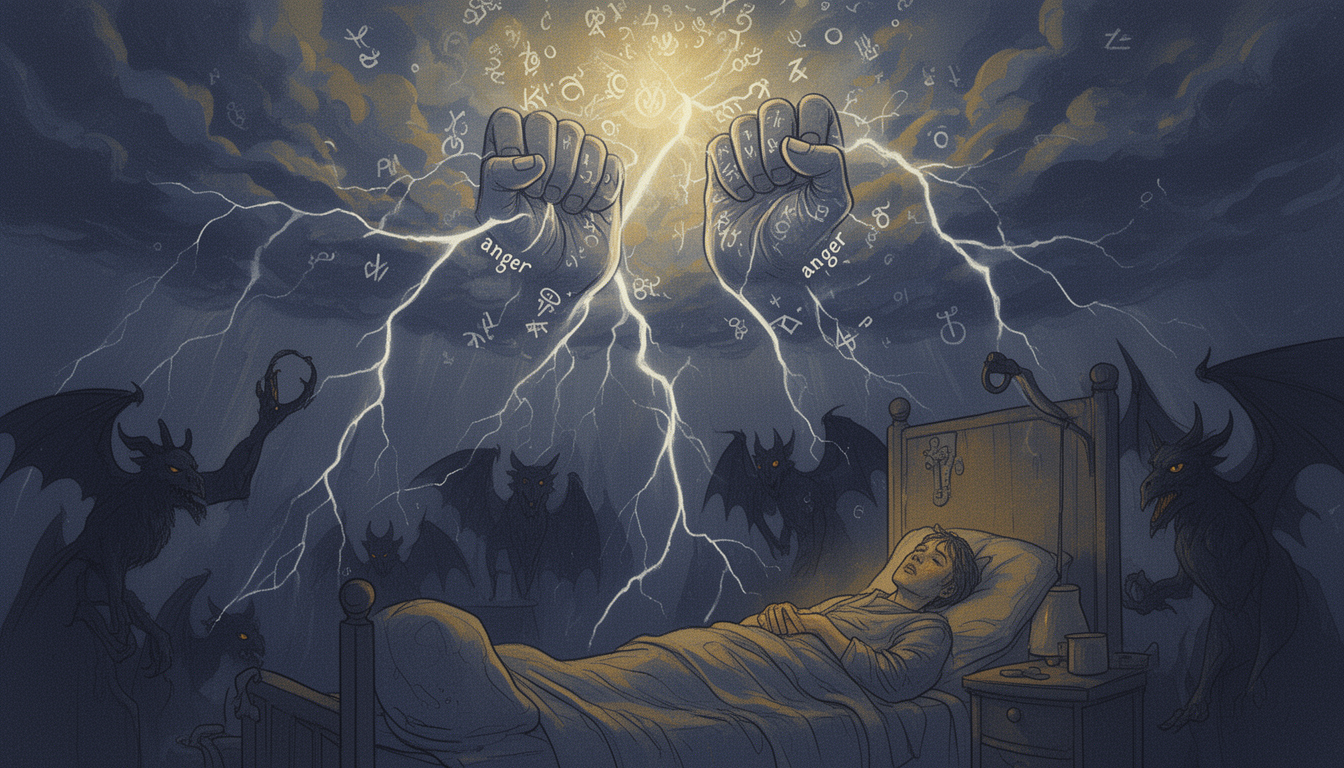
Before inquiry became disciplined, explanation often belonged to whoever had the most authority: the priest, the philosopher, the ruler, the ancient text, the confident speaker.
The Scientific Method changed the rules.
Not by giving humanity a new fact.
By giving humanity a way to decide what should count as one.
Part 3
The Discipline of Doubt
A method for extracting signal from the noise of belief.
The Scientific Method did not merely produce better answers. It created a repeatable process for making answers answerable.
Core Shift
From persuasion to proof
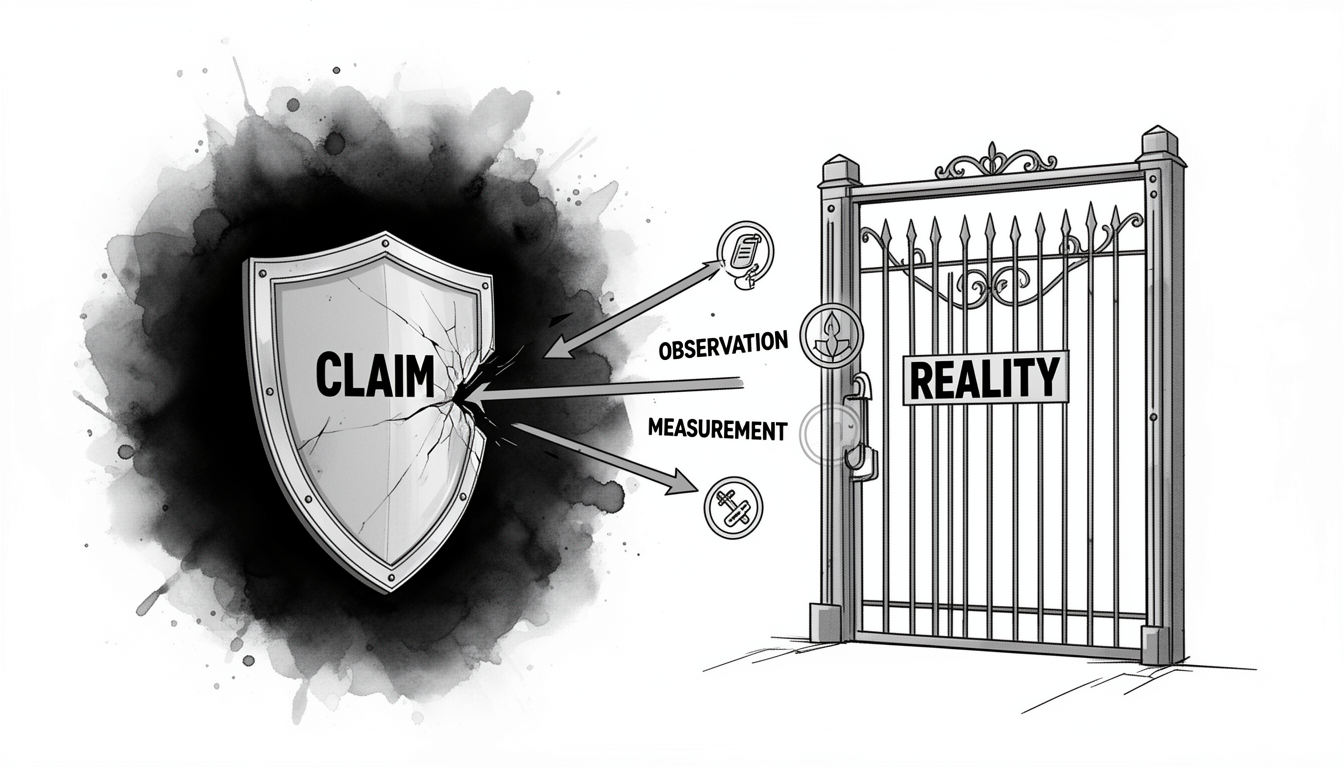
Once claims had to survive observation, measurement, and replication, knowledge could begin correcting itself at scale.
The world before disciplined inquiry
Human beings are natural meaning-makers.
We see patterns quickly. We form stories easily. We protect our beliefs fiercely. These instincts helped us survive, but they also made us unreliable judges of truth.
A person can believe something because it feels right.
A community can preserve an idea because it is old.
A ruler can declare a claim true because it is useful.
A philosopher can reason beautifully from a false starting point.
For much of history, inquiry was often tangled with rhetoric and authority. The question was not always, “What does the world show?” It was often, “Who said this?” or “Does this fit the accepted order?”
That does not mean earlier thinkers were foolish. Many were brilliant. They observed, argued, classified, measured, and wondered.
But what had not yet fully hardened into a shared discipline was the loop: a public, repeatable way to test claims against reality.
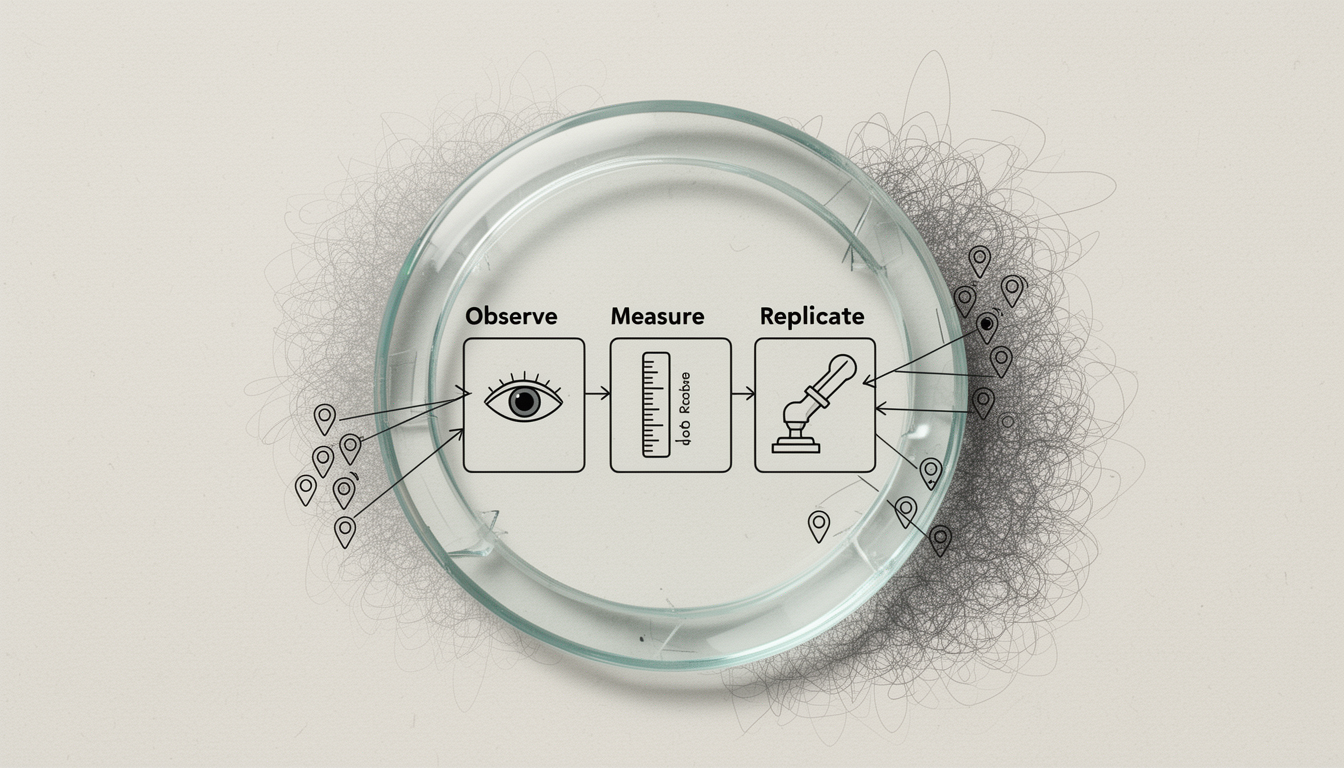
The method is simple. That is why it is powerful.
At its heart, the Scientific Method is almost plain.
Observe.
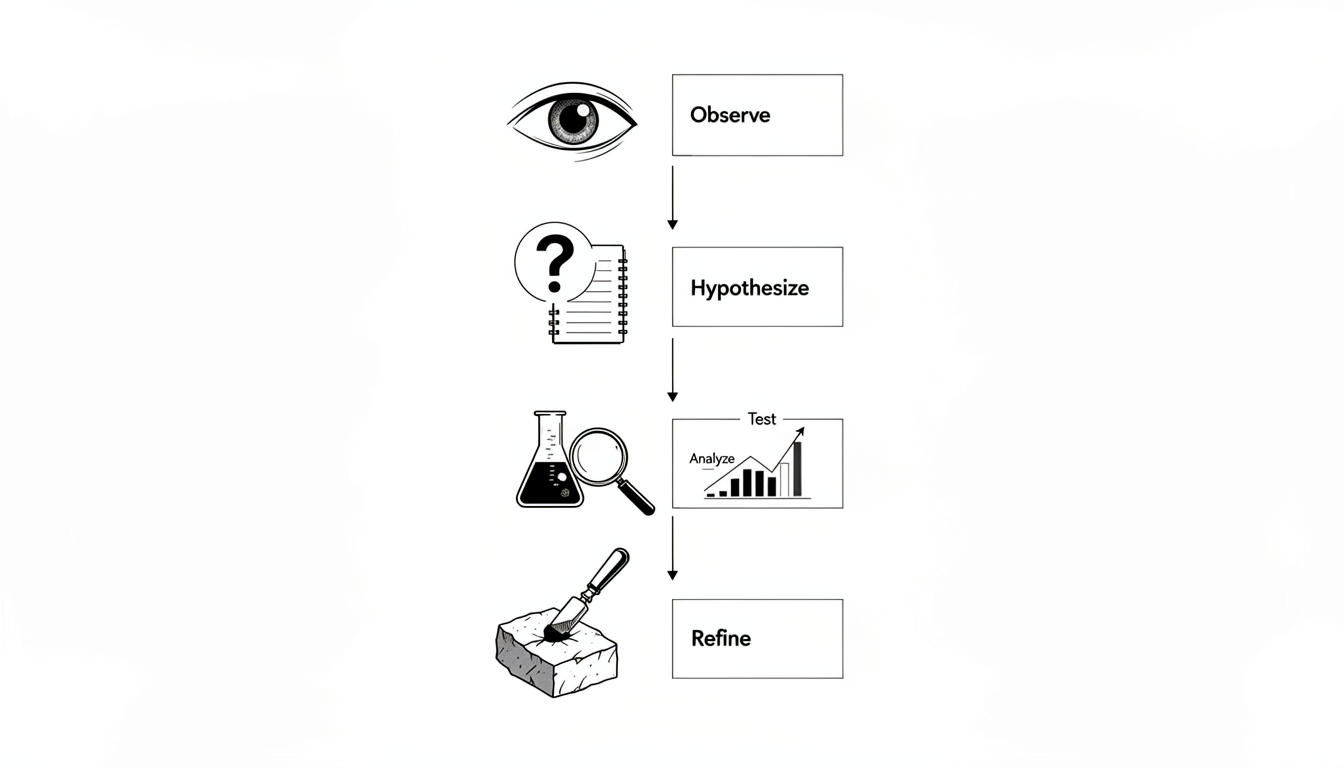
Hypothesize.
Test.
Analyze.
Refine.
Then begin again.
Diagram: Observe leads to Hypothesize; Hypothesize leads to Test; Test leads to Analyze; Analyze leads to Refine; Refine leads to Observe.
Diagram: Observe leads to Hypothesize; Hypothesize leads to Test; Test leads to Analyze; Analyze leads to Refine; Refine leads to Observe.
The genius is not in any single step.
Observation existed before science. So did speculation. So did experiments of a kind. The breakthrough was binding these acts together into a disciplined cycle.
A hypothesis became something different from an opinion.
It was no longer a conclusion to defend. It became a claim invited into danger.
A good hypothesis steps into the arena and says: test me.
This is the quiet moral force of the method.
It asks the thinker to surrender final authority. Not to another person. Not to a sacred text. Not to fashion.
To reality.
The data gets the last word
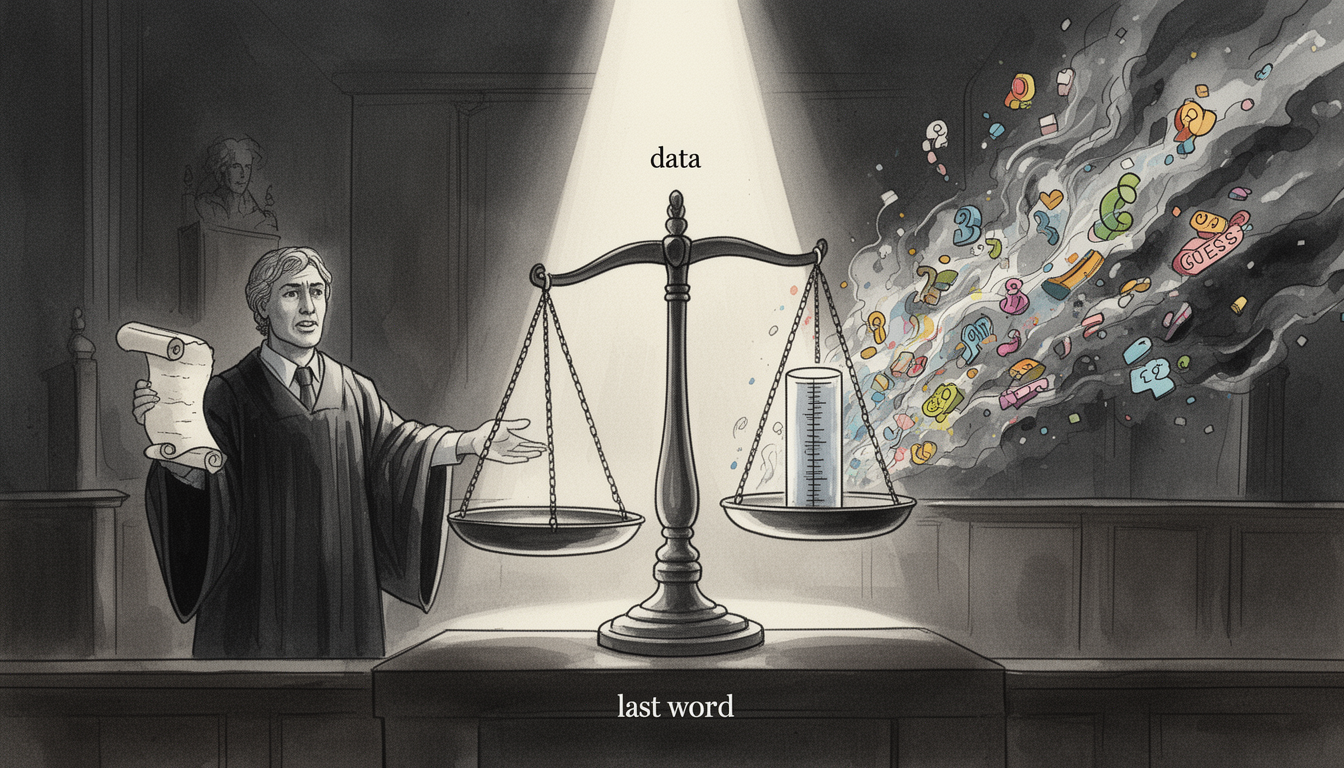
The method’s deepest move is psychological.
It was designed, whether openly or not, to conquer the unreliable parts of the human mind.
We favour what confirms us. We ignore what embarrasses us. We mistake vivid examples for general truth. We confuse fluency with accuracy. We build castles on assumptions, then defend the view from the tower.
The Scientific Method interrupts this.
It says: if your idea is true, the world should behave in a certain way.
So we check.
If the world does not behave that way, the idea must bend.
Not the data.
Not the instrument, unless the instrument is faulty.
Not the conclusion, because we wanted it.
The idea.
The Scientific Method is one of humanity’s great catalysts because it made knowledge self-correcting.
It replaced personal authority with repeatable tests that could expose error.
- —Claims had to survive observation and measurement.
- —Experiments could be repeated by people in different places.
- —Failed predictions became useful signals rather than private embarrassments.
- —Each result could become the starting point for the next refinement.
Discovery became less dependent on genius alone and more dependent on a shared process that could accumulate.
This is why the method is not merely a tool of laboratories.
It is a discipline of humility.
It makes room for intelligence while distrusting certainty. It respects imagination, then asks imagination to submit its receipts.
From secret art to public proof
Alchemy and chemistry offer a clean contrast.
Alchemy mixed observation with symbolism, secrecy, mysticism, and hidden procedure. It produced experiments, yes. It also produced coded language and private claims.
Chemistry changed the centre of gravity.
Controlled reactions mattered. Measurements mattered. Conditions mattered. Repeatability mattered.
If one person claimed a result, another person had to be able to reproduce it.
This moved knowledge from the chamber to the table.
From the guarded formula to the published procedure.
From “trust me” to “try it.”
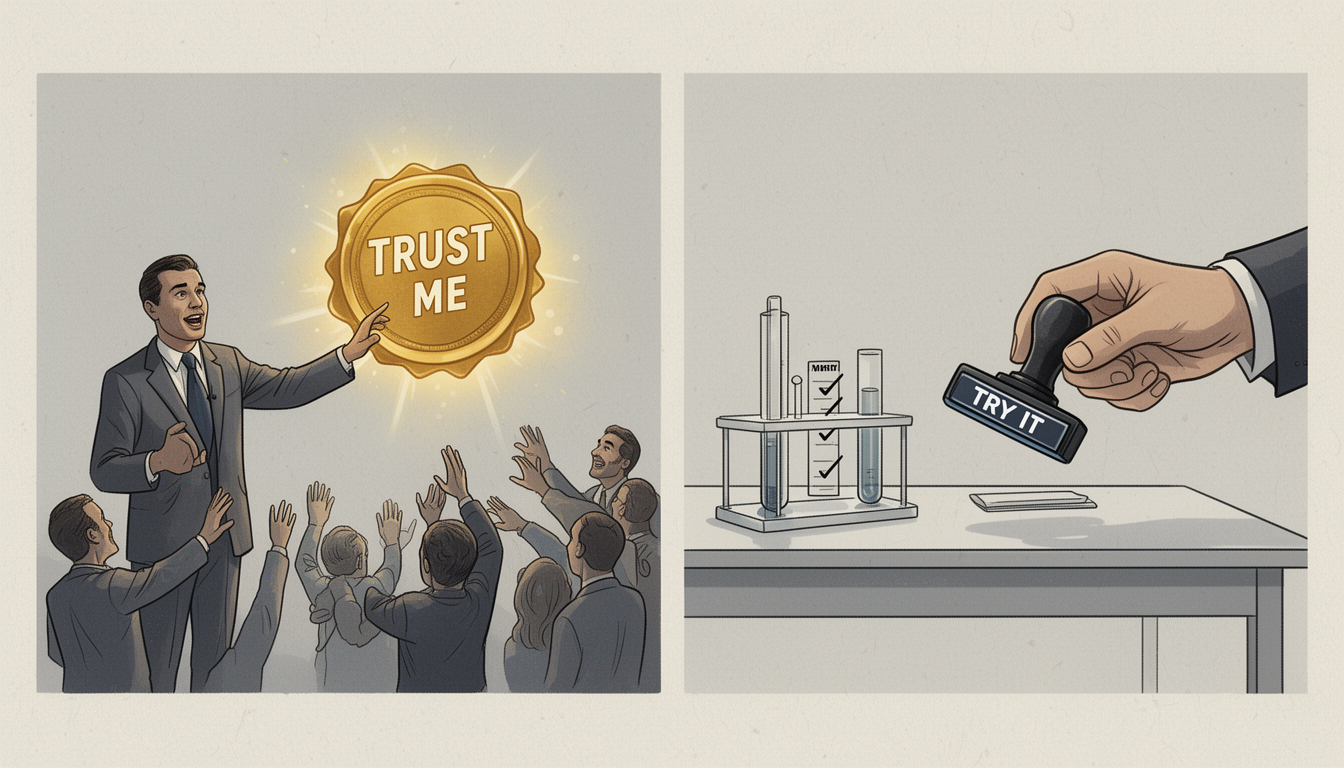
A claim could rest on authority, secrecy, tradition, or persuasive reasoning.
A claim had to face measurement, comparison, replication, and revision.
This was a new kind of democracy.
Not democracy in the political sense. Nature does not take votes. But the method weakened the monopoly of status.
A person in Florence could make an observation.
A person in London could test it.
A person in Berlin could refine it.
A person elsewhere could prove all three incomplete.
The claim belonged less to the claimant and more to the process.
That one shift made knowledge scalable.
Scalable knowledge changed everything
A single insight is fragile.
It can be forgotten, misunderstood, exaggerated, or trapped inside one mind.
But a tested insight that can be repeated becomes a building block.
A law of motion becomes a machine.
A controlled reaction becomes a material.
A biological observation becomes a treatment.
A measured signal becomes a circuit.
The Scientific Method made discovery cumulative. It turned isolated flashes into an advancing frontier.
Question → Test → Correction → Accumulation
- ·Physics becoming engineering
- ·Biology becoming medicine
- ·Chemistry becoming materials science
- ·Astronomy becoming spaceflight
- ·Electronics becoming computing
You need knowledge that can survive beyond the person who first proposed it.
This is why the method belongs in a series about catalysts of change.
It is not a single invention like a machine.
It is the process that makes better machines possible.
It accelerates the rate at which errors are found, useful patterns are confirmed, and new possibilities become reliable enough to build upon.
The loop that remade the modern world
The modern world is not made of certainty.
It is made of tested uncertainty.
Steam engines improved because heat, pressure, and motion could be studied. Electricity became usable because invisible forces could be measured and modelled. Semiconductors emerged because matter could be examined at smaller and smaller scales.
Medicine changed in the same way.
A treatment could no longer be judged only by tradition or anecdote. It had to be compared. Tested. Repeated. Measured against outcomes.
That path gave us vaccines, antibiotics, imaging, genomics, and the long, unfinished effort to understand life at its most intricate levels.
Observation, philosophy, craft knowledge, and inherited explanation coexist.
Claims are increasingly tied to experiment, measurement, and repeatability.
Physics and chemistry become engines of machines, materials, and power.
Biology and controlled testing reshape treatment, prevention, and public health.
Computing, genomics, climate science, and advanced engineering depend on iterative experimental systems.
Every modern technology carries the method inside it.
A bridge is crystallized testing.
A vaccine is crystallized testing.
A microchip is crystallized testing.
A weather model is crystallized testing.
The artifact may look finished, but beneath it is a long chain of questions that survived contact with reality.
Why this method is different from ordinary trial and error
Humans have always learned from trial and error.
Touch fire. Get burned. Avoid fire.
Plant here. Fail. Plant there. Improve.
But the Scientific Method adds structure to trial and error. It makes learning deliberate rather than accidental.
It asks for clarity before the test.
What exactly do we think will happen?
It asks for control during the test.
What are we changing, and what are we holding steady?
It asks for honesty after the test.
What did the result actually show?
It asks for openness beyond the test.
Can someone else reproduce this?
The key phrase is: could be proven wrong.
A claim that cannot be tested may still be meaningful. It may be poetic, moral, spiritual, or personal.
But it is not scientific in the strict sense.
Science begins where a claim risks defeat.
The beauty of being wrong
There is a strange courage in the method.
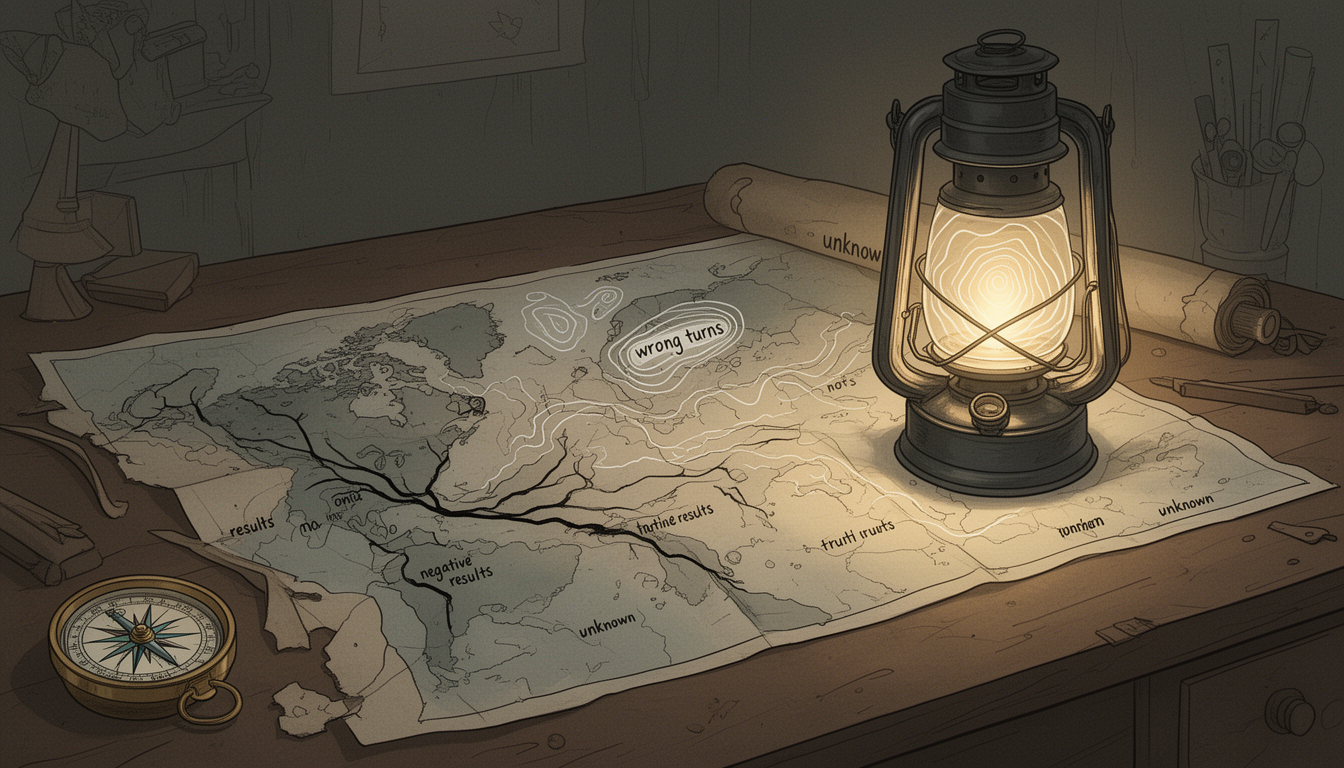
It turns being wrong into progress.
A failed experiment is not a dead end if it reveals something. A broken hypothesis is not a humiliation if it clears the path. Negative results are not empty; they are maps of where truth is not.
This is hard for humans.
We attach identity to our ideas. We want our first answer to be right. We want the world to reward our cleverness.
The method asks for a colder loyalty.
Not to the self.
To the question.
Where in your own life are you defending a conclusion that should really be treated as a hypothesis?
Look for a belief you protect quickly, explain often, or avoid testing.
That is why the Scientific Method remains culturally radical.
It teaches a habit most institutions claim to value and few naturally reward: changing your mind when the evidence changes.
The method outside the laboratory
The Scientific Method is most exact in science, but its spirit travels.
Not every question can be reduced to a controlled experiment. Human life is too layered for that. Love, art, politics, ethics, grief, and meaning do not fit neatly inside a lab.
Still, the method offers a powerful posture.
Be clear about what you think.
Notice what would change your mind.
Look for evidence beyond your preferences.
Separate what happened from the story you prefer.
Update without making a performance of it.
Treat strong assumptions as testable. If you think a change will help, define what “help” means before you begin.
A better question is not “Do I like this idea?” but “What would I expect to see if this idea were true?”
The point is not to make every part of life clinical.
The point is to keep reality in the room.
A simple test for serious claims
When a claim matters, ask better questions.
Not hostile questions. Clean ones.
Claim:
What is being asserted?
Prediction:
If this is true, what should we expect to see?
Test:
How could we check that without relying only on opinion?
Evidence:
What would count for the claim?
What would count against it?
Revision:
If the evidence is mixed or negative, what should change?
This small structure changes the mood of inquiry.
It moves people away from performance.
It makes room for correction.
It also reveals a great deal. Some claims become stronger when tested. Others evaporate the moment they are asked to make a prediction.
The process catalyst
Many catalysts are objects.
A wheel. A press. A machine. A circuit.
The Scientific Method is different.
It is a process catalyst.
It does not merely speed up one activity. It speeds up the discovery of better activities. It improves the way improvement happens.
That makes it unusually powerful.
A single invention can change an industry.
A method for testing inventions can change every industry.
Diagram: Disciplined Question leads to Testable Hypothesis; Testable Hypothesis leads to Experiment; Experiment leads to Evidence; Evidence leads to Correction; Correction leads to More Reliable Knowledge; More Reliable Knowledge leads to Better Tools, Medicine, Machines, Systems; Better Tools, Medicine, Machines, Systems leads to Disciplined Question.
Diagram: Disciplined Question leads to Testable Hypothesis; Testable Hypothesis leads to Experiment; Experiment leads to Evidence; Evidence leads to Correction; Correction leads to More Reliable Knowledge; More Reliable Knowledge leads to Better Tools, Medicine, Machines, Systems; Better Tools, Medicine, Machines, Systems leads to Disciplined Question.
This is the quiet engine behind modern confidence.
Not certainty in the shallow sense.
Not the fantasy that science is never wrong.
Science is wrong constantly at the frontier. That is the point. It is the rare human system built to notice, absorb, and correct its own errors.
The strength is not that every answer is final.
The strength is that no answer has to be.
The discipline that made progress cumulative
The Scientific Method did not remove mystery from the world.
It made mystery approachable.
It gave us a way to stand before the unknown without surrendering to myth, panic, or arrogance. It let us ask nature a question, listen carefully, and ask again with more precision.
That rhythm changed civilization.
Observe.
Hypothesize.
Test.
Analyze.
Refine.
Again.
Again.
Again.
That is how discovery becomes cumulative.
That is how error becomes fuel.
That is how humanity learned not only to know more, but to know better.
Carry the method forward
If this resonates, see how to apply it to your own work with the interactive Dispatch agent.
Be first to like this dispatch