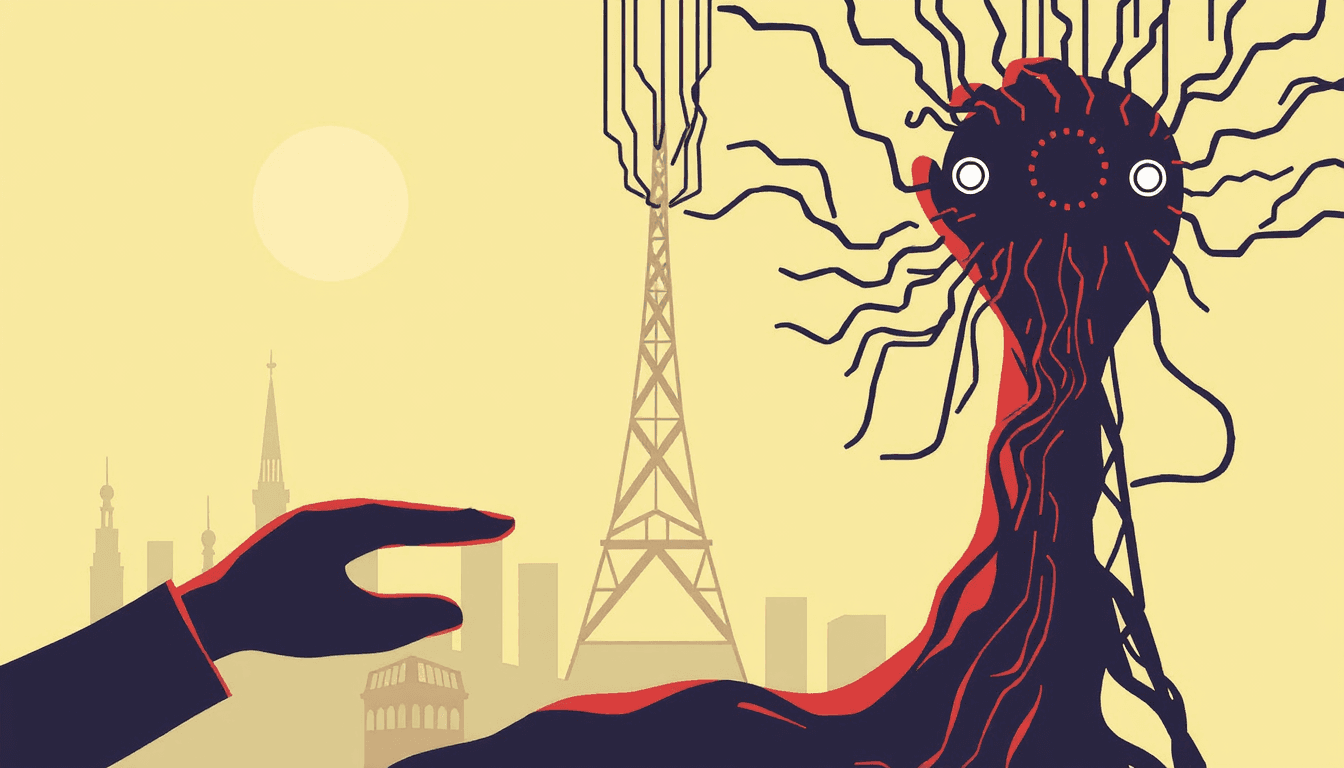
Power is not persuasion—it’s the feedback mechanisms that bend outcomes over time.

Previous · Part 14
When Everyone Wins, Coordination Still Fails
This builds on Part 14: When Everyone Wins, Coordination Still Fails
The Law of Diminishing Returns
More input feels like safety.
More reading. More research. More templates. More courses. More “I’ll start once I’ve got everything I need.”
But at some point, additional input stops compounding your output—and starts consuming your ability to finish.
The hidden equation: Output = Input × Synthesis × Execution
At first, “Input” increases your raw material. You have more examples to learn from, more angles to steal, more references to cite.
Then “Synthesis” becomes the bottleneck. You spend more time integrating than deciding. And “Execution” starts losing because your calendar has become a reading list.
So the system doesn’t fail because you’re learning too much.
It fails because you’re learning without a mechanism for conversion.
How the curve bends
1) Input increases, feedback latency increases
When you keep collecting information, you delay exposure to reality. Your experiments become less frequent. Your revisions become less grounded.
You’re not just “waiting for clarity.” You’re increasing the time between reality checks.
2) The search space grows faster than your capacity to explore
Each new source introduces not only facts, but interpretation demands:
- Which ideas matter?
- What conflicts?
- What’s the real underlying model?
- What’s actionable vs decorative?
As the library grows, the cost of finding the one thing that changes your next action rises.
So you continue reading—because stopping feels like leaving value on the table.
But you’ve already passed the point where the next 10% of information gives you 1% of leverage.
3) Decision quality falls under uncertainty
A strange side effect: more options reduce decisiveness. Your brain treats open loops as threats.
You become more “careful,” which is another word for avoiding the risk of being wrong.
The output drops—not because you lack knowledge, but because you’ve raised the bar for committing.
4) Cognitive bandwidth gets taxed
Every additional input competes for attention with:
- ongoing work
- planning
- debugging
- deciding
- writing
- shipping
Even when you can remember the material, you can’t run the machine and read indefinitely. The mind is not an infinite workspace.
Why “I just need one more thing” is often the problem
The rational version of the thought is: “If I learn the missing piece, I can execute.”
The system version is: “I’m postponing commitment because commitment would make me evaluate and possibly fail.”
Diminishing returns aren’t about intelligence. They’re about control.
Input offers control without consequence—until you stop. Output offers consequence with learning baked in.
The conversion layer: turning input into output
This is the missing mechanism most people never install.
Input must pass through a conversion layer that forces synthesis into decisions.
Install a small “input-to-output” protocol
Tabs: how diminishing returns looks in different modes
If your “input” is not the same kind of thing, your fix won’t be either.
You keep reading because you’re trying to reduce uncertainty.
Fix: require a decision memo after every reading session: 3 bullets, 1 action, 0 attachments.
Course-build mode
You consume structured material but postpone building until you’re “done learning.”
Fix: build alongside the course. Every module creates a deliverable, even if ugly.
Craft/perfection mode
You add more reference because you want quality and correctness.
Fix: define a quality threshold. Once met, ship and iterate with feedback—not more study.
Network/information mode
You keep collecting leads, opinions, and updates.
Fix: convert inputs into a single weekly priority list and stop feeding anything that doesn’t map to it.
A practical diagnosis: which bottleneck are you hitting?
If output is shrinking as input grows, you likely have one of these bottlenecks.
Diagram: More input leads to More candidates/options; More candidates/options leads to What slows you?; What slows you? leads to Integration time increases (Synthesis); What slows you? leads to Commitment avoided (Decision); What slows you? leads to Shipping frequency drops (Execution); What slows you? leads to Reality checks delayed (Feedback); Integration time increases leads to Output declines; Commitment avoided leads to Output declines; Shipping frequency drops leads to Output declines; Reality checks delayed leads to Output declines.
Diagram: More input leads to More candidates/options; More candidates/options leads to What slows you?; What slows you? leads to Integration time increases (Synthesis); What slows you? leads to Commitment avoided (Decision); What slows you? leads to Shipping frequency drops (Execution); What slows you? leads to Reality checks delayed (Feedback); Integration time increases leads to Output declines; Commitment avoided leads to Output declines; Shipping frequency drops leads to Output declines; Reality checks delayed leads to Output declines.
What to do when you catch yourself feeding the machine
Here are “in-the-moment” interventions that don’t require heroics.
The real rule (in plain language)
More input can be wise.
But diminishing returns is the rule that appears when input stops buying leverage—when it becomes consumption instead of conversion.
If this resonates, see how to apply it to your own work with the interactive Dispatch agent.
Be first to like this dispatch