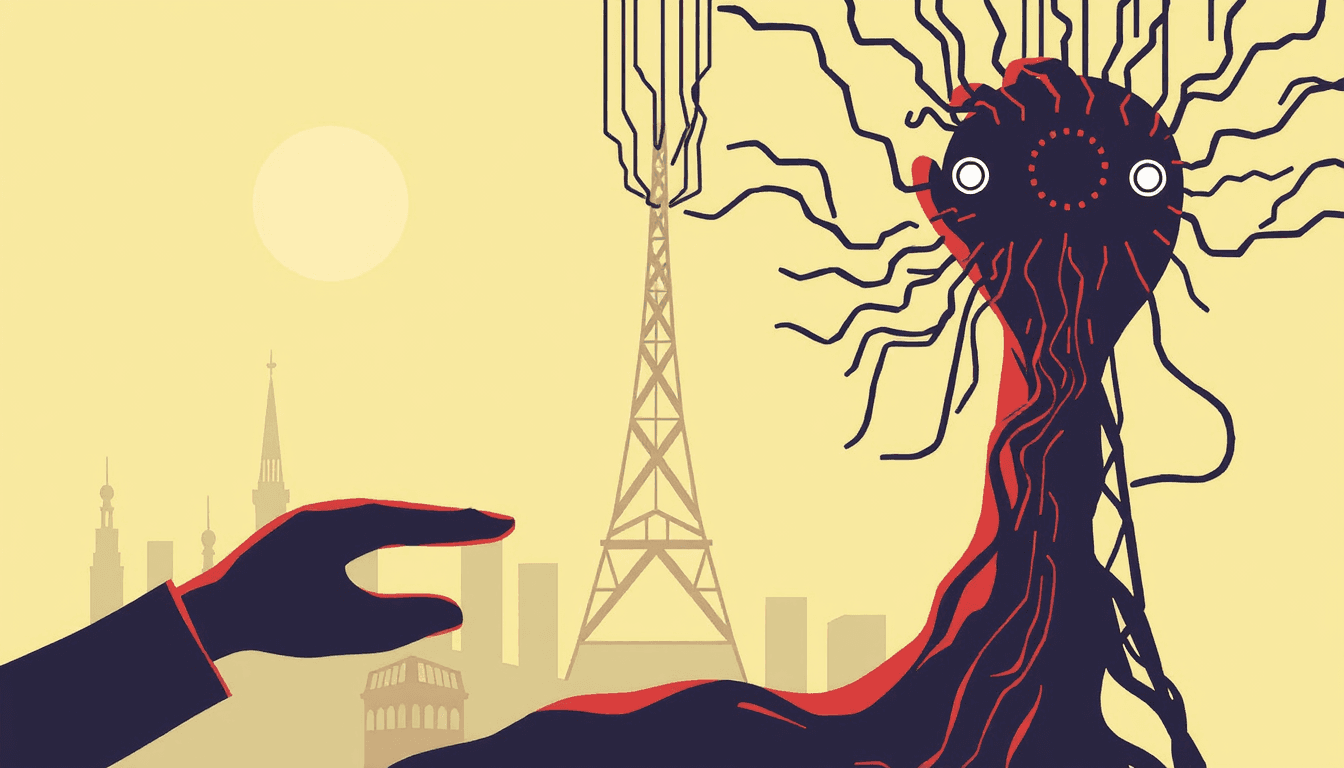
Power is not persuasion—it’s the feedback mechanisms that bend outcomes over time.

Next · Part 2
Path Dependence: How Early Choices Become Destiny (Even When You Change Your Mind)
Continue with Part 2: Path Dependence: How Early Choices Become Destiny (Even When You Change Your Mind)
Network Effects
There’s a reason “everyone moved” doesn’t feel like hype—it feels like gravity.
Some systems don’t merely support additional people. They become more valuable as more people participate. That’s the core of network effects: value that increases with connection density, not despite it.
The world runs on compounding connections
If you’ve ever felt the difference between a nearly-empty room and a packed one, you’ve already experienced the simplest version of the idea.
But network effects are more than busy-ness. They’re about three compounding forces:
- Coverage: more participants means more availability, options, and responsiveness.
- Relevance: more data and interactions sharpen recommendations, norms, and expectations.
- Standardization: shared practices become “the way,” reducing friction and increasing trust.
When those forces compound, the system doesn’t just grow. It improves.
Value doesn’t rise because people are nice—it rises because the graph thickens
You can think of a system as a web of nodes and edges.
- Nodes: people (or organizations), accounts, devices, followers.
- Edges: relationships—messages, transactions, collaborations, matches, citations.
As the web thickens, paths multiply. The system becomes easier to navigate, more rewarding to explore, and harder to leave without losing utility.
That’s why network effects often feel like inevitability once adoption crosses a threshold.
Network effects come in different flavors (and not all of them win)
Not every “growing user base” produces durable advantage. Some networks scale cleanly. Others don’t. The value curve depends on what type of interaction the system enables.
Value rises because each additional participant can interact with existing participants.
Examples: calling, messaging, marketplaces.
Indirect network effects
Value rises because participants create complements that make the system more useful.
Examples: platforms with apps, games with communities, ecosystems with tools.
Two-sided (or multi-sided) network effects
Value rises for one group because the other group is present (and vice versa).
Examples: marketplaces matching buyers and sellers, payment networks, ad-supported platforms.
The point isn’t to label them. It’s to locate which loop is actually operating in your system.
The hidden engine: feedback loops
Network effects are rarely one-off. They usually ride feedback loops:
- Adoption increases interactions
- Interactions increase learning and signal
- Signal improves experiences
- Improved experiences increase adoption
This is why network effects feel like they have a “self-reinforcing” personality. They don’t just accumulate users. They accumulate evidence—about what works, what’s likely, what’s trusted, what’s worth seeing.
When value increases, power follows
Once a system has network effects, the center of gravity shifts.
Participants don’t only choose based on features. They choose based on the future utility of being connected to “who’s there” and “what’s next.” That gives network owners and early entrants leverage—sometimes subtle, sometimes enormous.
And it also creates an uncomfortable truth: in network systems, timing becomes a competitive variable.
Not because people are irrational. Because when utility compounds, waiting can be expensive.
Reality check: network effects require structure
A network effect isn’t a wish. It’s a structural property.
To generate it, a system typically needs:
- Meaningful interaction (edges must represent value, not just presence)
- Reducible friction (joining must not feel heavy)
- Measurable signals (the system needs feedback to learn)
- Stability or norms (trust and expectations prevent chaos from dominating)
Without structure, growth remains linear—or becomes negative.
The takeaway
Network effects are one of the cleanest examples of how “systems” aren’t just metaphors—they’re mechanics. When joining changes the structure and improves outcomes, value compounds. And once it compounds, the system starts to feel like fate.
If this resonates, see how to apply it to your own work with the interactive Dispatch agent.
Be first to like this dispatch