
Next · Part 2
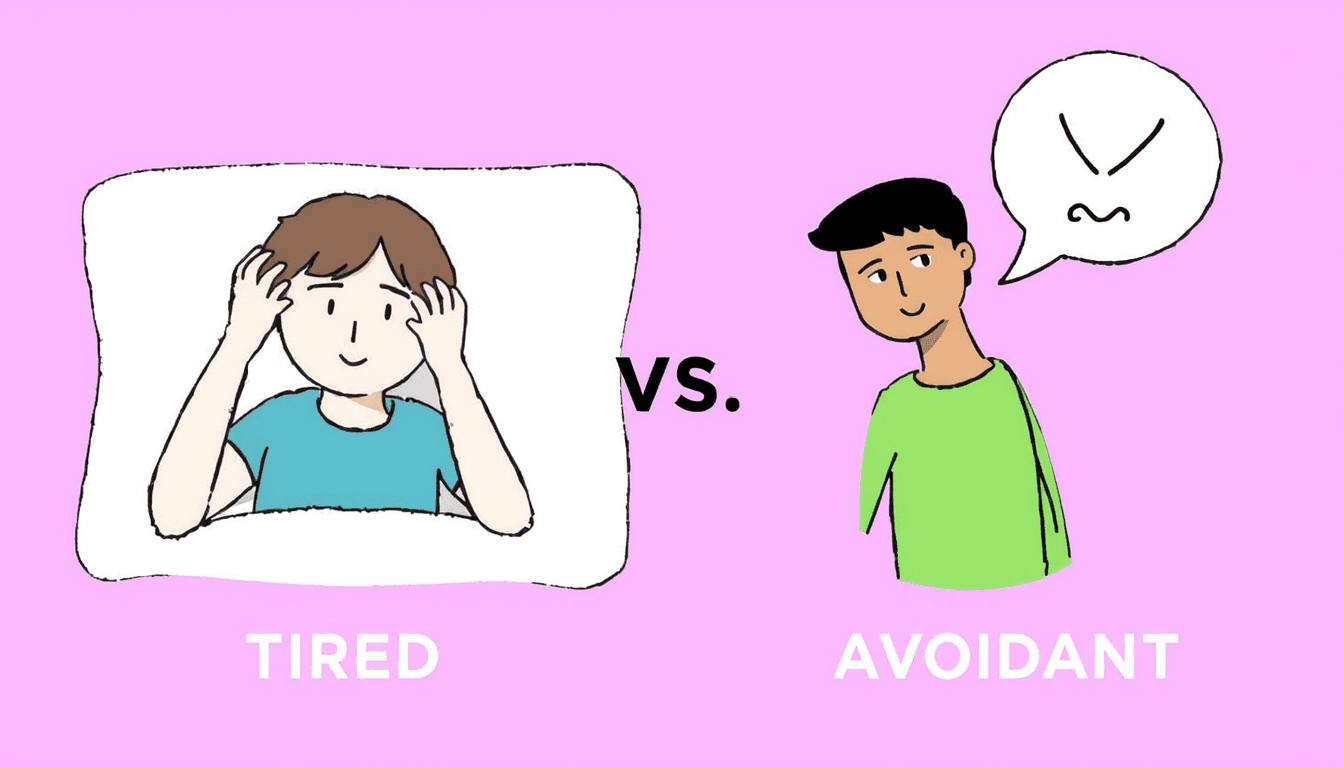
Tired vs. Avoidant: How to Tell Which One You’re Actually Feeling
Continue with Part 2: Tired vs. Avoidant: How to Tell Which One You’re Actually Feeling
The quiet tax you’ve been paying
Unfinished things don’t stay neutral. They lodge in the background of your mind, quietly collecting emotional interest—until you can’t tell whether you’re avoiding a task… or avoiding the feeling it carries.
This is why “I’ll do it later” often becomes “I’m still thinking about it.” The brain doesn’t file away incomplete loops. It keeps a running account.
Why closure feels heavy (and why it matters)
Closure isn’t only a productivity idea. It’s a nervous-system idea. When you leave something incomplete, your mind stays on standby: scanning for updates, rehearsing next steps, and quietly estimating effort.
The result is a subtle kind of fatigue. Not dramatic burnout—more like low-grade emotional drag that makes everything else feel harder than it should.
The three kinds of unfinished things
Not all loops are created equal. If you treat them the same, you’ll keep “doing more,” without ever feeling the relief.
1) The unfinished you can finish
Deadlines, emails, drafts, repairs. Concrete tasks with a definable next action.
2) The unfinished you should decide about
Projects you’ve outgrown. Commitments that no longer fit. Work that’s technically “in progress” but emotionally abandoned.
3) The unfinished you need to release
Grudges, guilt, promises you made to others—or to yourself—then failed to uphold. These are loops without a checklist.
The real cost: where it shows up
Emotional weight leaks into your day in recognizable ways:
- You feel resistance before you even start.
- You avoid opening the document/email/thread.
- You experience “mental fog” around related tasks.
- You keep planning around the thing instead of doing it.
This is often mistaken for laziness or lack of discipline. It’s usually incomplete closure asking for attention.
A closure method that doesn’t require heroics
You don’t need to complete everything. You need to reduce the number of open loops your brain has to monitor.
Use this closure sequence, in order:
This is how you turn emotional weight into momentum—without waiting for motivation to show up.
Closure scripts you can borrow immediately
Sometimes the missing ingredient is language. Here are three quick scripts for the three categories.
If it’s “finish”
You’re not “catching up.” You’re starting.
Script:
“I’m doing the next step only. I’ll stop when the next step is clear.”
If it’s “decide”
Decision is closure. A decision doesn’t have to be permanent—it has to be real.
Script:
“Either I commit to this by [date] or I stop pretending it’s active.”
If it’s “release”
Release is not denial. It’s consent to move forward.
Script:
“I did what I could with what I knew. I’m no longer responsible for carrying this the same way.”
The mindset shift: from pressure to partnership
Unfinished things create pressure because they imply an obligation. But you can reframe them as a relationship with your future self.
Your goal isn’t to never start anything you can’t finish. Your goal is to start with awareness—and close with respect.
What to do today (small, real, effective)
You’re going to pick just one loop and close it the smallest meaningful way.
If you want the fastest relief: choose something you can finish in a single sitting. Then stop. Let the closure land.
Close loops like a professional
Professionals aren’t more disciplined. They’re more practiced at ending things clearly—by finishing, deciding, or releasing.
And each time you close one loop, you teach your attention a new rule: “We end what we start, or we formally decide otherwise.”
Takeaway Checklist — Do this now
If this resonates, see how to apply it to your own work with the interactive Dispatch agent.
Be first to like this dispatch