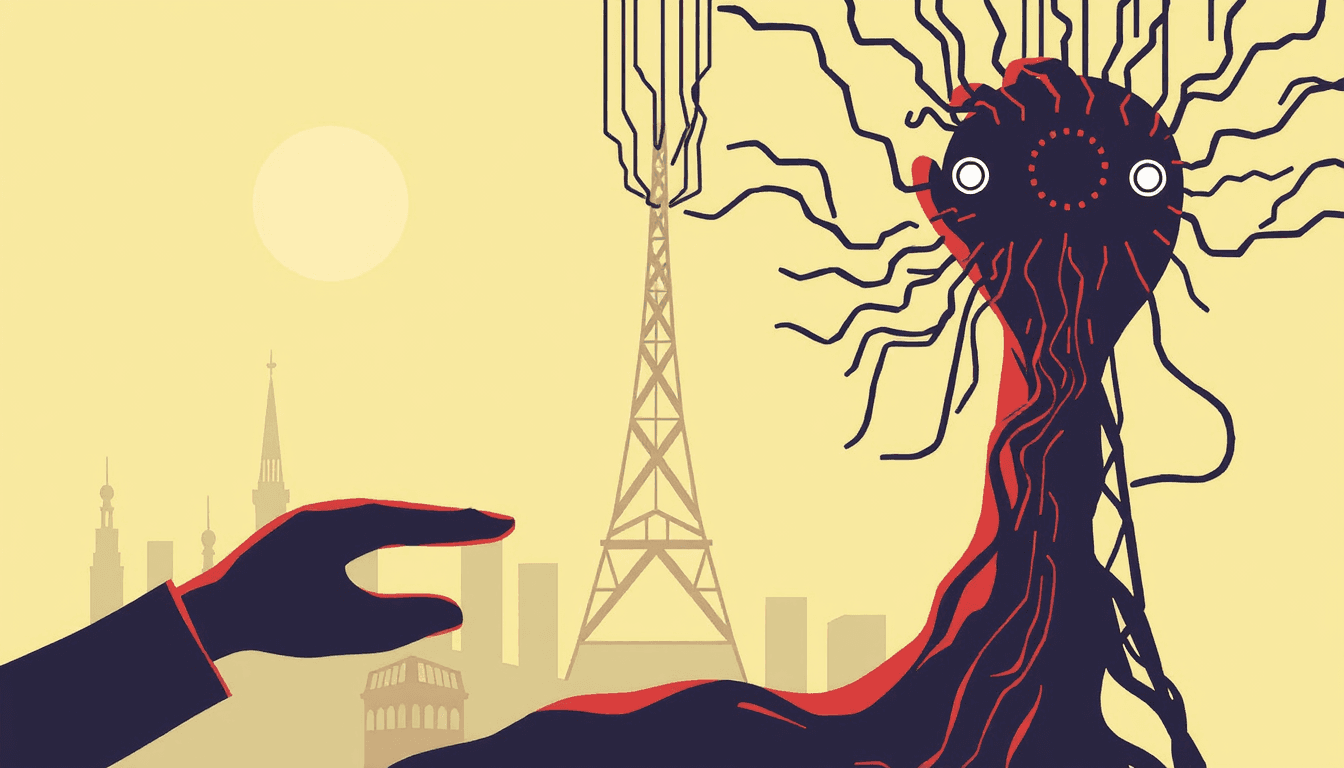
Power is not persuasion—it’s the feedback mechanisms that bend outcomes over time.

Previous · Part 1
Network Effects: Why Value Rises When More People Join

Next · Part 3
The Matthew Effect: How Advantage Compounds Across Money, Attention, and Opportunity
This builds on Part 1: Network Effects: Why Value Rises When More People Join
Continue with Part 3: The Matthew Effect: How Advantage Compounds Across Money, Attention, and Opportunity
Path Dependence
Some outcomes don’t merely follow decisions. They inherit them.
Path dependence is what happens when early events—sometimes small, even arbitrary—create conditions that make later alternatives harder to choose, costlier to reverse, and psychologically easier to rationalize. You don’t just end up with a result. You end up with a trajectory.
The hidden engine: increasing returns and switching costs
Path dependence tends to show up when two things collide:
- Increasing returns: As you commit, the value of continuing rises (experience, compatibility, standardization, reputation).
- Switching costs: Changing later requires paying for retooling, re-learning, breaking social contracts, rebuilding trust.
Even if a better option exists later, the world may become organized around the first choice.
Where it appears (quietly, everywhere)
In organizations
A team hires for an initial strategy, builds processes around it, and trains people accordingly. Later, a new strategy might require disassembling workflow, redefining ownership, and retraining. The organization calls this “realism.” It’s often inertia in a suit.
In technology and standards
Once a platform is widely used, it accumulates integrations, tooling, and learned behavior. New entrants can be technically superior yet lose because the ecosystem is already aligned elsewhere.
In relationships and habits
The first pattern becomes the default. You don’t simply teach a habit—you teach the expectations around it: timing, tone, acceptable friction, what counts as “normal.”
The mechanics: why reversing becomes emotionally and economically expensive
Path dependence is rarely one single factor. It’s a stack:
- Coordination locks: Others have committed too.
- Learning locks: Your skills and mental models assume the old route.
- Data locks: Measurements reward the current system, not the hypothetical better one.
- Investment locks: Money, time, identity—spent already—begins to dictate the future.
- Narrative locks: People build stories that make the early decision feel inevitable.
The key question: What has ratcheted?
Not every early decision matters. Path dependence appears when the early choice creates irreversible steps—or near-irreversible ones.
Ask: What does the world now assume?
Here are common ratchets:
- A standard (what “works” becomes what “matches”)
- A budget (what’s funded becomes what’s possible)
- A network (who depends on you becomes who coordinates with you)
- A skill profile (what you can do fast becomes what you do)
- A culture (what behavior is rewarded becomes what behavior will occur)
A practical model for early decisions
Use this as a decision lens the moment you’re tempted to say, “It’s too early to overthink.”
The smallest irreversible act is often the real danger
You can think of commitments as a spectrum:
- Reversible: try, explore, prototype, test.
- Semi-reversible: limited rollout, pilot with teardown options.
- Irreversible: hiring lock-in, standard adoption, permanent integrations, identity anchoring, long-term contracts.
Path dependence usually begins at the exact moment you cross from learning into identity and infrastructure.
Tabs: how to respond when you suspect you’re locked in
Beginner
If you feel stuck, look for the “easy lever”:
- Find what’s expensive because of habit, not because of necessity.
- Run a small experiment to create new evidence.
- Decide based on outcomes, not on past reasoning.
Experienced
Treat it like a system:
- Identify which ratchet is dominant (coordination, skills, standards, data, identity).
- Design interventions that reduce switching costs (parallel tracks, translation layers, staged migrations).
- Measure the incremental benefit of change, then compare it to the incremental inertia.
Advanced
Model it as a dynamic constraint problem:
- Define the state variables (resources, capabilities, norms, dependencies).
- Track how early commitments change transition costs between states.
- Only “lock-in” when expected value growth outweighs expected future switching cost under uncertainty.
When to embrace path dependence (it’s not always a problem)
Sometimes inertia is a feature.
- Security frameworks: stability can be life-saving.
- Quality systems: consistent processes prevent chaos.
- Reputation building: trust compounds.
- Brand and standards: coherence beats novelty.
The difference between constructive path dependence and destructive path dependence is agency: you can still steer the trajectory.
If the system no longer lets you correct course, that’s not commitment. That’s entrapment.
A short self-audit for your own trajectory
Where have you made an early commitment that now quietly shapes your options?
Name the ratchet (standard, cost, coordination, skills, data, identity). What would switching actually require—time, trust, or both?
And then decide what kind of response you need:
- Reduce switching costs
- Create a parallel path
- Stage the migration
- Reframe the narrative
- Or—rarely—accept the lock and extract value
Decision tool: “Is this path-dependent in a healthy way?”
Is my current setup gaining compounding value, or just accumulating inertia?
Treat it as healthy if you can still test and steer within the locked-in structure. Treat it as unhealthy if correction requires breaking trust or rebuilding everything.
Practical takeaway checklist
If this resonates, see how to apply it to your own work with the interactive Dispatch agent.
Be first to like this dispatch