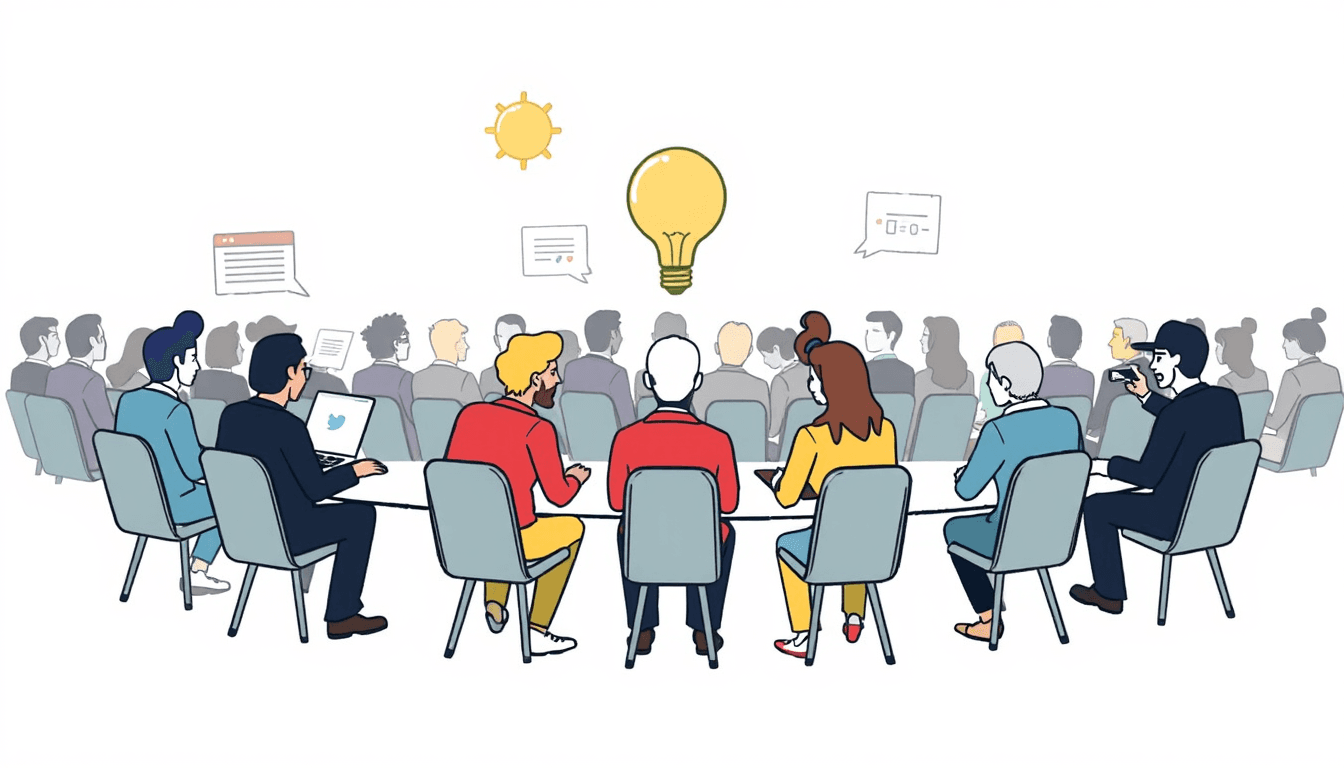
Explanation becomes power when it extracts essential structure—and carries it through frictionless transfer.

Previous · Part 8
The Compounding Test: Does Your Insight Travel?

Next · Part 10
Description vs Illumination: How Explanations Reorganise Understanding
This builds on Part 8: The Compounding Test: Does Your Insight Travel?
Continue with Part 10: Description vs Illumination: How Explanations Reorganise Understanding
Make the Mechanism Visible
People don’t just buy claims. They buy reasons. And reasons land when your reader can see the internal motion—what has to be true for the outcome to follow.
This is the persuasion edge of showing how something works. Not because it sounds smart. Because it reduces uncertainty in the only place that matters: inside your audience’s mind.
The persuasion problem: “It works” has no handle
When you say something “works,” your reader is forced to do a private calculation:
- Is the result real, or curated?
- What causes it—so could it fail under new conditions?
- What would I need to do to get the same benefit?
Without a visible mechanism, they can’t verify your claim. They can only guess.
So they default to the safest strategy: skepticism, waiting, or outsourcing trust to someone else.
The persuasion advantage: a visible mechanism makes outcomes legible
A mechanism creates a transfer bridge. Your reader can map:
Cause → Process → Effect
Once they understand that chain, belief becomes less mystical. It becomes directional.
They stop asking, “Does it work?” and start asking, “Given these inputs, will the mechanism fire?”
Mechanism ≠ Details. It’s the essential structure.
Showing how something works doesn’t mean drowning people in minutiae. It means revealing the invariants—the parts that don’t change when the context shifts.
Think of it like this: your reader doesn’t need every screw. They need the gearbox.
Three ways “mechanism” persuades
Continue reading with a subscription
Explorer and Immersion subscribers get full access to all premium dispatches, series, and long-form guides.
If this resonates, see how to apply it to your own work with the interactive Dispatch agent.
Be first to like this dispatch