Lasting transformation is ignited by catalysts—specific ideas or tools that compress time and amplify human capability.


Previous · Part 4
Zero: The Number That Made Nothing Work
This builds on Part 4: Zero: The Number That Made Nothing Work
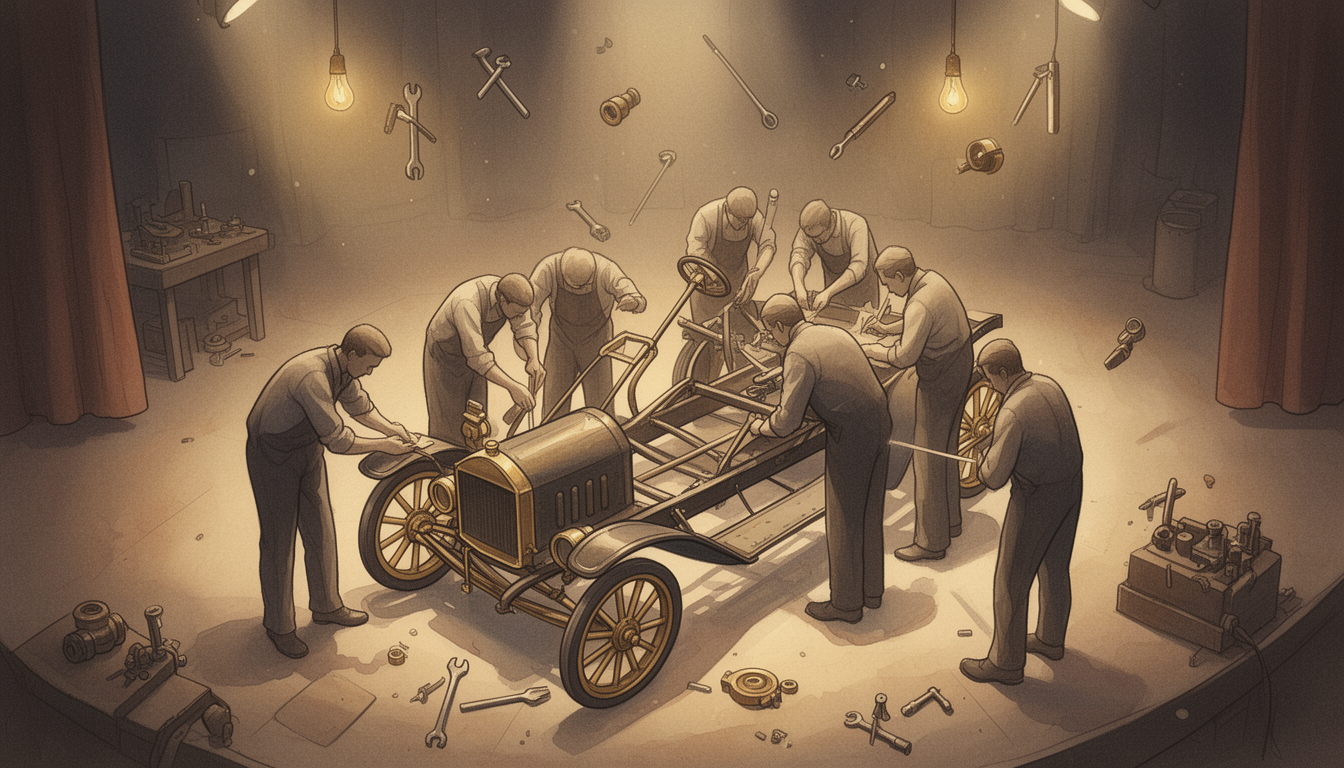
Before 1913, a car was mostly a performance.
To build a single Model T, a team of skilled mechanics spent around 12 hours. They hovered over a stationary chassis, moving tools and parts around like actors sharing a stage. It was impressive work—slow, costly, and dependent on people being in the right place at the right time.
Then Ford asked a question that sounds simple until you feel its consequences:
What if the work came to the man?
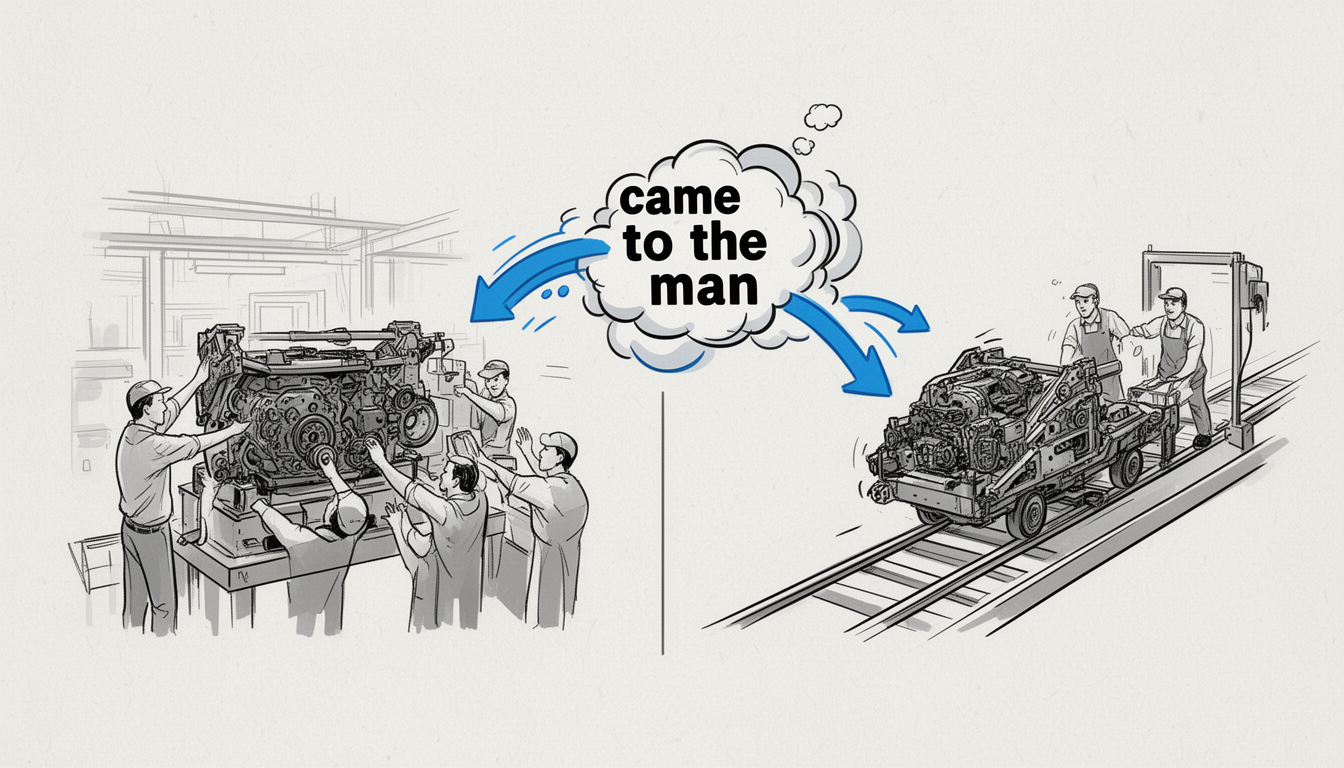
The Leap: From Craft Loops to a Flow Machine
At Highland Park, Ford and his engineers built a moving line along roughly a 150-foot path. The chassis traveled—pulled by rope, later by chain—past a sequence of workers.
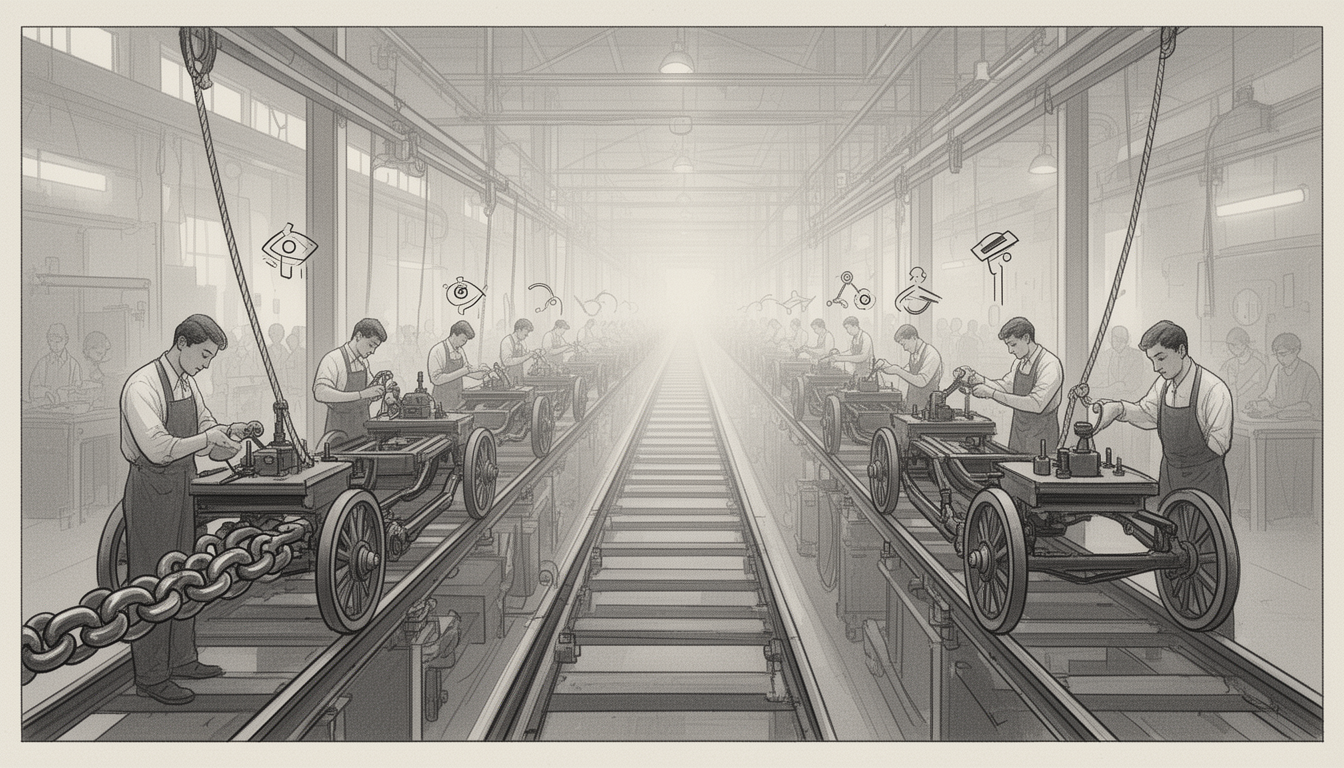
Each person did one narrow task.
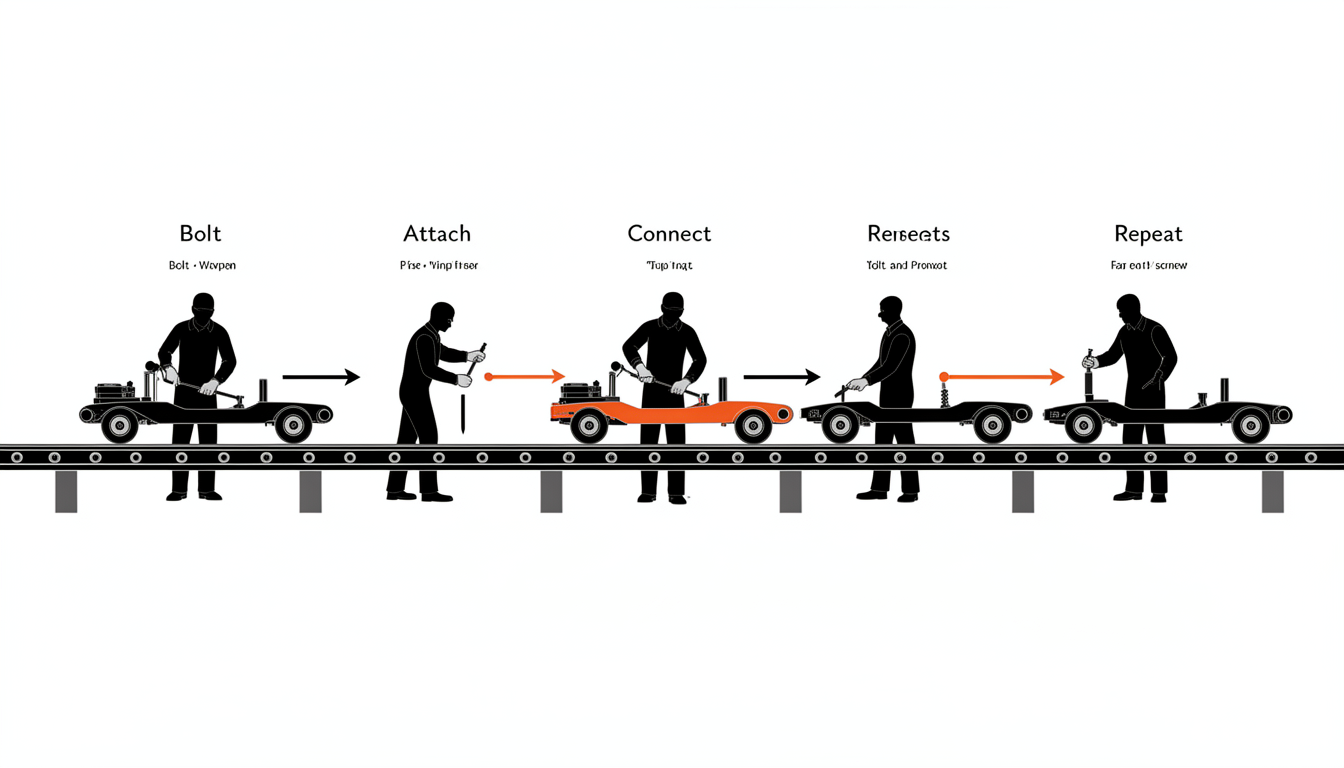
Bolt. Attach. Connect. Repeat.
The geometry of the work changed. Instead of teams gathering around a static object, the object streamed through the team. The factory became continuous motion.
And that’s the part most people miss: the line wasn’t only a piece of equipment. It was a coordination system.
The Catalyst: The moving assembly line wasn't a single invention, but an orchestration. It synchronized standardized parts, interchangeable workers, and continuous motion into a relentless, efficient system.
The Numbers That Hit Like Gravity
The impact was immediate—and hard to argue with.
- Build time fell from 12 hours to 93 minutes.
- Production surged.
- Cost collapsed: the price dropped from $850 to $260.
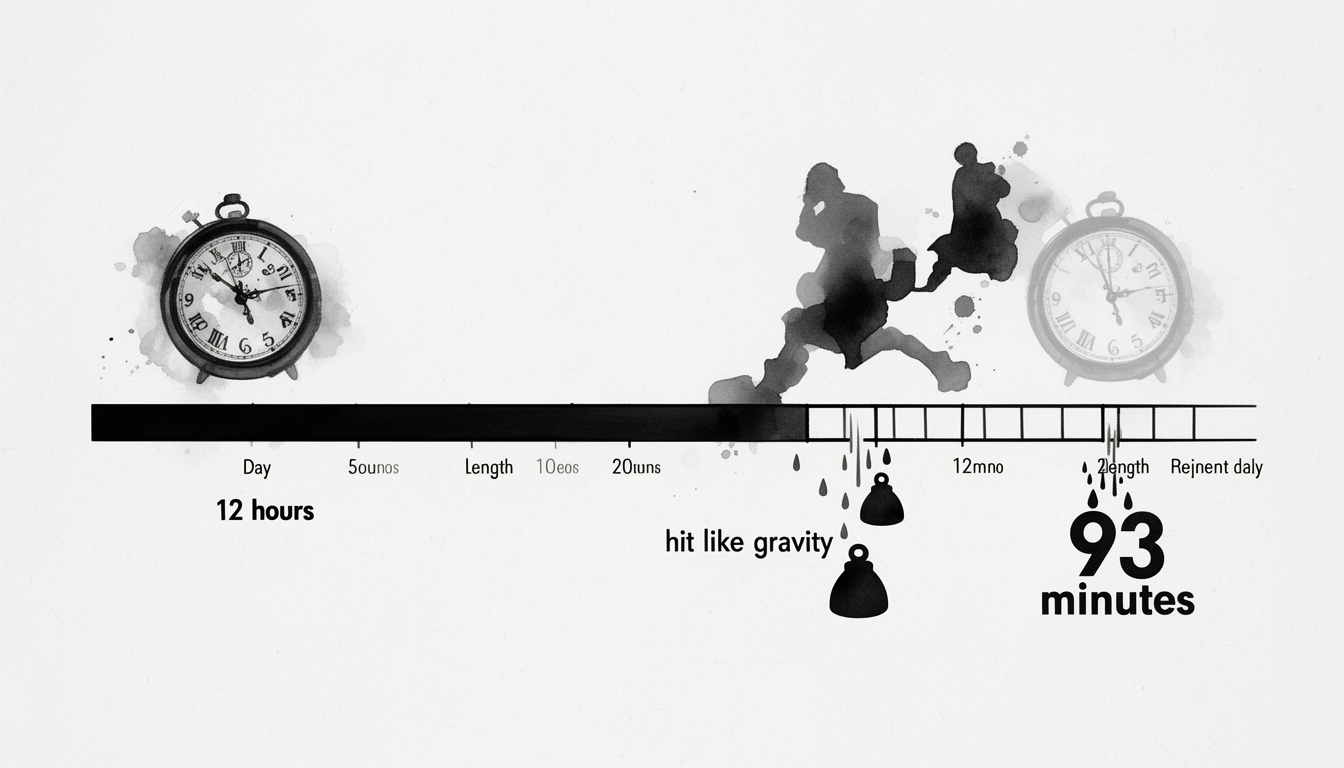
This was more than a better product. It was a new economic possibility. When cars became cheaper, they stopped being a rare prize and started being a mass good.
And when that happened, the whole world had to catch up: roads, financing, servicing, advertising, supply chains, commuter life.
Build time
12 hours → 93 minutes
Model T price
$850 → $260
Why Ford’s Line Also Needed People to Change
Ford’s $5-a-day wage—often treated as pure generosity—was also an engineered response.
The assembly line’s work was monotonous. Monotonous work tends to produce turnover. High turnover is expensive: retraining costs money, consistency breaks, and the flow stops being smooth.
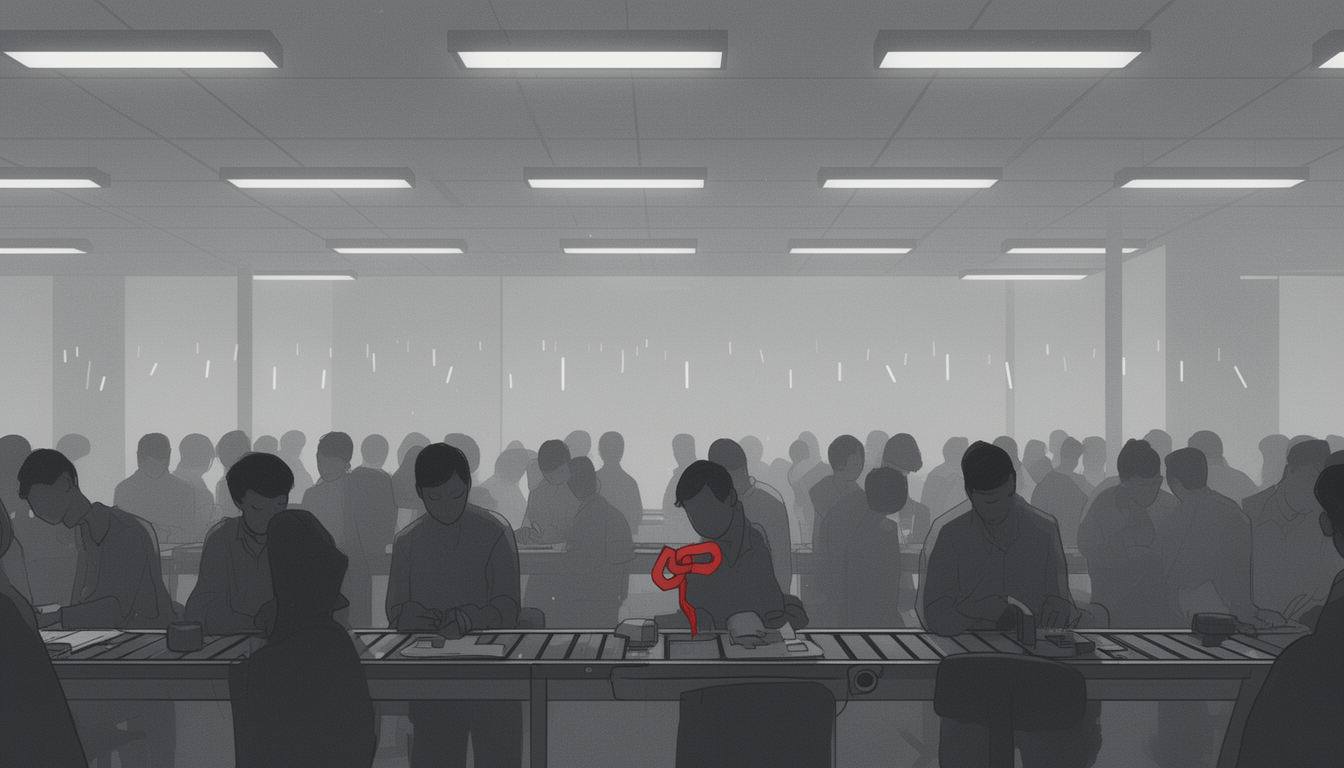
So Ford doubled the industry standard to stabilize the labor force.
That wage did two things at once:
- Reduced churn (keeping production stable).
- Created customers (workers could afford the products they helped build).
The Hidden Cost: What Standardization Extracts
The assembly line didn’t just manufacture cars. It trained society in a new relationship to work.
The benefits were real:
- mass production
- lower prices
- a growing middle class
- the blueprint for the 20th-century industrial world
But the same standardization that made production reliable also made labor narrower.
This is where the legacy becomes double-edged.
The assembly line helped birth Taylorist efficiency—the breaking of work into timed segments that can be measured, optimized, and replaced. That logic erodes craft. It turns expertise into repeatable steps, then treats those steps as interchangeable. Over time, that can hollow out the meaning of work.
And as factories intensified, the popular image of industrial life hardened into something harsher: “dark satanic mills.” Whether you use that phrase literally or not, it points to a real tension—what happens when the system treats people like parts.
The Real Catalyst: A Factory That Rewired Society’s Rhythm
If you zoom out, the moving line is a physical expression of a deeper idea:
Standardization isn’t only about identical parts.
It’s about identical expectations—about what should happen next, how often, and in what sequence.
The assembly line synchronized:
- standardized components
- continuous motion
- repeatable tasks
- a labor force that could stay long enough to be consistent
That synchronization didn’t stay inside factories. It traveled outward into the economy and culture, helping create “the age of plenty” and “the age of the cog.”
The factory’s motion became the model for modern life:
work broken into stages, output measured in units, progress treated as throughput.
The Takeaway You Can Carry Forward
Ford didn’t invent speed alone. He invented a system where speed became inevitable—because every constraint (parts, people, motion, timing) was arranged to support it.
That’s the lesson of the moving line: the next leap in human affairs often looks less like a new tool and more like a new orchestration.
If this resonates, see how to apply it to your own work with the interactive Dispatch agent.
Be first to like this dispatch