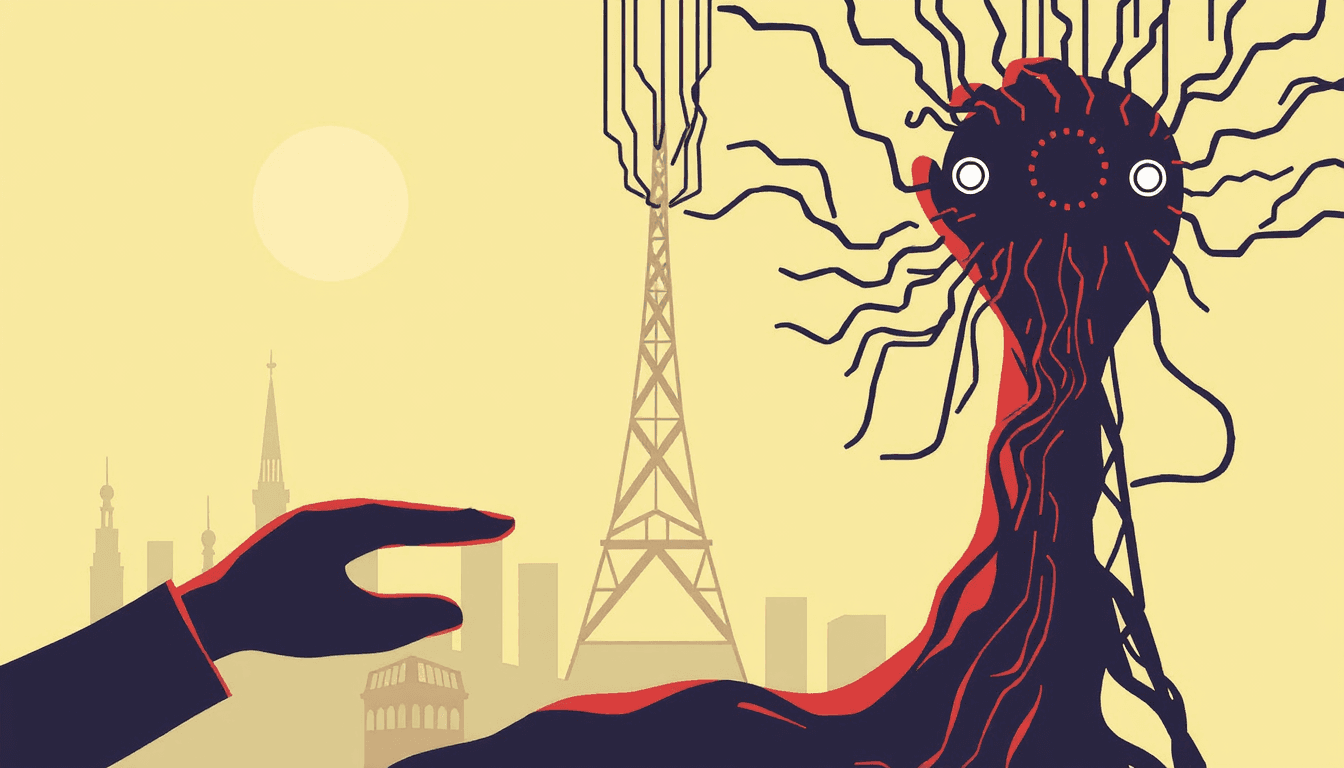
Power is not persuasion—it’s the feedback mechanisms that bend outcomes over time.


Previous · Part 11
Fragility vs Antifragility: How Systems Learn (and Unlearn) Under Stress

Next · Part 13
Critical Mass: The Tipping Point Where Growth Stops Needing You
This builds on Part 11: Fragility vs Antifragility: How Systems Learn (and Unlearn) Under Stress
Continue with Part 13: Critical Mass: The Tipping Point Where Growth Stops Needing You
Emergence: When the System Becomes the Author
Sometimes you can do everything “right” and still get a result you didn’t plan for.
Not because you made a mistake. Because you set a machine in motion—one made of many interacting parts. In complex systems, outcomes often arise from the pattern of interaction itself. The system “writes” the ending, and your intentions are only one variable among many.
The Core Mechanism: Interactions Over Intention
A simple system can often be predicted from its parts. A complex one resists that move.
Why? Because the parts don’t just add up; they interact. Feedback loops form. Nonlinear effects kick in. Small differences get amplified. And constraints—rules, environments, resource limits—shape what’s possible.
So instead of asking, “Who intended this?” you ask, “What conditions make this outcome likely?”
Micro to Macro: Local Rules, Global Patterns
Emergence doesn’t require mystical forces. It requires only that:
- agents follow simple rules,
- their actions influence one another,
- and the system has enough complexity to produce unintended coordination.
Think of it like weather. No one person “decides” where a storm forms. But given the right conditions—temperature gradients, pressure systems, moisture, and time—the pattern becomes extremely likely.
In human systems, the same logic holds—only the “conditions” include incentives, information flows, norms, and institutional friction.
Why Emergence Feels Like Magic (Until You Look)
There’s a specific reason emergent outcomes surprise us.
We naturally reason like designers. We expect causality to run in a straight line: decision → action → result. But complex systems often produce causality that curves, loops, and multiplies.
So the result can look like it came “out of nowhere” when it’s actually the cumulative output of many interactions over time.
The Two Kinds of Unplanned Outcomes
Not all emergent outcomes are the same. Sometimes emergence is productive. Sometimes it’s destructive.
1) Beneficial emergence (order from coordination)
This is the system discovering efficient structure without being centrally commanded.
Examples: markets allocating resources, teams self-organising around bottlenecks, communities forming norms that reduce friction.
2) Pathological emergence (order from constraints)
This is the system locking into dynamics that hurt everyone—sometimes slowly, sometimes suddenly.
Examples: arms races, cascades, lock-in behaviors, coordination failures that feel “inevitable” once they start.
The Emergence Trap: Confusing Outcomes With Intent
Here’s the intellectual hazard: anthropomorphising.
When something emerges, it’s tempting to speak as if the system had a plan:
- “The market wants…”
- “The organisation decided…”
- “The network is pushing…”
But emergence doesn’t imply agency. It implies structure.
The system doesn’t choose. It converges.
A Simple Diagram of Emergence
Diagram: Local actions by many agents leads to Interactions & constraints; Interactions & constraints leads to Feedback loops; Feedback loops leads to Nonlinear dynamics; Nonlinear dynamics leads to Global pattern emerges; Global pattern emerges leads to Outcomes that no one designed.
Diagram: Local actions by many agents leads to Interactions & constraints; Interactions & constraints leads to Feedback loops; Feedback loops leads to Nonlinear dynamics; Nonlinear dynamics leads to Global pattern emerges; Global pattern emerges leads to Outcomes that no one designed.
What You Can Do About It (Practically, Not Pretending)
If emergence is inevitable, the goal isn’t to eliminate complexity. It’s to shape it.
You can’t fully control the macro outcome. But you can influence:
- what rules agents follow,
- what information they see,
- how feedback is measured and when it triggers,
- which interactions are strengthened or throttled,
- and where constraints allow multiple equilibria versus forcing a single one.
Decision Points: How to Handle Emergent Reality
Complex systems reward a particular stance: humility with leverage.
You admit that you can’t predict everything. Then you design for learning—so your system improves as the outcome reveals itself.
Tabs: Different Mental Models for Different Stakes
Emergence means “big results from small moves.” If many people interact under rules, the pattern you get can’t be traced to any one person’s intention.
A Quick Reality Check Exercise
Where in your life or work are you relying on “intent-based causality” (assuming outcomes mainly reflect what someone meant)?
List one emergent outcome you’ve observed, then write the interaction conditions you suspect produced it.
Final Takeaway Checklist (Use This This Week)
If this resonates, see how to apply it to your own work with the interactive Dispatch agent.
Be first to like this dispatch