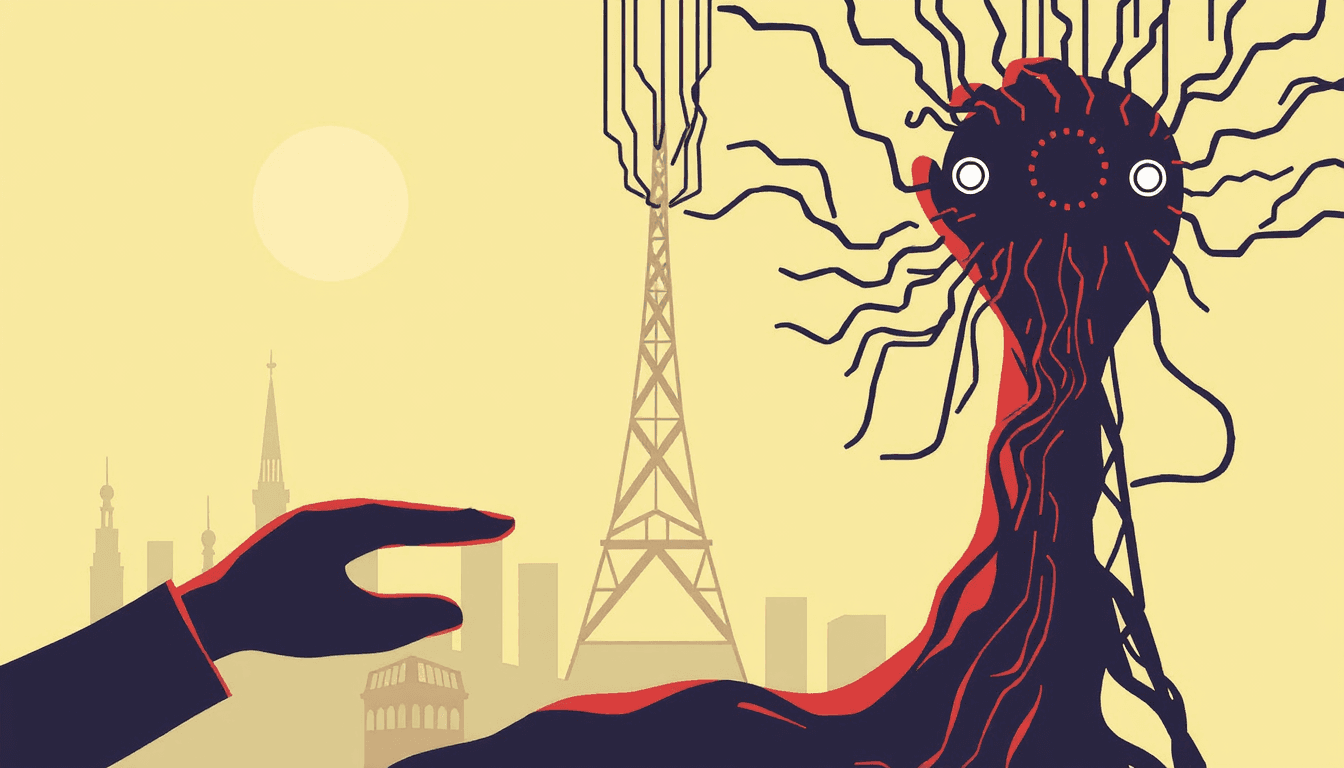
The answers you need are the questions that keep reappearing—because they govern your incentives, agency, and stakes.


Previous · Part 14
Turning Knowledge into Wisdom: The Missing Link Between Knowing and Judging
This builds on Part 14: Turning Knowledge into Wisdom: The Missing Link Between Knowing and Judging
What makes something matter?
When we say something “matters,” we’re usually doing more than describing importance. We’re making a claim about influence: what will move our attention, our resources, our decisions, our time.
The quiet machinery behind “importance”
Most value talk sounds metaphysical. Underneath, it’s operational.
Something matters when three forces line up:
- It predicts outcomes. People feel value because the thing has consequences they can’t ignore.
- It signals identity. People defend value because it reflects who they are.
- It sustains commitment. People keep choosing it because the cost of switching feels irrational.
None of these are purely “about” the thing. They’re about how the thing behaves in the web of expectations.
A simple model: Matter = Perceived Consequence × Social Reinforcement × Personal Resonance
You can treat “mattering” as a multiplier:
- Perceived consequence: “If I do this, the world changes in a way I care about.”
- Social reinforcement: “Other people treat this as real.”
- Personal resonance: “This connects to my experience, temperament, and meaning.”
When all three are high, the thing becomes hard to dismiss—even if you can’t fully justify it.
Why agreement is rare
You’ve probably noticed that two smart people can look at the same phenomenon and feel it differently.
That’s not necessarily incompetence. It’s usually mismatched inputs to the multiplier:
- One person experiences consequences directly (and learns fast).
- Another person mostly encounters signals and reputational gravity.
- Someone else feels resonance through lived analogy—pain, joy, craft, love.
- And sometimes the difference is just that their systems for updating are calibrated differently.
The three ways value gets assigned
Value tends to be created through different mechanisms. They can blend, but they’re distinct.
1) Instrumental value (I can use it)
This is the cleanest: the thing is valuable because it achieves goals.
- Money, tools, time-saving habits.
- Skills, strategies, materials.
Instrumental value is often legible. But it can be shallow—especially when goals drift.
2) Experiential value (I have it / I feel it)
Some things matter because they shape the texture of living.
- Music you return to.
- Rituals that steady you.
- Work that makes time disappear.
This value is real, but it doesn’t always scale into public consensus.
3) Normative value (We should want it)
This is the social layer: not merely “I like it,” but “it deserves pursuit.”
- Justice.
- Dignity.
- Care.
- Rights.
Normative value is where moral language comes from—and also where people can talk past each other most aggressively.
Reinforcement: how value survives doubt
Even when evidence is ambiguous, values persist. Why?
Because value doesn’t only live in beliefs. It lives in habits.
- If a thing repeatedly guides behavior, it earns loyalty.
- If communities reward it, it gains momentum.
- If identity depends on it, it becomes defended.
This is why “mattering” can outlive correctness. A value can be valuable to the system even when it’s empirically shaky—at least for a while.
The hidden danger: mistaking attention for matter
We often treat the loudest signals as the most important ones. That’s a category error.
Attention is a resource. But it’s also a tactic.
- Some things matter because they produce durable consequences.
- Others matter because they manufacture urgency.
- And some things matter only within a narrow feedback loop—until the loop collapses.
A calibration question that cuts through noise
When you want to know whether something truly matters—or whether you’re being pulled by the weather of the moment—use this calibration:
- Can it withstand delay?
If the same priority kept its strength after a day of no stimulation, it likely has substance. - Does it scale beyond your mood?
Values that matter in boredom and fatigue are usually deeper than values that only survive adrenaline. - Does it create better downstream choices?
If it consistently improves your ability to act wisely, it’s earning its place.
When matters become distorted
Sometimes “mattering” grows so powerful that it stops being a compass and starts being a weapon.
- When we outsource value to a crowd, we get moral momentum without discernment.
- When we cling to identity substitutes, we get certainty theater.
- When we chase instrumental payoff too hard, we get means-as-ends.
A short internal audit
Before you accept that something matters—especially if it carries you emotionally—run a quick audit on the three multipliers.
Your turn: what matters to you, and why
Think of one thing you currently treat as “important,” even if you can’t fully defend it.
Answer in three lines: 1) What consequence do you expect? 2) What identity does it signal or protect? 3) What personal resonance (memory/experience) makes it stick? Then ask: If you removed social reinforcement for 30 days, would you still choose it?
Practical takeaway
Value becomes real when it changes what you do—and when it survives contact with delay, fatigue, and independent judgment. If you want to know what truly matters, don’t just ask what you feel. Ask what it reliably makes possible.
If this resonates, see how to apply it to your own work with the interactive Dispatch agent.
Be first to like this dispatch