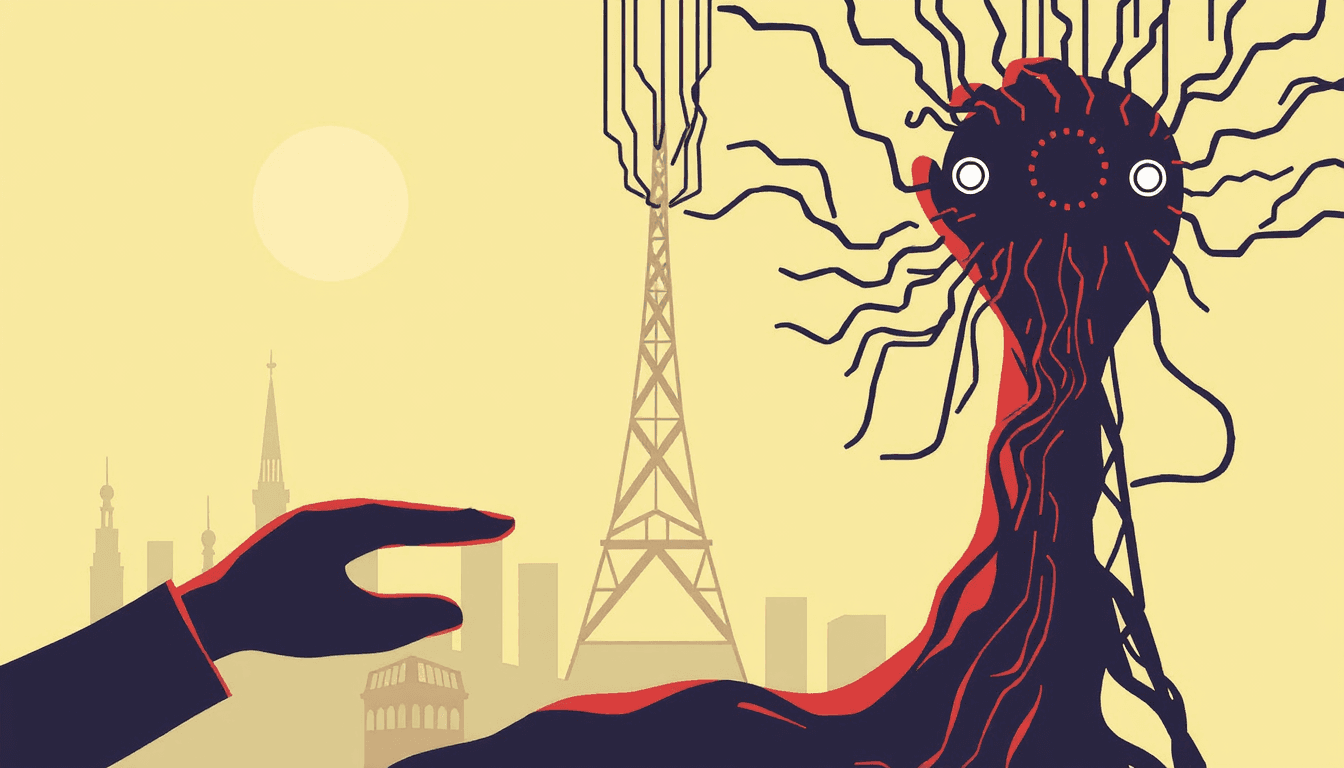
True leverage is found not by removing all friction, but by choosing exactly where it remains.


Previous · Part 8
The Paradox of Infinite Choice: Why Abundance is the Enemy of Depth

Next · Part 10
The Architecture of Mastery: Navigating the Tension Between Depth and Agility
This builds on Part 8: The Paradox of Infinite Choice: Why Abundance is the Enemy of Depth
Continue with Part 10: The Architecture of Mastery: Navigating the Tension Between Depth and Agility
We have been conditioned to view transparency as a universal good—a moral mandate for the modern age. We are told that sunlight is the best disinfectant, that open systems are inherently more robust, and that if you have nothing to hide, you have nothing to fear.
But there is a quieter, more tactical reality. Transparency is not just a value; it is a resource. And like any resource, when it is depleted through indiscriminate use, its value drops to zero.
When you broadcast your intent, your processes, and your internal trade-offs, you gain trust. But you also lose the capacity to move unseen. You surrender the tactical high ground.
The Dynamics of Openness
Transparency acts as a signal of integrity. To your audience, it feels like an invitation; to your competitors, it feels like an instruction manual. The tension here lies in the fact that power often resides in the "what" and the "why," while transparency focuses exclusively on the "how."
Diagram: Intent leads to The Transparency Threshold; Advantage leads to Information Asymmetry; Community leads to Information Symmetry; Information Asymmetry leads to Control & Agility; Information Symmetry leads to Alignment & Legitimacy.
Diagram: Intent leads to The Transparency Threshold; Advantage leads to Information Asymmetry; Community leads to Information Symmetry; Information Asymmetry leads to Control & Agility; Information Symmetry leads to Alignment & Legitimacy.
When you move toward total symmetry, you lose the ability to surprise. You forfeit the "first-mover advantage" that comes from holding cards that no one else can see.
The Spectrum of Exposure
Not all transparency serves the same master. Depending on your goals—whether you are building a community, defending a market position, or creating a brand—your approach to disclosure must shift.
Embrace radical openness regarding your failures and your values. Your audience is buying into your journey, not just your output.
The Cost of the Glass Cage
The danger of becoming too transparent is that you begin to optimize for the audience's gaze rather than your own mission. When every decision is scrutinized in real-time, the natural response is to become risk-averse. You stop making the bold, strange, or unconventional choices because you cannot afford the energy required to explain them to a crowd that doesn't have the context to understand.
If you find yourself explaining your choices more than you are executing them, you have likely drifted too far toward transparency and away from agency.
Recovering Your Leverage
You do not need to choose between being a fortress and being a display case. The most effective actors learn to calibrate their exposure.
Defining Your Boundaries
True power requires the ability to choose what remains hidden. Without the ability to hold back information, you are no longer a strategist; you are merely a participant in someone else’s game.
Where in your current work are you over-sharing?
Identify one aspect of your strategy that, if kept private, would allow you to move with more confidence.
The goal is not to be dishonest. It is to recognize that your strategic advantage depends, in part, on the distance between what the world sees and what you are actually capable of doing. Protect that distance.
If this resonates, see how to apply it to your own work with the interactive Dispatch agent.
Be first to like this dispatch