The Unseen Architect Blueprint: What This Series Builds for You
You don’t need more effort—you need a cleaner signal chain that steers you from emotion to action.

Previous · Part 1
You’re Already Building—Now Add a Compass
Next · Part 3
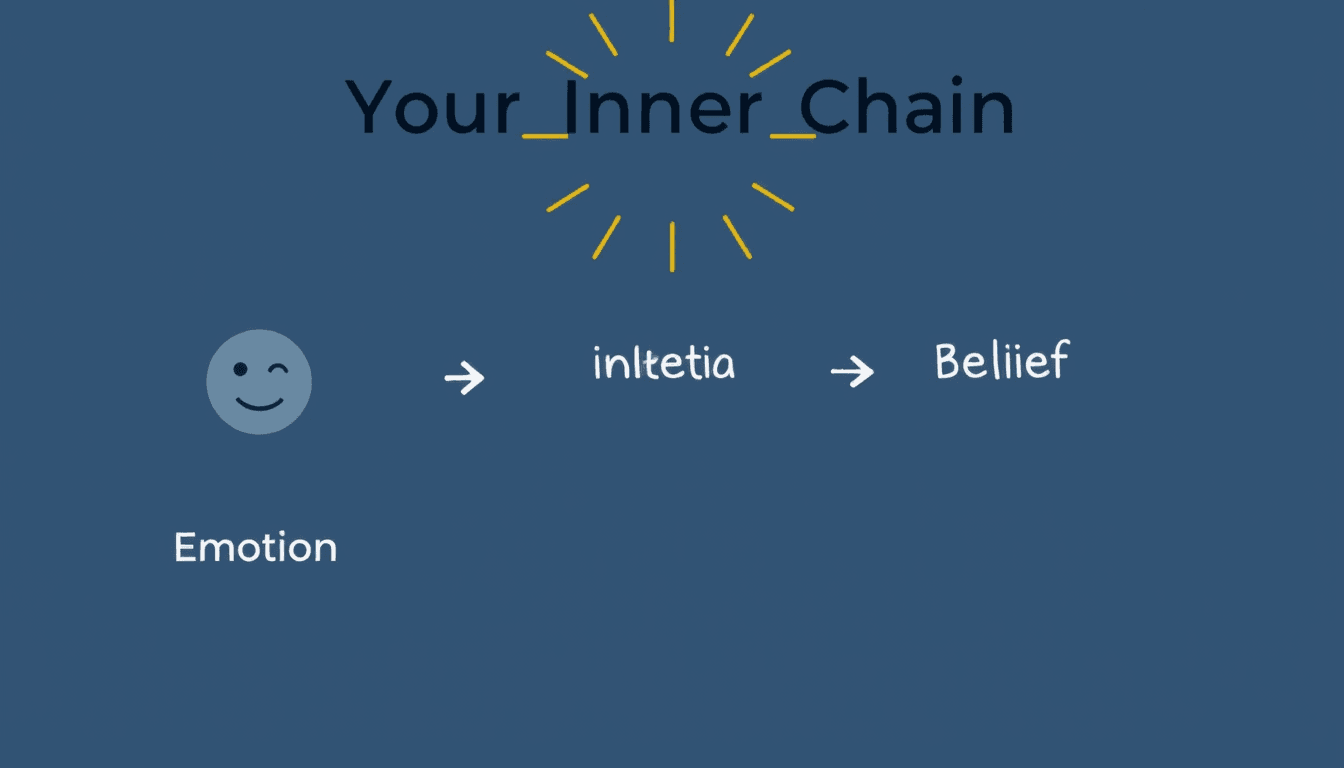
Your Inner Chain: Emotion → Intention → Belief (The Repeatable Mechanism)
This builds on Part 1: You’re Already Building—Now Add a Compass
Continue with Part 3: Your Inner Chain: Emotion → Intention → Belief (The Repeatable Mechanism)
What This Series Will Do for You (Part 1): The Inside-Out Blueprint
You’re already creating—whether you realize it or not.
Right now, your life is reflecting the way you’re steering from the inside: what you notice, what you believe, what you rehearse, and what you keep returning to. The Unseen Architect series simply gives you a cleaner interface—so you can move from automatic alignment to intentional creation.
The engine is emotion. The draft is intention. The instructions are belief.
Before any “external results” show up, there’s an internal chain reaction:
- Emotion calibrates your alignment (like a compass).
- Intention focuses the blueprint (what you want to build).
- Words and belief convert awareness into direction (what your inner world organizes).
The point isn’t to “think positive.” The point is to learn how to translate your inner signals into consistent direction—even when life feels noisy.
The System in One Line (So You Don’t Drift)
You don’t need more wishing. You need a better feedback loop.
- Emotion tells the truth about your current alignment.
- Intention gives the blueprint a target.
- Belief provides the bedrock that lets the blueprint hold.
- Anchors and rhythms help you stay steady.
- Release clears the channel for allowance.
In Part 1, we lay the foundation: alignment, intention, and belief—the core “architecture tools” before we add supports.
Diagram: Emotion as Alignment Signal leads to Intention as Blueprint Target; Intention as Blueprint Target leads to Belief as Bedrock / Conviction; Belief as Bedrock / Conviction leads to Anchors as Return Points; Anchors as Return Points leads to Daily Rhythms as Stability; Daily Rhythms as Stability leads to Strategic Release as Channel Clearing; Strategic Release as Channel Clearing leads to Continuous Conscious Living.
Diagram: Emotion as Alignment Signal leads to Intention as Blueprint Target; Intention as Blueprint Target leads to Belief as Bedrock / Conviction; Belief as Bedrock / Conviction leads to Anchors as Return Points; Anchors as Return Points leads to Daily Rhythms as Stability; Daily Rhythms as Stability leads to Strategic Release as Channel Clearing; Strategic Release as Channel Clearing leads to Continuous Conscious Living.
Why This Series Feels Different
Most people try to manifest by adding effort: more affirmations, more focus, more intensity.
This series works by improving calibration.
When you treat your inner world like an instrument—something you can tune—you stop treating setbacks like failures. You start treating them like feedback.
The Sequence You’ll Learn (Part 1 Focus)
You’ll move through a set of pillars that build on each other. Each one activates the last.
Emotion → Alignment (Compass)
Emotion is not a problem to fix. It’s your navigation signal—telling you whether your inner state matches the blueprint you’re trying to build.
Intention → Blueprint Target
Intention is your “what.” It’s the shape of the outcome you’re building. Without it, alignment becomes vague and your inner energy has no clean direction.
Belief → Bedrock Conviction
Belief is the “how it gets to be real” layer. Limiting beliefs create internal resistance. Conviction creates inner flow—space for the blueprint to hold without collapse.
A Simple Rhythm You’ll Use From the Start
This will become your internal operating system—when you’re writing, working, creating, dating, recovering, or simply trying to live on purpose.
Chapter-Opening Bridge (Your “Architect Mode” Switch)
If you remember one thing from Part 1, remember this: you are not trying—you are designing.
Here’s the premise that sets the tone for the early chapters: you’re using your inner world like a workspace.
What “Magic” Means in This System (So You Stay Empowered)
This series uses the language of “magic” only as metaphor—and even then, it’s always anchored to mastery.
Magic becomes: your ability to shift internal states—deliberately—so your life can reorganize around a new alignment.
Checklist: Part 1 Outcomes (Before We Move On)
Use this as a yardstick while you write (or read) the first set of chapters.
If this resonates, see how to apply it to your own work with the interactive Dispatch agent.
Be first to like this dispatch