Writer’s block is rarely a single problem.
Sometimes you do not know what to say. Sometimes you know exactly what you want to say but cannot find the right shape. Sometimes the work is clear, yet beginning feels strangely impossible.
The mistake is treating all of these moments as the same.
A useful author’s toolbox begins with a simple principle:
Do not fight the page. Diagnose the problem.
Once you know what is stuck, you can choose the right move.
The writer’s block matrix

| What’s happening | What it usually means | What to do next |
|---|---|---|
| You have no ideas | The subject is too broad or too distant | Narrow the question |
| You have too many ideas | There is no clear centre | Choose the one thing the piece must do |
| You know the point but cannot begin | You are trying to write the introduction first | Start with the clearest paragraph |
| The draft feels flat | The writing has information but no tension | Add a question, contrast, or stake |
| Every sentence feels wrong | You are editing before discovering | Write a rough, deliberately imperfect version |
| You keep stopping halfway | The structure is carrying too much weight | Break the piece into smaller turns |
| You are bored | You have removed your own curiosity | Follow the most interesting complication |
This is the first useful distinction: the surface problem is not always the real problem.
“I can’t write” may mean “I have not decided what this is about.”
“My introduction is terrible” may mean “I have not yet found the argument.”
“I need more research” may mean “I am avoiding the uncertainty of making a claim.”
The page often becomes easier when the problem is named accurately.
If this, then that
When the work stalls, use the smallest intervention that matches the obstacle.
If you have no idea what to write
Ask a sharper question.
A broad subject gives you a field. A specific question gives you somewhere to stand.

Instead of:
I want to write about creativity.
Try:
Why do creative people produce less when they have too many tools?
The second question creates pressure. Pressure creates movement.
If you have too many ideas
Choose the central tension.
A piece can contain many observations, but it usually needs one organising conflict.
Try completing this sentence:
This is really about the difference between ______ and ______.
For example:
This is really about the difference between collecting ideas and developing them.

That contrast can become the spine of the piece.
If you know what you mean but cannot start
Write the middle first.

The opening is often difficult because it has to introduce the subject, establish the tone, and promise something worth reading. That is too much responsibility for a blank page.
Start with the paragraph you can already see.
Write the example. State the argument. Describe the moment when something changed.
You can build the entrance later.
If every sentence sounds awkward
Stop trying to make it good.
Write the version that explains the idea plainly, even if it feels clumsy. A rough sentence contains more material than an elegant silence.
You are not writing the final piece. You are finding the piece.
Revision works best when there is something to revise.
If the draft feels boring
Look for what is missing from the writer’s own attention.
Boredom often enters when a writer reports what they think they should say instead of pursuing what they actually find strange, useful, or unresolved.
Ask:
- What surprised me here?
- What do I disagree with?
- What would a smart reader challenge?
- Where does the obvious answer fail?
Interest is not always found at the beginning. Sometimes it appears when the argument meets resistance.
If you keep abandoning drafts
Reduce the size of the promise.
A piece that attempts to explain everything is difficult to finish because it has no natural edge.
Instead of trying to write the definitive essay on a subject, write one clear dispatch about one visible problem.
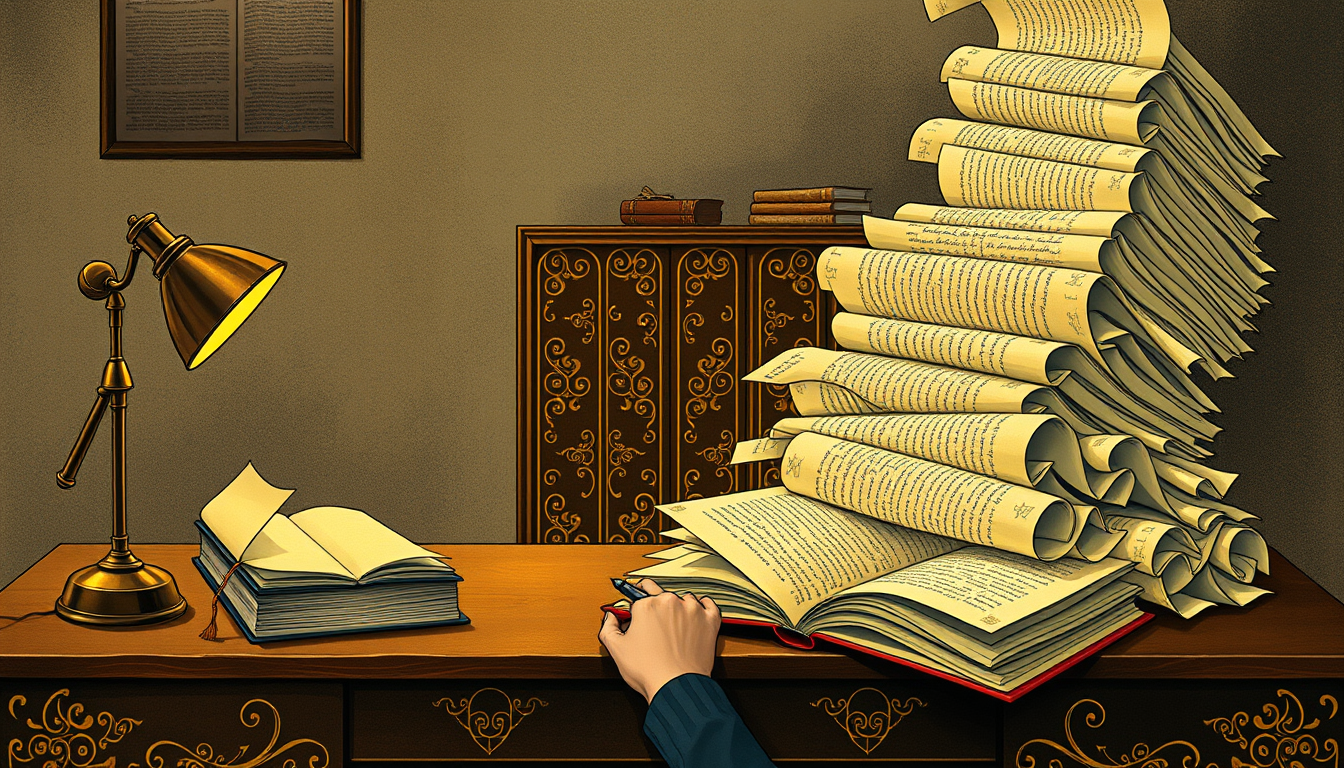
A small finished piece teaches you more than a large abandoned one.
Principles in action
Principles are useful only when they change what you do.
Here are three that belong in every author’s toolbox.
1. Clarity comes from commitment
You do not always discover the subject by thinking longer. Often, you discover it by choosing a direction and writing into it.
A draft can change its mind. It cannot develop if it refuses to make one.
Commit to a temporary version of the idea:
For now, I believe this is about…
That is enough to begin.
2. Movement matters more than completeness
A strong piece does not need to contain everything you know. It needs to move the reader from one understanding to another.
Each paragraph should alter the reader’s position in some small way.
It might:
- introduce a problem
- complicate an assumption
- offer an example
- make a distinction
- reveal a consequence
- arrive at a clearer claim
If a paragraph does none of these, it may be circling rather than progressing.
3. The draft is a place to think
Writing is not only the act of expressing finished thoughts. It is also how unfinished thoughts become visible.
That means confusion is not always a warning sign. Sometimes it is evidence that the work has begun.
Let the draft show you what you mean.
A simple diagnostic loop
When you are stuck, move through these questions:
-
What kind of stuck is this?
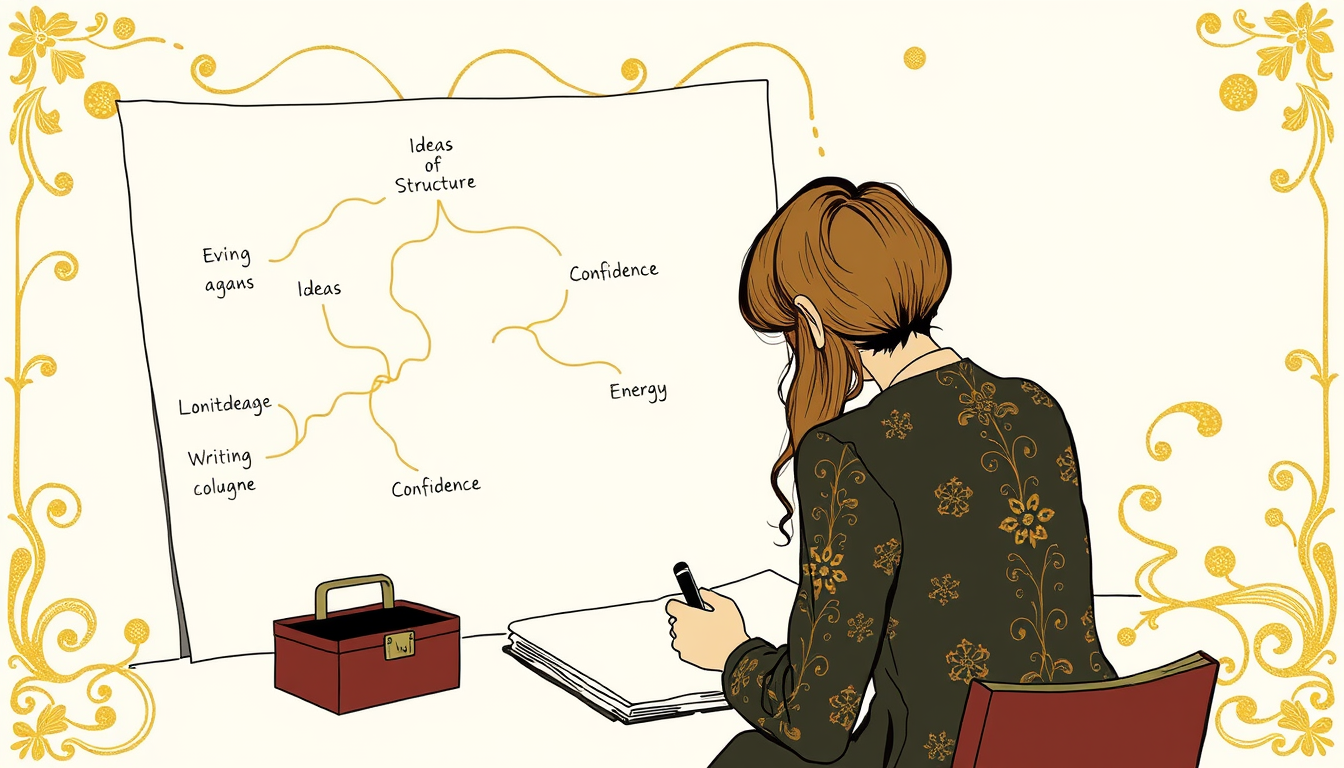
Idea, structure, language, confidence, or energy? -
What is the smallest decision I can make?
A question, a point of view, an example, or an ending? -
What can I write without solving the whole piece?
One paragraph is enough. -
What changed after I wrote it?
The next move usually becomes clearer once something exists.
This is not a system for eliminating difficulty. It is a way to stop making the wrong difficulty worse.
A writer’s toolbox is not a collection of tricks for avoiding resistance. It is a set of moves that make resistance useful.
The page does not need you to feel ready.

It needs you to make one clear choice, then another.
Interactive Companion
Prompt Matrix Builder
Name what is blocking your writing and assemble a focused prompt for your smallest useful next move.
Generated Prompt
Act as a practical writing coach. Help me diagnose the problem rather than fight the blank page.

I am working on a short essay.
My working material:
I want to write about why creative people produce less when they have too many tools.

My selected obstacle:
I have no ideas. The subject may be too broad or too distant. Help me narrow it into a specific question that creates pressure and gives me somewhere to begin.

Treat this explanation as a working hypothesis, not a certainty. Use the smallest intervention that fits the material. If context is missing, ask one focused question rather than inventing my intent.

Assistance style: Do not write the prose for me. Give me one focused exercise and a concrete starting instruction.
Writing target: one rough paragraph.

Keep the response compact. Name the likely obstacle, help me make one temporary decision, and give me a next move toward the writing target. Do not attempt to solve or finish the whole piece. Prioritise movement over polish and completeness.

End with a brief check-in for after I write: What changed, and what is the next smallest decision?
If this resonates, see how to apply it to your own work with the interactive Dispatch agent.
Be first to like this dispatch