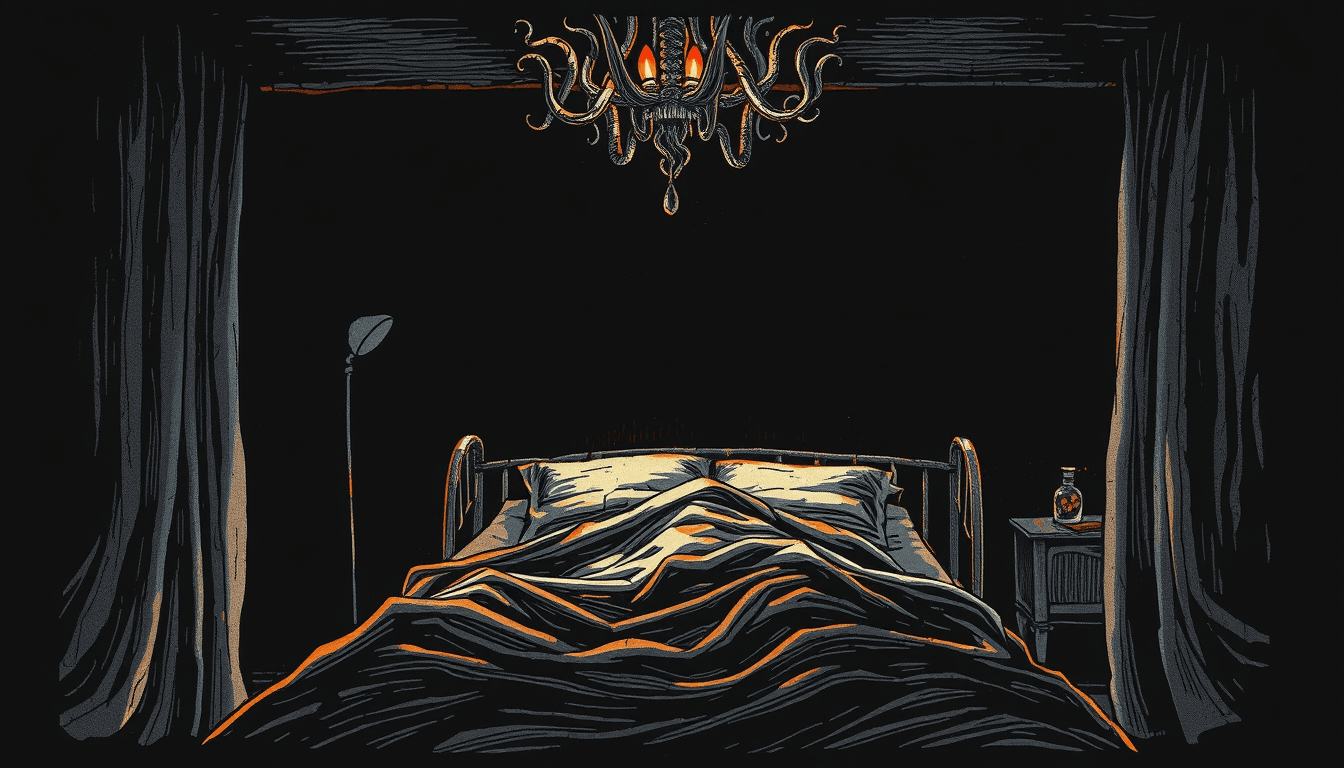
Consider the last time you felt the urge to ask for permission.
It probably wasn’t dramatic. You weren’t standing before a judge or asking a bank for a million dollars. It was smaller than that: a pause before sending an email, a hesitation before publishing your work, a glance around the room to see whether everyone else agreed before you voiced your objection.
That pause is not a personality flaw.
It does not mean you lack courage, ability, or experience. More often, it means you have reached an unclear moment and your mind is searching for an authority figure to make the uncertainty disappear.
You are waiting for a green light.

The problem is that the person holding it may no longer exist.
How the Habit Was Installed
Watch a toddler for ten minutes.
They do not ask whether it is strategically wise to crawl toward the sofa. They touch the wall, grab the cat, put the keys in their mouth, and learn from what happens next.
Their operating system is simple:
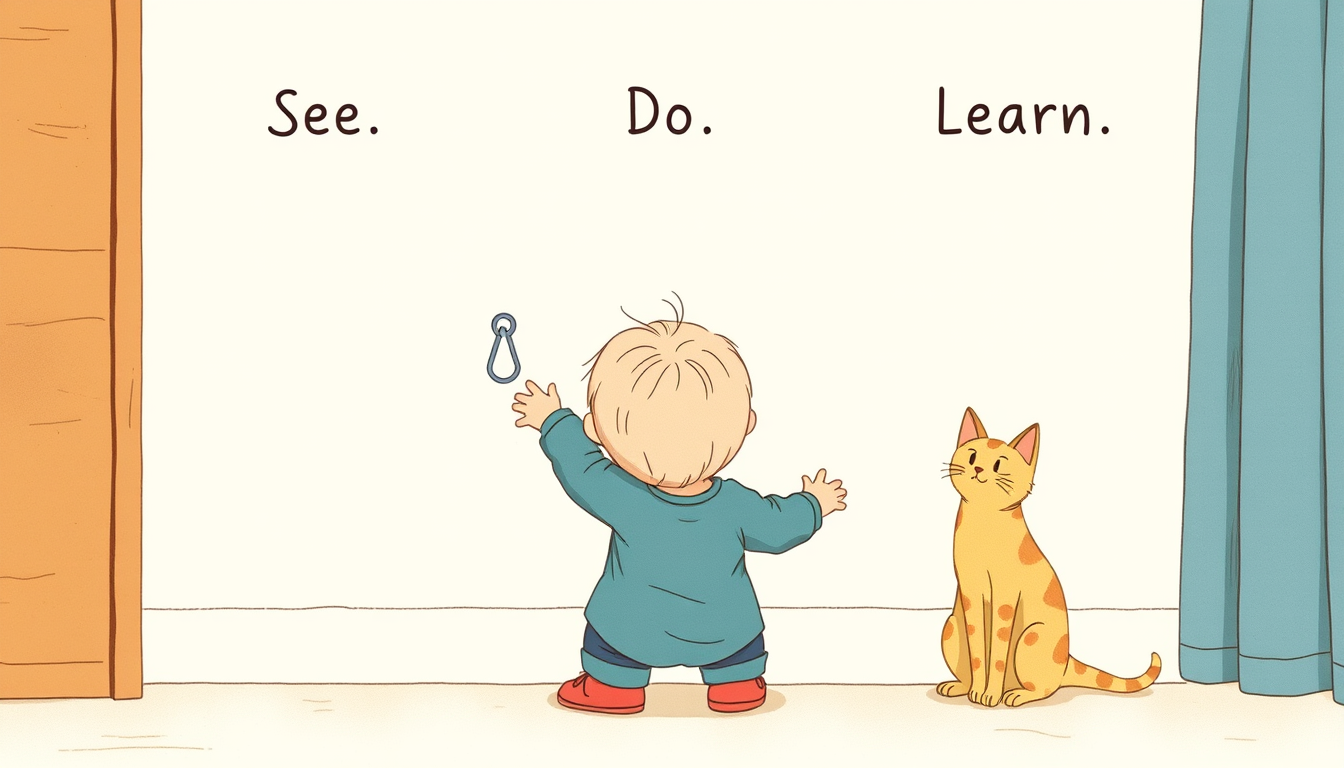
See. Do. Learn.
Then the training begins.
“No, don’t touch that.”
“Wait for me.”
“Ask before you take a cookie.”
These rules are necessary. Children need boundaries. But they also create an early association: independent action leads to trouble, while compliance leads to approval—or at least the absence of punishment.
The lesson becomes:
Safety equals permission.
School reinforces it.
For years, you sit in rows, move when the bell rings, speak when called on, and complete assignments designed by someone else. You are often rewarded for producing the correct answer in the approved format.
That system is useful for teaching shared knowledge and basic discipline. But it also trains a specific habit: wait for the assignment, follow the instructions, and submit your work for evaluation.
Success becomes less about judgment and initiative than pleasing the person with the gradebook.
Then you enter the workforce, and the structure changes names but not shape.
The teacher becomes a manager.
Grades become performance reviews.
The bell becomes the working day.
Early in your career, asking for approval is sensible. You are learning the environment. You do not yet know which decisions are expensive, political, or irreversible. Permission protects you from avoidable mistakes.
But the habit can outlive its usefulness.
You gain experience. You become the person with the context. You see the inefficiencies and the opportunities. Yet you still ask whether you are allowed to act.
You have an idea, but instead of building a prototype, you write a proposal asking whether a prototype would be appropriate.
You do not launch the project. You schedule a meeting to discuss the feasibility of launching it.
You turn a decision into a committee.

The Paycheck Tether
The permission habit survives because it once worked.
That is what makes it difficult to remove. It was not installed by stupidity. It was installed by reinforcement.
Ask first, and you avoid punishment.
Follow the rules, and you receive approval.
Wait for instructions, and you reduce the risk of being blamed.
The trouble begins when the environment changes but the rule remains.
Your brain still treats unsupervised action as dangerous. A rejected proposal feels like social exile. A failed product launch feels like expulsion from the group. A public mistake feels larger than it is because your nervous system is applying an old consequence to a new situation.
This is a context error.
You are using a childhood safety rule in an adult professional setting.

The original rule may have been:
Do not act until an authority figure approves.
That rule made sense when the authority figure controlled your food, safety, grades, or employment.
It becomes destructive when you are trying to start a company, write a book, publish an essay, lead a team, or make a decision that has never been assigned to you.
Creation requires deviation. Leadership requires judgment. Innovation requires doing something before there is a proven procedure for doing it.
The same instinct that once kept you out of trouble can now keep you out of motion.
The Ghost in the Machine
The rules you follow are often inherited from people solving a different problem.
Your parents were solving for physical safety:
Don’t run into the street.
Your teachers were solving for classroom order:
Don’t speak out of turn.
Your early managers were solving for operational risk:
Don’t deviate from the process.
Those rules may have been valid in their original environments. But a rule can be reasonable in one context and harmful in another.
If you are building something new, “don’t deviate” is not caution. It is a contradiction.
The people who installed these rules are often no longer in the room. Yet their voices remain.
The cautious parent.
The disapproving teacher.
The micromanaging boss.
The skeptical colleague.
Over time, you absorb their judgments so completely that you no longer need them to enforce anything. You become your own gatekeeper.
That is the central absurdity of the permission trap:
You are waiting for approval from a ghost.

There is no supervisor to consult. No grade will be recorded. No permission slip is required for the field trip because you are already on it.
The Origin Map
You cannot change a habit until you can see the cue that activates it.
The next time you notice yourself hesitating, run a quick audit. Do not use it to criticize yourself. Use it to separate the present situation from the old programming attached to it.
1. Who am I trying to please?
Be specific.
Are you trying to serve a customer? That may be useful. Customer feedback is evidence.
Are you trying to meet a legal requirement? Then the rule is real and should be followed.
Or are you trying to satisfy a vague idea of professionalism? A skeptical peer? An imagined expert? A parent who hoped you would choose a safer career?
Often, the authority is a composite character: a mixture of everyone whose approval once mattered.
Call it the Committee.
The Committee meets whenever you try to do something bold. It requests more research, more preparation, and more certainty. It rarely says no directly. It simply keeps adding conditions.
The Committee feels responsible.
It is also where many ambitions go to die.
2. What is the actual consequence of acting?
In school, the consequence of breaking a rule might have been detention or a bad grade.
At your first job, it might have been a reprimand.
But what happens now?
If you publish the article and nobody reads it, you may feel embarrassed for ten minutes. Then you will know more about the subject, the audience, and the quality of the idea.
If you launch the product and it fails, you may lose time and money. That cost is real. But it is not necessarily punishment. It is the price of learning whether the offer works.
The mind inflates vague danger. Specific consequences shrink it.
Ask:
- What exactly could happen?
- How likely is it?
- Can I repair the damage?
- What would I learn if it went badly?
You are not trying to pretend risk does not exist. You are trying to measure it instead of worshipping it.
3. Is the rule real or inherited?
This is the most useful question.
Is there a law, contract, policy, or genuine obligation preventing you from acting?
Or is it simply “not how things are done”?
Many barriers are painted lines, not concrete walls.

You assume you need a credential before speaking on a subject.
You assume you need an introduction before contacting someone.
You assume you must wait ten years before leading.
You assume you need a perfect brand before selling a useful product.
Show yourself the rulebook.
If no actual rule exists, you may be dealing with inherited hesitation rather than a genuine constraint.
The Cost of Waiting
The permission habit is expensive.
It costs speed. While you are drafting the email asking whether you can begin, someone else may already be testing the idea.
It costs opportunity. Markets shift while you are preparing to enter them.
It costs authority. When you ask for validation on every minor decision, you send a signal: I do not trust my own judgment.
Eventually, other people may begin trusting it less too.
But the deepest cost is internal.
Every time you hand a decision to an external authority, you weaken your ability to make the next one. You become more dependent on reassurance. Ambiguity becomes more threatening. Small decisions require more discussion.
You are not becoming careful. You are losing range.
This is why so much “preparation” can feel productive while producing nothing.
You build the presentation deck before speaking to a customer.
You design the logo before testing the offer.
You refine the business plan before making the first sale.
You complete the homework for a class that does not exist, hoping someone will eventually guarantee your success.
There is no teacher coming to grade the preparation.
The market does not reward effort in the abstract. It responds to useful things placed in front of real people.
Impact requires motion.
Rewriting the Code
Understanding the origin of the habit is useful. But insight alone does not replace it.
You need a new behavior.
When you feel the urge to ask, “Can I do this?”, state your intent instead.
Replace:
“Is it okay if I try this new approach?”
With:
“I’m going to try this approach to solve X. I’ll share the results on Friday.”
Replace:
“Do you think I’m ready to launch?”
With:
“I’m launching on Tuesday.”
This is not about pretending to know everything. It is about taking responsibility for a reversible decision.
There is a crucial difference between seeking information and seeking permission.
Ask for information when someone has knowledge you need.
Ask for approval when the decision genuinely belongs to them.
But do not disguise fear as collaboration. Do not turn a decision you own into a request for someone else to carry.
The first version asks another person to become your parent.
The second makes your position clear and gives them something concrete to respond to.
That shift will feel uncomfortable. Your internal alarm may sound because you are violating an old safety protocol.
Let it sound.
Fear is not always evidence of danger. Sometimes it is evidence that you are doing something your previous conditioning did not permit.
You are not a child reaching toward a hot stove.
You are an adult standing before an open door, responsible for deciding whether to walk through it.

The gatekeepers you imagine—critics, bosses, experts, industry standards—may be real in some situations. But many are projections cast by your history.
So when hesitation arrives, open the Origin Map.
Identify the voice telling you to wait.
Thank it for trying to keep you safe.
Then ask whether the rule still applies.
If it does, follow it deliberately.
If it does not, stop waiting for permission. State your intent, accept the consequence, and move.
If this resonates, see how to apply it to your own work with the interactive Dispatch agent.
Be first to like this dispatch