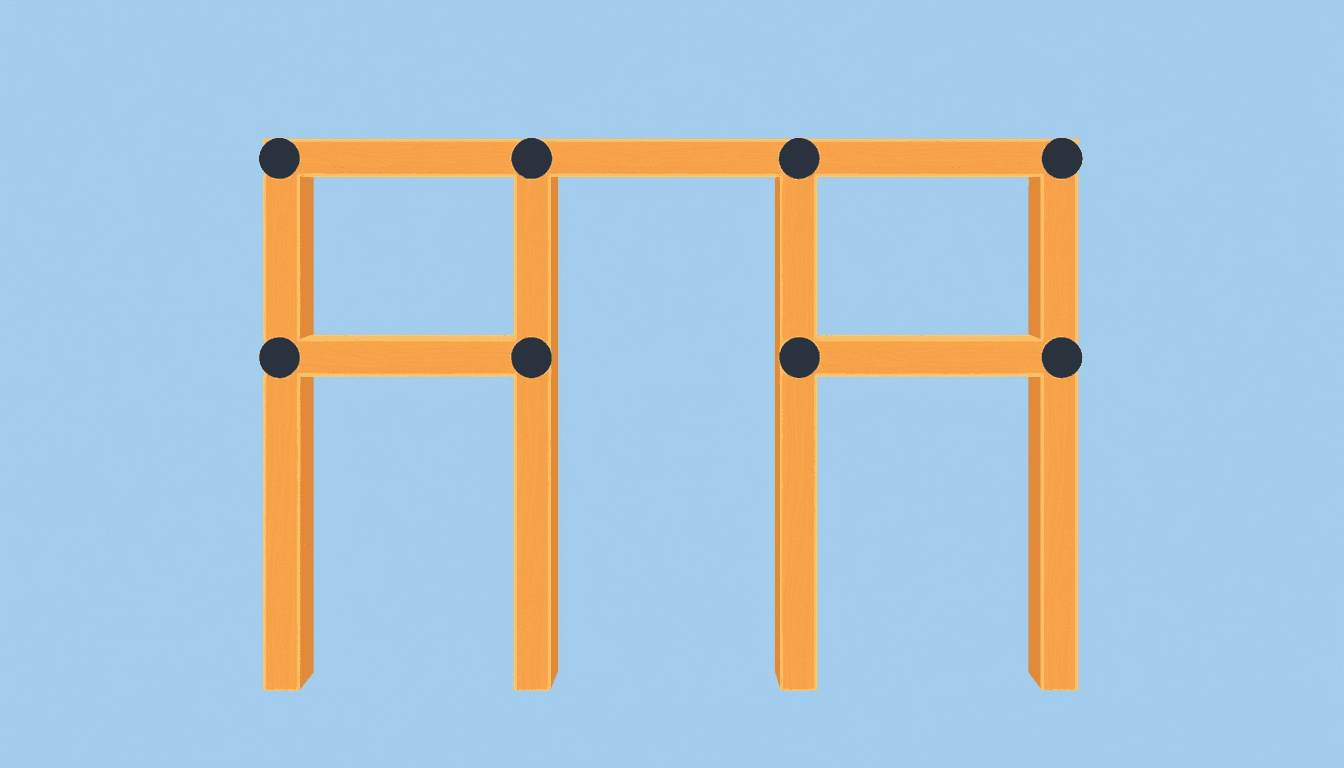
Lattices look fragile—just a few slender pieces crossing each other—yet they hold bridges, roofs, even entire cathedrals. The secret isn’t the wood or steel; it’s the pattern. The same is true for writing, thinking, building a business, or designing a life.
What a Lattice Teaches About Structure
A lattice does three things simultaneously:
- Distributes load so no single point bears all the weight
- Creates pockets of space—room for air, vines, ideas to grow
- Repeats a simple unit until something vast emerges
Swap “load” for “attention,” “space” for “creative freedom,” and “unit” for “daily habit,” and you have a blueprint for anything that must stand on its own.
Diagram: Simple Unit leads to Lattice (Repeats); Lattice leads to No Overload (Distributes); Lattice leads to Open Space (Creates); Lattice leads to Emergent Scale (Multiplies).
Diagram: Simple Unit leads to Lattice (Repeats); Lattice leads to No Overload (Distributes); Lattice leads to Open Space (Creates); Lattice leads to Emergent Scale (Multiplies).
Build Your Own Lattice
How Big Things Stay Fragile
Most ambitious projects fail the opposite way: they over-engineer early. Concrete where a lattice would do. One brittle joint cracks the whole slab.
Massive planning documents, frozen specs, single points of failure.
Small interchangeable modules, weekly checkpoints, redundant paths.
A Pattern to Borrow
Lattice Growth
- ·Japanese kumiko woodworking
- ·Scalable software micro-services
- ·Newsletter essay series
- ·Neighborhood community grids
You need scale without central weight, creativity without chaos.
Pressure-Test Your Structure
What’s the smallest repeating unit in your current project?
Write it down. Now halve it.
Templates You Can Steal
One crystallizing image
One personal anecdote
One external example
One actionable step
Total: 250 words max
Mon – Plant seed (idea)
Tue – Wireframe lattice (outline)
Wed – Fill two cells (draft sections)
Thu – Add cross-braces (transitions)
Fri – Publish one unit
Weekend – Air & light (rest)
When to Break the Pattern
Lattices fail under torsion—twisting loads they were never meant to take. If your environment demands sudden pivots (markets, moods, pandemics), swap to a tensegrity structure: rigid parts held in pure tension. Same lightness, higher adaptability.
Is your road predictable for 6+ months?
Choose lattice for compounding; choose tensegrity for surviving surprise.
Let
the Light Through
Scroll to watch the structure breathe
Light, repeated just enough, becomes unbreakable. Build your lattice—then let the vines, the readers, the customers, the days—grow through.
If this resonates, see how to apply it to your own work with the interactive Dispatch agent.
Be first to like this dispatch