A medieval monk once took a knife to an ancient manuscript.
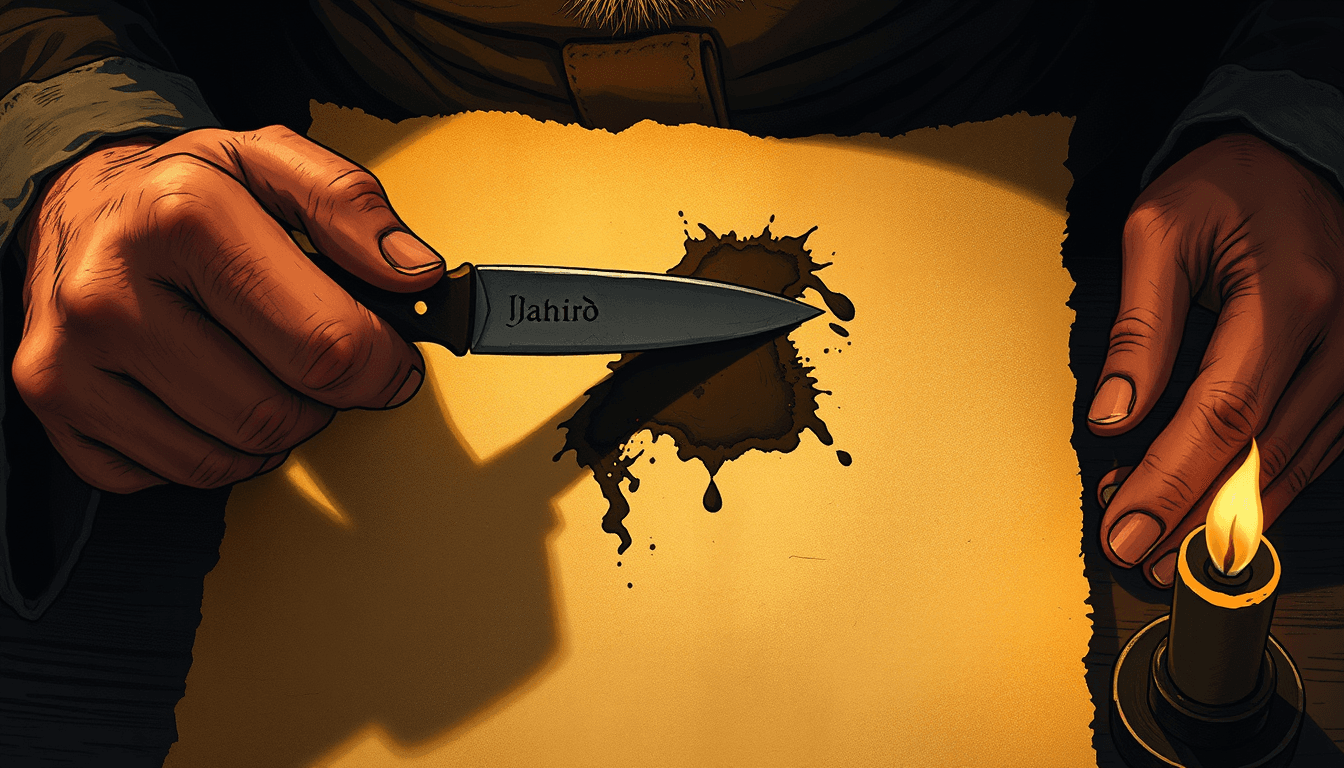
He scraped the parchment clean.
Not because he hated the text. Not because he knew what he held. Parchment was expensive, and blank pages were useful. So he erased the old words and wrote new ones over the top.
For centuries, the original work vanished.
Then modern imaging looked beneath the surface.
What it found was not a minor footnote from antiquity.
It was Archimedes.
The strange life of a destroyed book
The manuscript is now known as the Archimedes Palimpsest.
A palimpsest is a reused manuscript. The old ink is scraped or washed away so the page can serve a new purpose.
In this case, the erased text included works by Archimedes, one of the great mathematical minds of the ancient world. His ideas on geometry, infinity, balance, and measurement shaped the future long after his death.
But the copy containing some of those ideas did not travel through history like a treasure.
It travelled like a ghost.
Archimedes works in Syracuse
A scribe copies several of his works onto parchment
The parchment is scraped and reused as a prayer book
A scholar notices traces of hidden mathematical text
The manuscript resurfaces in damaged condition
Imaging technology begins revealing the erased writing
The monk did not know
This is the part that makes the story so human.
The monk was not a villain in a library cloak. He was likely doing something ordinary. Practical. Sensible.
Parchment was valuable. Prayer books were needed. Old Greek mathematics may have seemed useless, unreadable, or simply available.
So the pages were cut, folded, scrubbed, and overwritten.
A masterpiece became raw material.
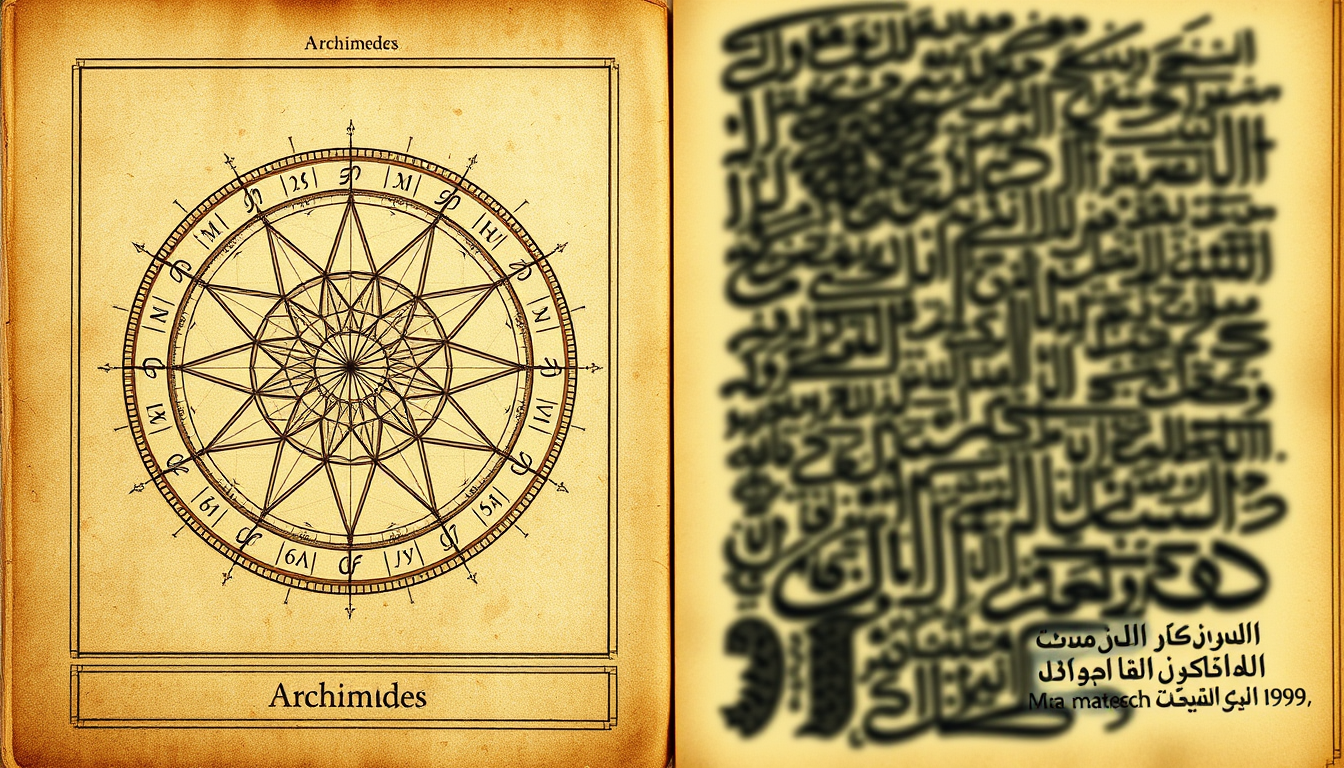
That is what makes the survival of Archimedes so astonishing.
The manuscript was not saved by a perfect chain of careful guardians. It was damaged, altered, misplaced, and misunderstood.
And still, something remained.
What was hidden underneath
When researchers used modern imaging, they began to recover the erased text beneath the later writing.
The hidden work included parts of Archimedes’ The Method of Mechanical Theorems, where he explored mathematical ideas using physical intuition — balance, weight, and imagined mechanical models.
It also included material connected to the Stomachion, a puzzle-like geometric work that has raised deep questions about combinatorics, the mathematics of arrangement and possibility.
Some historians and mathematicians have argued that parts of the manuscript show Archimedes thinking in ways that feel astonishingly modern.
Not “modern” in the easy, exaggerated sense.
Modern in the sense that he was reaching toward ideas later central to calculus, infinity, and mathematical proof.
Author hidden beneath the prayer book
Archimedes
Approximate age of original Archimedes works
Over 2,200 years
Manuscript copy
Around the 10th century
Reused as a prayer book
Around the 13th century
Time hidden in plain sight
Roughly 700 years
The survival pattern
The story has a strange shape.
A mind produces an idea.
A scribe copies it.
A monk erases it.
A prayer book preserves it.
A scholar notices it.
A machine reveals it.
The idea returns.
Diagram: Archimedes thinks leads to Scribe copies the work; Scribe copies the work leads to Manuscript enters history; Manuscript enters history leads to Monk scrapes the parchment; Monk scrapes the parchment leads to Prayer book overwrites the text; Prayer book overwrites the text leads to Centuries pass; Centuries pass leads to Modern imaging reads beneath the surface; Modern imaging reads beneath the surface leads to Archimedes returns.
Diagram: Archimedes thinks leads to Scribe copies the work; Scribe copies the work leads to Manuscript enters history; Manuscript enters history leads to Monk scrapes the parchment; Monk scrapes the parchment leads to Prayer book overwrites the text; Prayer book overwrites the text leads to Centuries pass; Centuries pass leads to Modern imaging reads beneath the surface; Modern imaging reads beneath the surface leads to Archimedes returns.
Destruction as Preservation
- ·Palimpsests
- ·Ruins reused in new buildings
- ·Oral stories folded into later myths
- ·Old technologies repurposed for new needs
Something appears lost, but its structure, trace, or pressure remains inside what replaced it.
The prayer book did not honour Archimedes.
It accidentally protected him.
The scraped parchment held on to enough ink, enough pressure, enough residue for the future to reconstruct what the past had buried.
The deeper lesson
We like to imagine knowledge moving forward cleanly.
One genius writes. One generation preserves. Another builds upon it.
But the real path is rougher.
Knowledge is copied badly. Stored carelessly. Mislabelled. Translated. Forgotten. Burned. Reused. Rediscovered.
It does not glide through time.
It limps.
The survival of knowledge is more fragile, and more miraculous, than we usually admit.
Great ideas depend not only on brilliance, but on materials, accidents, institutions, weather, money, and luck.
- —Archimedes’ work survived beneath a text meant to replace it
- —Modern technology recovered what the human eye could not read
- —Centuries passed before the manuscript’s deeper value became clear
Every preserved idea is not just an achievement of thought, but an achievement of endurance.
There is a quiet humility in this.
A great mind is not enough.
Even Archimedes needed parchment. Copyists. Chance. A future with better tools.
He needed someone, centuries later, to care about what was barely visible.
What remains beneath the surface
The Archimedes Palimpsest is not only a story about mathematics.
It is a story about layers.
A page can carry more than one life. A civilisation can forget what it still contains. A ruined object can become a doorway. An erased thing can wait.
We are surrounded by palimpsests.
Cities built on older cities.
Languages carrying dead metaphors.
Customs whose origins are forgotten.
Books with marginal notes from people long gone.
Even our own lives have this structure. We overwrite ourselves constantly. New roles. New beliefs. New names for old desires.
But the earlier text is not always gone.
Sometimes it is only waiting for the right light.
What is something in your life that looks erased, but may only be hidden?
Think of an old interest, skill, relationship, idea, or version of yourself that still leaves a trace.
The book refused to die
There is something almost defiant about it.
A monk tried to make the page useful by erasing the past.
Instead, he created one of the most extraordinary acts of accidental preservation in intellectual history.
The old text did not survive untouched.
It survived wounded.
That may be the more honest miracle.
The book that refused to die reminds us that human knowledge is not a straight line.
It is a buried river.
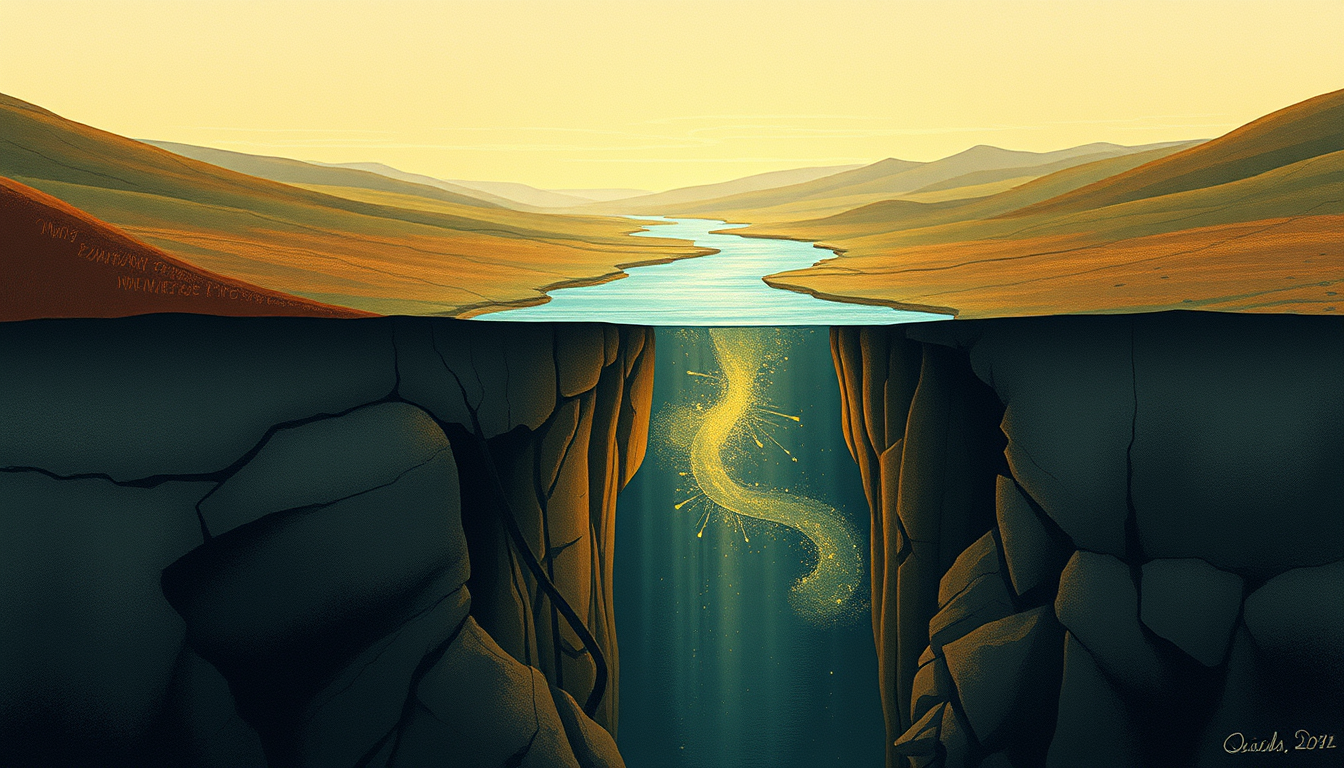
It disappears. It changes course. It runs underground for centuries.
Then one day, under the right conditions, it rises again.
Carry this forward
If this resonates, see how to apply it to your own work with the interactive Dispatch agent.
Be first to like this dispatch