Previous · Part 3
The Art of Becoming Dangerous: How to Master Anything Worth Knowing

Next · Part 15
The Year-Structure Method: Turn 12 Months Into a System
This builds on Part 3: The Art of Becoming Dangerous: How to Master Anything Worth Knowing
Continue with Part 15: The Year-Structure Method: Turn 12 Months Into a System
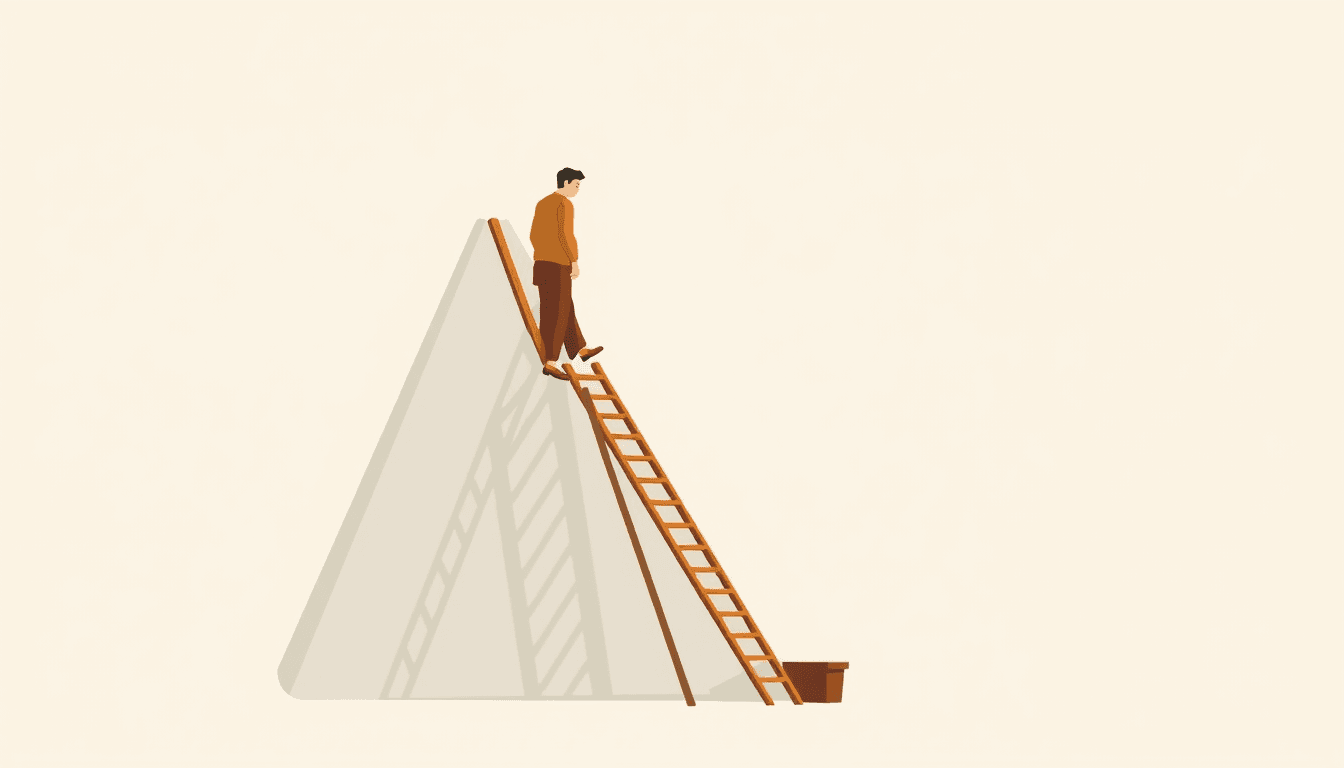
Your career isn’t a ladder—it’s a structure you design.
Most people treat careers like vertical motion. Step, promotion, title, compensation. But ladders reward motion; structures reward design.
A career is the system you build from your constraints—your time, energy, skills, access, responsibilities, health, and markets. And here’s the uncomfortable truth:
Not the ones you “want” in theory. The ones your reality already supports—if you stop fighting it and start architecting it.
The Architecture: what you’re actually building
A career structure has four layers. When one layer is weak, you compensate with hustle. When all layers are strong, momentum feels almost unfair—in the best way.
Diagram: Constraints leads to Design Choices; Design Choices leads to Craft & Output; Craft & Output leads to Signal & Leverage; Signal & Leverage leads to Design Choices.
Diagram: Constraints leads to Design Choices; Design Choices leads to Craft & Output; Craft & Output leads to Signal & Leverage; Signal & Leverage leads to Design Choices.
1) Constraints (the raw material)
Constraints aren’t obstacles. They’re the boundaries of your most realistic advantage.
- Time: how many hours you can repeatedly offer without collapse
- Energy: what drains you vs. what you can sustain
- Access: who you can reach, consistently
- Skills: what you can improve quickly vs. what takes longer
- Life load: family, health, debt, obligations
- Market gravity: what demand exists where you are
2) Design choices (the blueprint)
This is where you decide what your career is.
Design choices look like:
- Which problems you repeatedly solve
- Which environments you repeatedly participate in
- Which outputs you repeatedly ship
- Which relationships you repeatedly invest in
- Which reputation you intentionally accumulate
3) Craft & output (the engine)
“Architecture” isn’t a vibe. It’s the cadence of your work:
- The amount you can produce steadily
- The learning loop you can maintain
- The quality threshold you can sustain
Continue reading with a subscription
Explorer and Immersion subscribers get full access to all premium dispatches, series, and long-form guides.
If this resonates, see how to apply it to your own work with the interactive Dispatch agent.
Be first to like this dispatch