
Previous · Part 4
The Architecture of a Career: Designing Your Constraints Into Power

Next · Part 16
The Anti‑Procrastination Manual for Smart People
This builds on Part 4: The Architecture of a Career: Designing Your Constraints Into Power
Continue with Part 16: The Anti‑Procrastination Manual for Smart People
Stop “having a year.” Start running one.
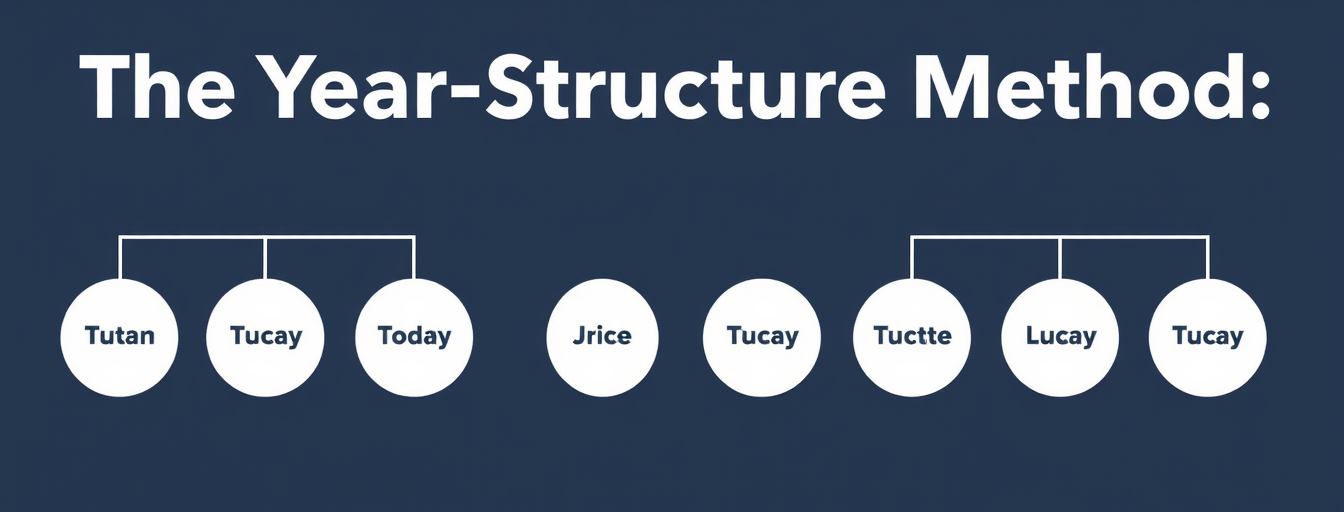
Most people treat the year like a calendar. But a calendar isn’t a strategy. It’s just the container.
A properly structured year does three things at once:
- clarifies what matters,
- sequences it so momentum compounds, and
- keeps you from thrashing when the unexpected arrives.
The core model: Outcomes → Themes → Experiments
Think in layers. Each layer answers a different question.
Outcomes (the “what”)
These are the concrete results you want by year-end. Fewer than you think. If everything matters, nothing does.
Themes (the “how”)
Themes are behavioral and strategic. They guide decisions when you don’t have perfect information.
Experiments (the “proof”)
Experiments are time-bounded actions that test whether your theme is working.
A clean breakdown you can actually follow
Here’s a structure that scales from ambition to reality.
Year
- 3–5 outcomes
- 1–3 themes
- 6–10 “experiments” you’ll run across the year
Quarters
- 1–2 focus priorities per quarter
- 1 measurable target per priority
- a short “decision rule” for each priority
Months
- 1 theme emphasis per month
- 2–4 weekly commitments
- a review question you’ll answer at month’s end
Step-by-step: Structure your year in under a weekend
Continue reading with a subscription
Explorer and Immersion subscribers get full access to all premium dispatches, series, and long-form guides.
If this resonates, see how to apply it to your own work with the interactive Dispatch agent.
Be first to like this dispatch