Earn attention by making ideas verifiable, effortless to process, and ready to act on.

Previous · Part 5
The Attention Curve: Where Minds Wander and How to Keep Them

Next · Part 7
The First 5 Seconds: How Content Wins (or Dies) Immediately
This builds on Part 5: The Attention Curve: Where Minds Wander and How to Keep Them
Continue with Part 7: The First 5 Seconds: How Content Wins (or Dies) Immediately
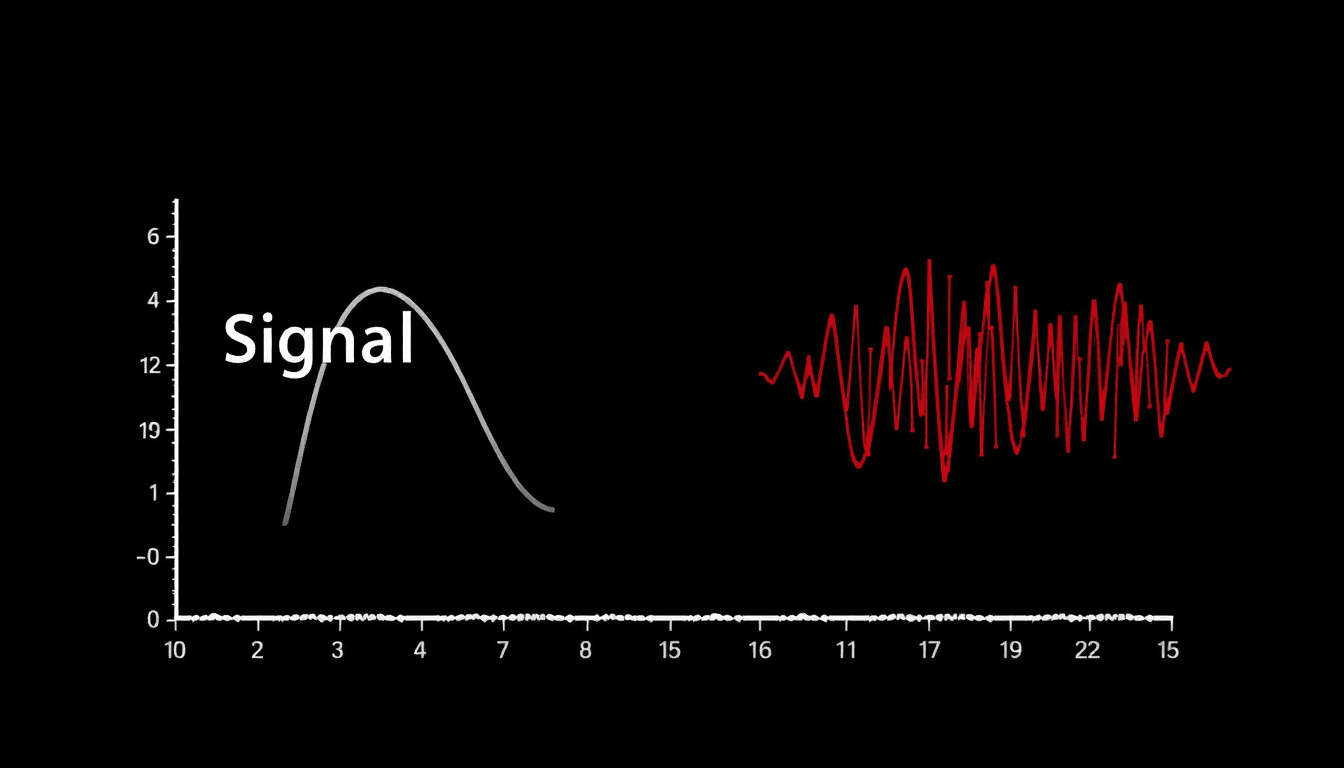
Signal vs Noise
Most content fails for a simple reason: it tries to be everything at once.
Your reader doesn’t arrive to be entertained, educated, reassured, and persuaded in one sitting. They arrive to understand one thing clearly—then decide what to do next. When you don’t design for that, you drown the signal under noise.
The real question: what changes in the reader?
“Does this section sound smart?” is a vanity metric.
The only useful question is:
What changes in the reader after they read this—mentally, emotionally, or behaviorally?
Anything that doesn’t shift something is probably noise.
A practical definition of signal
Treat each sentence like a micro-decision.
Signal typically does one (or more) of these:
- Defines what you mean (reduces ambiguity)
- Connects ideas (creates causal links)
- Distills complexity (compresses understanding)
- Examples the claim (makes it usable)
- Predicts an outcome (lets them anticipate reality)
- Instructs an action (moves toward behavior)
- Contrasts alternatives (clarifies trade-offs)
Noise is usually one of these:
- Context without relevance (“by the way, here’s history”)
- Proof without point (data that doesn’t resolve a question)
- Polish without function (flowery phrases, extra synonyms)
- Asides that don’t serve the main thread
- Reassurance that substitutes for clarity
- Repetition that covers uncertainty
The surgical workflow: eliminate until the point is unmistakable
Use this as a repeatable pass. Not a one-off edit spree.
Continue reading with a subscription
Explorer and Immersion subscribers get full access to all premium dispatches, series, and long-form guides.
If this resonates, see how to apply it to your own work with the interactive Dispatch agent.
Be first to like this dispatch