You don’t need more effort—you need a cleaner signal chain that steers you from emotion to action.

Previous · Part 11
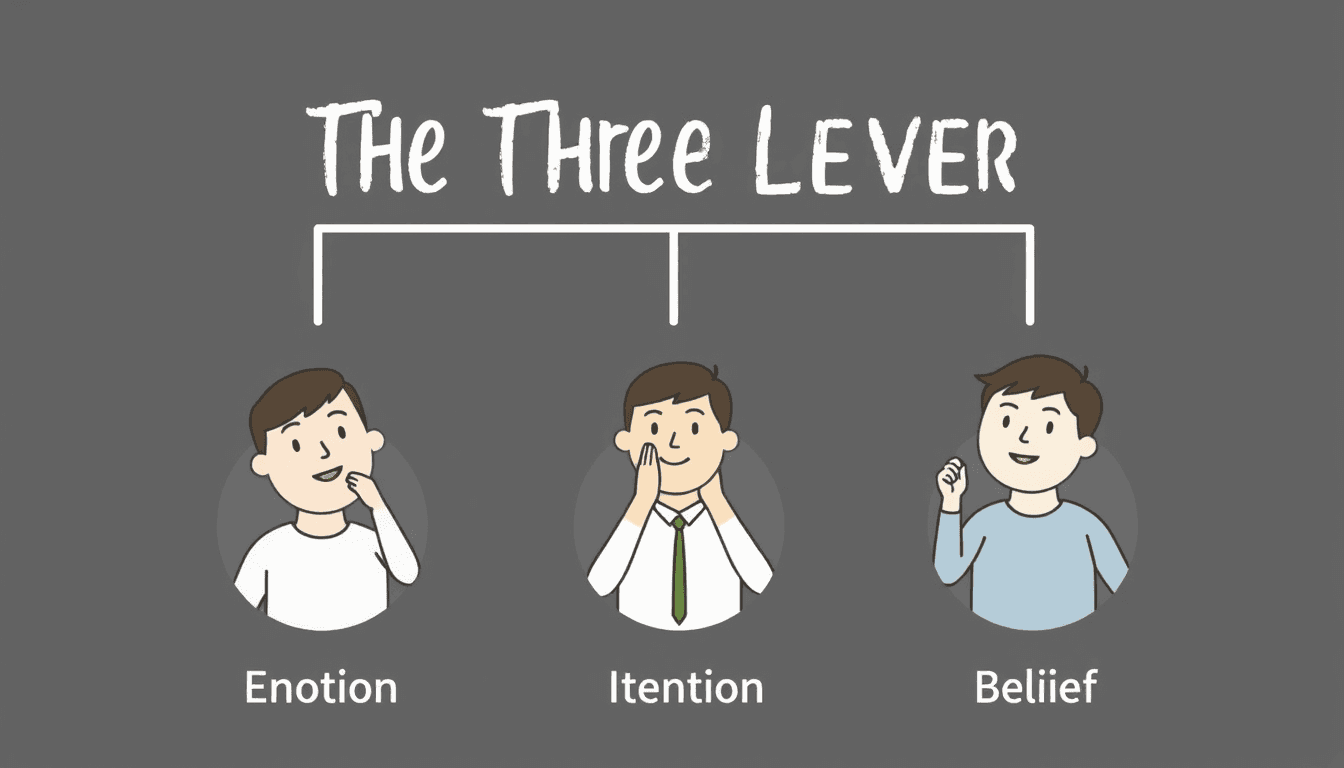
The Three Levers: Emotion, Intention, Belief

Next · Part 13
Drift Is Not Failure—It’s a Missing Anchor
This builds on Part 11: The Three Levers: Emotion, Intention, Belief
Continue with Part 13: Drift Is Not Failure—It’s a Missing Anchor
When resistance shows up, your blueprint is whispering
You don’t need to “beat” resistance. You need to listen to it.
In your internal architect system, resistance is what happens when your current state and your intended direction don’t match. Not “wrong you.” Not “bad energy.” Just misalignment information—like a compass that’s trying to stop you from walking deeper into the wrong valley.
Core concept: Resistance as a pointing device
What it is (plain language)
Resistance is the inner friction you feel when you try to move toward what you want—hesitation, dread, heaviness, irritation, procrastination, self-protective urges. In this model, it’s evidence that some part of you is unconvinced, overprotective, or interpreting the moment as “danger.”
You experience it as “I can’t,” but the deeper message is: “This pathway isn’t currently aligned.”
Why it matters in conscious creation
Because conscious creation is intention + focus + energetic alignment.
If alignment is off, intention gets stranded. Your desire still exists—but your internal system is throwing up barriers that prevent clean signal transmission. Resistance is your system refusing to pretend.
So instead of pushing harder, you recalibrate. You adjust the internal variables until your current state can support the future state.
How it links to adjacent pillars
- Emotion → alignment: Resistance is an emotion with information. It tells you the frequency of your internal weather.
- Words → containers for direction: When you describe the situation in “doom language,” you often intensify the resistance. (You’ll feel it in your body.)
- Belief → conviction: Many resistances are belief shaped—rules you learned, safety strategies you adopted, or conclusions you’ve been living by.
Continue reading with a subscription
Explorer and Immersion subscribers get full access to all premium dispatches, series, and long-form guides.
If this resonates, see how to apply it to your own work with the interactive Dispatch agent.
Be first to like this dispatch