Human experience is engineered by inner states—so the next move starts with naming the condition.
Previous · Part 10
Doubt as a Signal: Turning Uncertainty Into Forward Motion

Next · Part 12
Resentment as a Time Machine: How Unfairness Becomes a Self-Fulfilling Story
This builds on Part 10: Doubt as a Signal: Turning Uncertainty Into Forward Motion
Continue with Part 12: Resentment as a Time Machine: How Unfairness Becomes a Self-Fulfilling Story
Hope
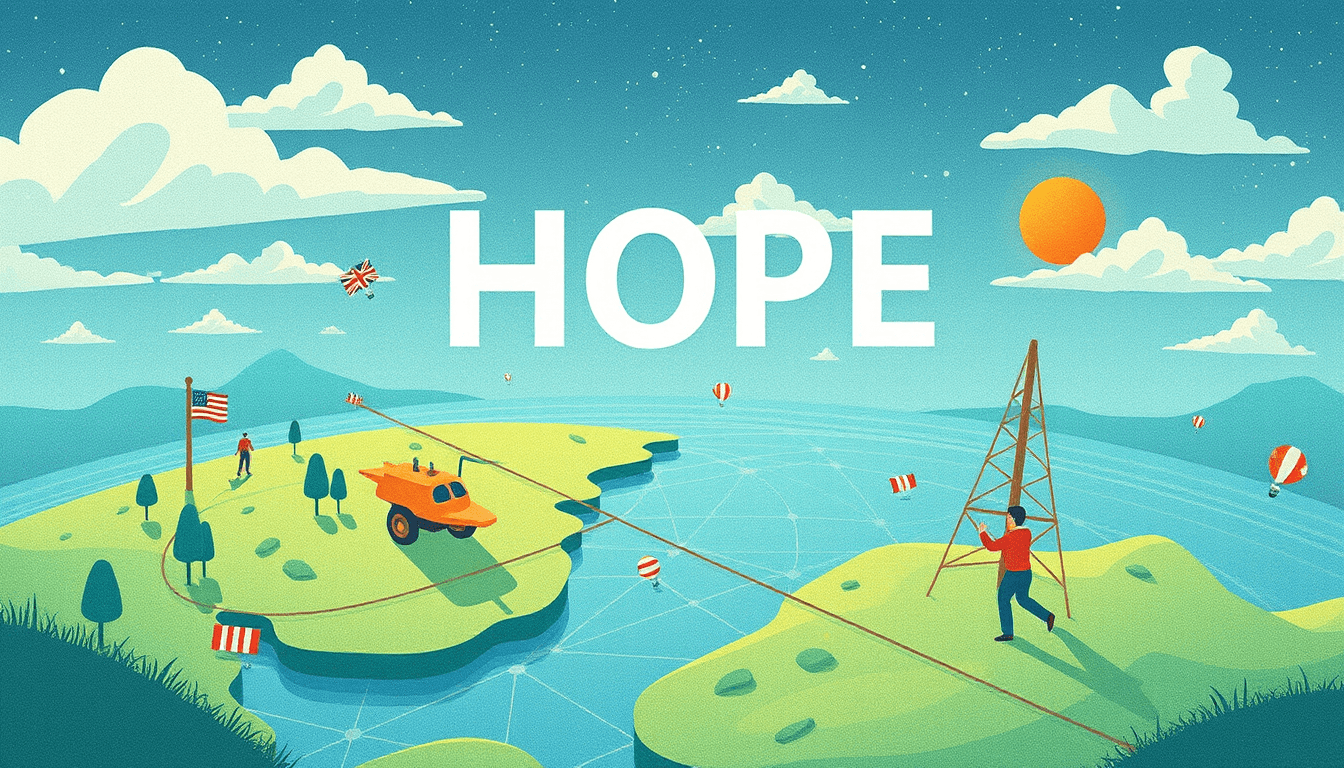
Hope isn’t a mood you either have or don’t have. It’s an orientation—an internal GPS calibrated toward what might become true.
Not wishful thinking. Not naïve optimism. Hope is a disciplined relationship with the future: I expect something better enough to keep moving.
What hope actually does to experience
Hope changes the felt meaning of time.
When hope is present, the future is not merely “ahead.” It becomes relevant. Ordinary days start to look like steps rather than dead ends. Even setbacks feel temporarily instructive instead of permanently condemning.
Hope also changes what you notice:
- You begin to register signals that support your trajectory.
- You interpret delays as part of a process rather than evidence of futility.
- You tolerate uncertainty longer, because uncertainty isn’t the whole story.
The mechanics: expectation + behaviour
Hope has two components that work together.
- Expectation: the mind generates a credible future.
- Behaviour: the body reorganizes to meet that future halfway.
Expectation without behaviour turns into fantasy. Behaviour without expectation turns into stubbornness. Hope is the coordination between the two.
Diagram: Expectation of future outcome leads to Interpretation of time; Interpretation of time leads to Meaning of effort; Meaning of effort leads to Action selection; Action selection leads to Persistence under setbacks; Persistence under setbacks leads to Evidence accrual; Evidence accrual leads to Expectation of future outcome.
Diagram: Expectation of future outcome leads to Interpretation of time; Interpretation of time leads to Meaning of effort; Meaning of effort leads to Action selection; Action selection leads to Persistence under setbacks; Persistence under setbacks leads to Evidence accrual; Evidence accrual leads to Expectation of future outcome.
Notice the loop. Hope isn’t just “how you feel.” It’s how perception and action continuously generate new evidence—which then updates expectation.
Hope and resilience: why it survives pain
Resilience isn’t the absence of suffering. It’s the ability to keep organizing yourself toward something that still matters.
Hope provides that “something.” It gives your pain a boundary: this is not the final chapter; it’s the middle.
When hope is intact, setbacks become inputs rather than final verdicts. You don’t ignore reality—you refuse to let one outcome define the entire possible world.
The behavioural signatures of hope
Hope shows up in the kinds of actions people choose—especially under constraints.
You’ll often see:
- Small commitments that can be completed even when life is hard
- Adaptive planning (the goal stays; the route changes)
- Recovery practices after failure (repair beats rumination)
- Social leaning (seeking information, mentorship, or companionship)
Hope can be quiet. It doesn’t always look like confidence. Sometimes it looks like showing up again with better questions.
Two dangers: when hope becomes a trap
Hope can fail in two distinct ways.
1) Hope becomes denial.
If the future is expected but never engaged—if behaviour doesn’t match—hope turns into denial. Reality eventually asserts itself, and the collapse is harsher.
2) Hope becomes bargaining.
Some hope isn’t hope at all; it’s a negotiation with fate: If I endure enough, something good must happen. That turns outcomes into contracts and makes resilience dependent on external confirmation.
Hope vs. optimism: a useful distinction
Optimism says: Things will probably work out.
Hope says: Even if they don’t work out as planned, I can still move toward something that matters—by updating what “works.”
Optimism is often passive. Hope is operational.
Try this: name a future outcome you actually care about, then define the next action that would be rational even if you got no reassurance for 48 hours.
How to cultivate hope without lying to yourself
You don’t “summon hope” like a weather pattern. You build it by constructing believable futures and aligning behaviour to test them.
A quiet exercise: hope as a daily design decision
Hope isn’t only internal. It’s produced by the environment you choose—tasks, people, rhythms, feedback.
If you want to strengthen hope, design your day so it produces evidence. Not constant evidence. Just enough to keep the loop alive.
What future are you currently training your mind to expect—and what evidence did you create for it in the last 72 hours?
Be honest. Then pick one action tomorrow that would make that future 5% more plausible.
Practical takeaway
Hope is a navigation system. Treat it as a loop: expectation → action → evidence → updated expectation.
If this resonates, see how to apply it to your own work with the interactive Dispatch agent.
Be first to like this dispatch