Emotion as Your Compass: Alignment Feedback Without Self-Judgment
Philosophy15 April 2026Published by Pen & Muse

Emotion as Your Compass: Alignment Feedback Without Self-Judgment

Back to Dispatches
Part 4 of a 21-part series108 min read · 21,504 words total
Dispatch SeriesPart 4 of 21
The Unseen Architect — Article Series

You don’t need more effort—you need a cleaner signal chain that steers you from emotion to action.
Series PositionPart 4 of 21
Emotion as Your Compass: Alignment Feedback Without Self-Judgment
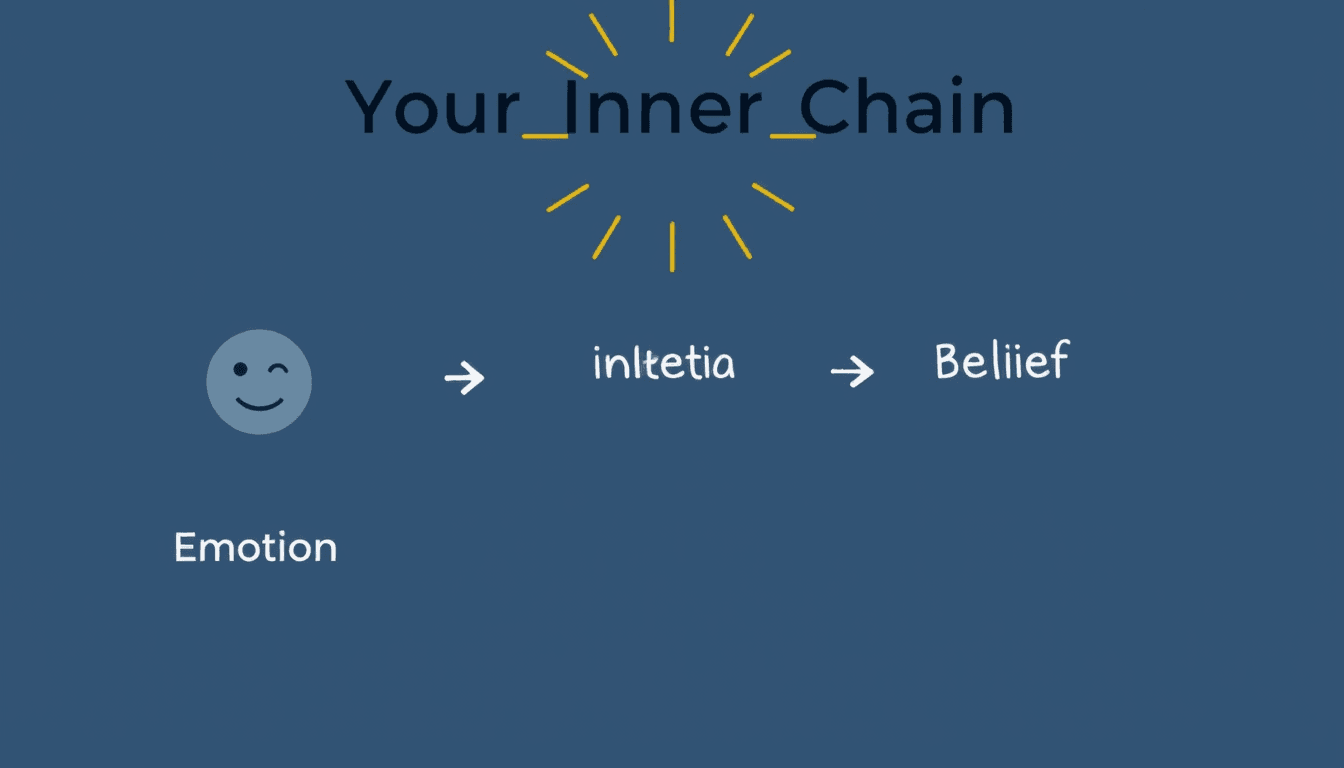
Your Inner Chain: Emotion → Intention → Belief (The Repeatable Mechanism)

Previous · Part 3

Your Inner Chain: Emotion → Intention → Belief (The Repeatable Mechanism)

The Alignment Gap: When Knowing Isn’t Moving

Next · Part 5

The Alignment Gap: When Knowing Isn’t Moving

This builds on Part 3: Your Inner Chain: Emotion → Intention → Belief (The Repeatable Mechanism)

Continue with Part 5: The Alignment Gap: When Knowing Isn’t Moving

You don’t have a feelings problem. You have an interpretation problem.

As the Unseen Architect, you’re always receiving input—signals from your inner world. In this chapter, we stop treating emotion like an error message to erase. We treat it like data.

Not because you “should be positive.” Because your nervous system is already doing the work of navigation. Your job is only to read the map.

The core shift: from “fix it” to “decode it”

Most people use emotion like a weapon against themselves.

  • “I’m anxious, so I’m failing.”
  • “I’m upset, so I’m doing it wrong.”
  • “I’m sad, so something is broken.”

But emotion doesn’t predict failure. It predicts misalignment—between what you want and what your current internal system believes is safe, possible, or true.

When you change your relationship to emotion, you don’t become emotionally numb. You become emotionally literate.

What “data” means (plain language)

Emotion is information about:

  • what you’re focusing on,
  • what story you’re running in the background,
  • what your system thinks will happen next.

In LOA terms: your emotional state reflects your current energetic alignment. It shows you what frequency you’re broadcasting—without you needing to guess.

Why this matters for conscious creation

Conscious creation isn’t magic. It’s mastery.

And mastery requires feedback. If you cannot read signals, you can’t calibrate. If you can’t calibrate, you keep steering by hope instead of alignment.

Emotion is your “compass needle.” Not to control you—so you can control direction.

So the question becomes simple and powerful:

✦ Subscriber Exclusive

Continue reading with a subscription

Explorer and Immersion subscribers get full access to all premium dispatches, series, and long-form guides.

If this resonates, see how to apply it to your own work with the interactive Dispatch agent.

Be first to like this dispatch
More in PhilosophyView all →
Keep Reading, Then Step Inside
Cover of Dead Air
Book + Immersive Experience£3.99

Dead Air

Pen & Muse

## Dead Air **Genre:** Fiction / Crime Thriller / Noir **Tone:** Hard-Boiled, Claustrophobic, Slow-Burn Dread **Experience Type:** Cold Case Unravelling ### Overview It's the graveyard shift at Municipal Radio. The host — a former investigative journalist now reading zoning ordinances into the dark — gets a call. The caller knows things no one should know. He calls himself The Night Owl. He has details from the Cressi Jackson disappearance that were never released, procedural errors the original police team never acknowledged, and an access road near an old reservoir that triggers something quiet and deeply uncomfortable in the host's memory — something about his late father. The Night Owl doesn't want to chat. He wants airtime. All of it. Now. *Dead Air* is a claustrophobic, late-night noir that unspools through a single radio station booth, a two-decade-old cold case, and the growing dread of a man who realizes the truth he failed to find twenty years ago may have been buried by people he loved. Channelling the hard-boiled intimacy of Dennis Lehane and the psychological precision of Tana French, this is crime fiction that turns the screws slowly, methodically, and with real moral weight. ### What to Expect from This Experience A deliberately paced descent — each chapter tightening the grip of The Night Owl's broadcast as the host's past and the cold case collapse into each other. Sessions are atmospheric and tense, built around voice, dread, and the slow surfacing of things better left buried. ### Ideal For Fans of literary crime fiction and radio-noir — readers who want their mystery drenched in atmosphere, driven by character guilt, and structured around a revelation that implicates the protagonist as deeply as anyone else.

Platform Access

Interested in building narratives using our proprietary architecture? Join the creator waitlist.