Podcast · Episode 13
Free Indirect Discourse: The Voice Between Voices
Alex and Sam explore free indirect discourse, the technique that allows a narrator’s sentence to carry a character’s private language, judgement and emotional pressure without introducing the thought as a quotation. Through everyday and fictional examples, they distinguish it from direct thought, first-person narration and stream of consciousness. They examine its characteristic double perspective: readers may understand both what happened and how the character has interpreted it. The conversation also considers irony, narrative distance, tense, ambiguity, common mistakes and revision, ending7
Alex & Sam · About 13 min
Listen here and keep browsing. Your place is saved. Autoplay continues through this programme; switch it off in the player.
Read the conversation
Alex
Recognising the Unnamed Voice
Have you ever read a sentence and thought, “I know exactly what this person thinks,” even though the sentence never says, “she thought”? That little moment is often free indirect discourse. You recognise the character’s mind before you know the name of the technique.
Sam
It’s a wonderful phrase for something that can feel almost invisible. The sentence appears to belong to the narrator, but its temperature, vocabulary or judgement belongs to the character. You’re hearing a voice pass through another voice without stopping to announce the handover.
Alex
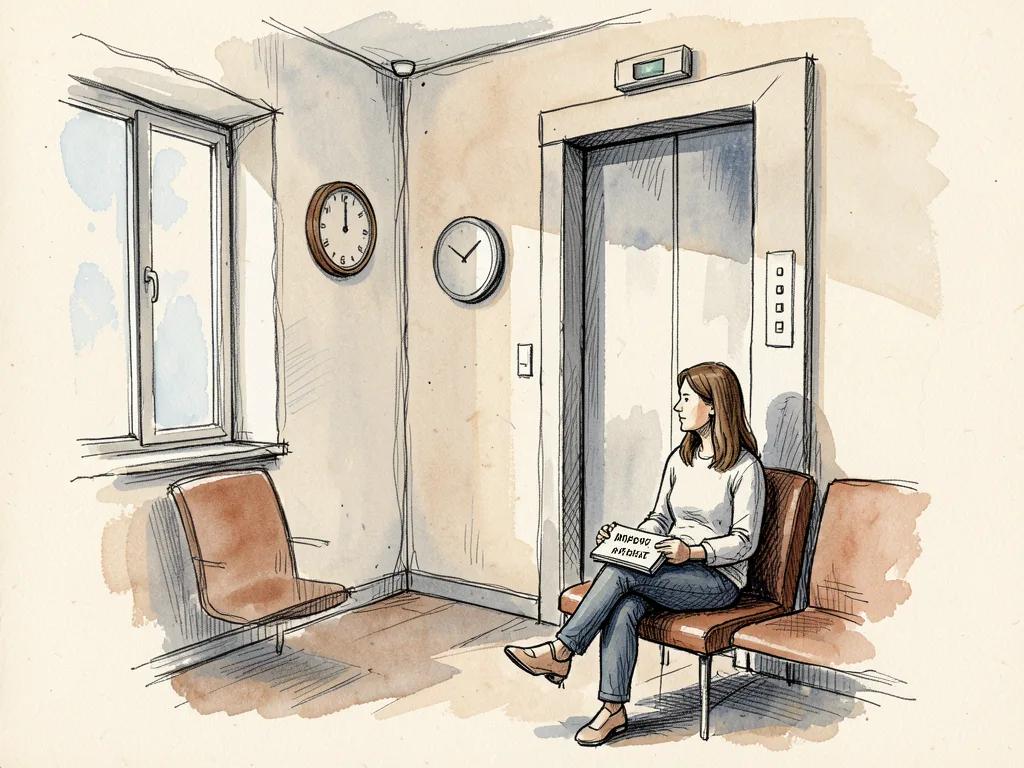
Imagine: Clara arrived at the interview at nine. Naturally, the lift chose that morning to move at the speed of geological research. The first sentence could be neutral narration. The second carries Clara’s irritation, perhaps even her slightly theatrical way of describing inconvenience.
Sam
And notice that we haven’t written, “Clara thought the lift was moving at the speed of geological research.” We’ve avoided the reporting phrase. The narration simply adopts the shape of her thought. That’s the basic invitation of free indirect discourse: come close, but don’t expect a clean border.
Alex
The Basic Blend of Narrator and Character
Let’s slow down and define it. In free indirect discourse, a third-person narrator presents a character’s thoughts, perceptions or judgements using the grammar of narration, but with some of the character’s own language and perspective mixed in.
Sam
The word “free” means the thought is freed from a formal introduction such as “she thought” or “he wondered.” “Indirect” means we aren’t receiving the thought as a direct quotation. And “discourse” is useful because this can include more than private thoughts: it can shape description, evaluation and even the way events are named.
Alex
Direct Thought, Neutral Narration and Free Indirect Discourse
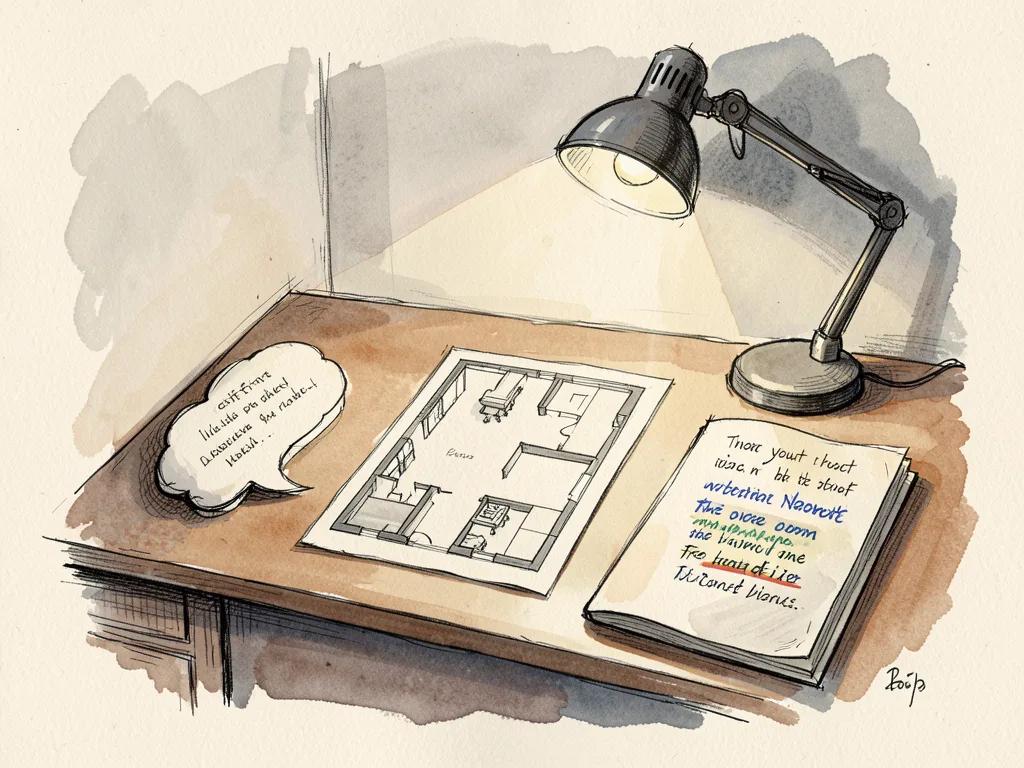
Compare three versions. Direct thought: “This place is a mausoleum,” Clara thought. Ordinary narration: Clara entered the quiet office. Free indirect: The office was a mausoleum. Same room, three different relationships between the reader, the narrator and Clara.
Sam
In the direct version, we hear Clara’s thought clearly as a thought. In the neutral version, we’re given the room without much pressure. In the free indirect version, the room has been interpreted for us, but the interpretation feels so specifically Clara’s that we can almost watch her mind settle over the furniture.
Alex
That “almost” matters. Free indirect discourse doesn’t need to reproduce a thought exactly as it would appear in someone’s head. It can compress, sharpen or arrange it. Fiction isn’t a transcript of mental activity; it’s a crafted presentation of consciousness.
Sam
Yes, and that’s why readers often recognise it without knowing the label. We’re sensitive to small signals: a loaded adjective, an odd comparison, a phrase that sounds too personal for a neutral narrator. The sentence quietly answers not just “what is there?” but “what does this person make of what is there?”
Alex
The Double Perspective and Narrative Irony
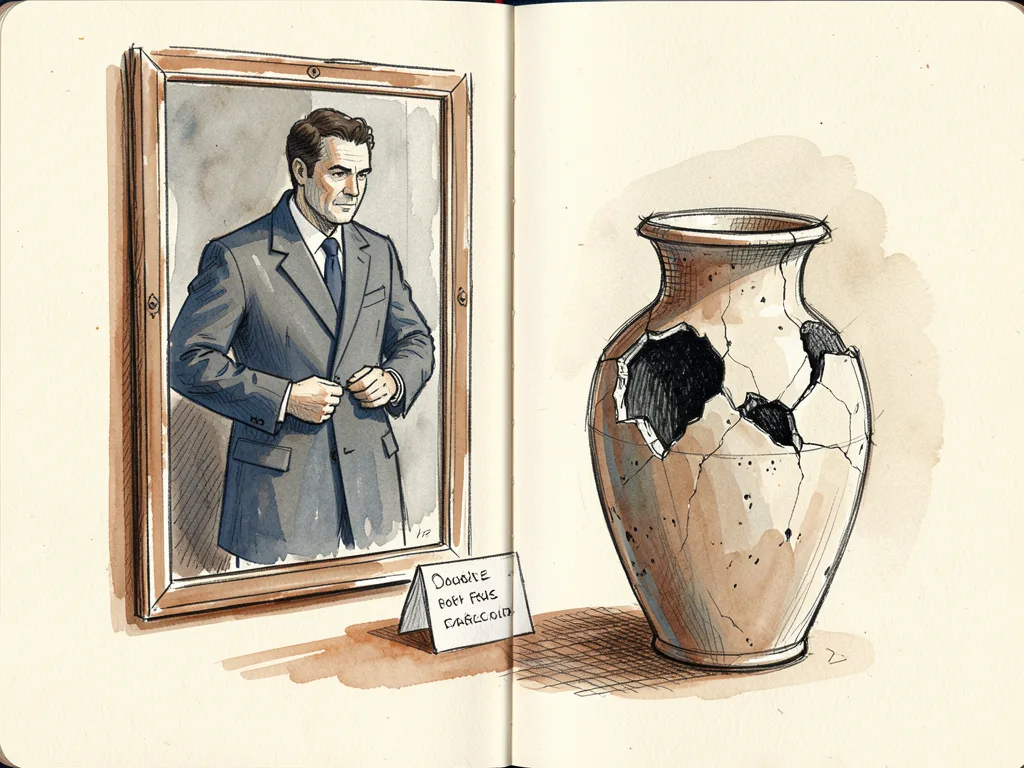
There’s also a lovely complication: the sentence can carry two perspectives at once. Suppose we write, “Daniel had finally apologised, which was generous of him.” Is that the narrator’s judgement, Daniel’s self-congratulation, or a phrase hovering between them?
Sam
Exactly. Context might tell us. If Daniel has caused serious harm and is proud of a tiny apology, “generous” may expose his self-image. The narrator doesn’t have to step in and say, “Daniel was being self-important.” The character’s own flattering vocabulary can reveal the gap between his account and the situation.
Alex
That gap is where irony grows. Free indirect discourse can let us inhabit a character’s interpretation while also noticing what the character cannot or will not notice. We’re close enough to feel the logic from inside, but not trapped inside it.
Sam
And that is different from simply mocking a character. If the language only tells us, “Look how foolish this person is,” we remain outside them. The stronger version lets their reasoning make sense for a moment. Then a detail, a contradiction or another person’s response makes the limits of that reasoning visible.
Alex
Language as Evasion
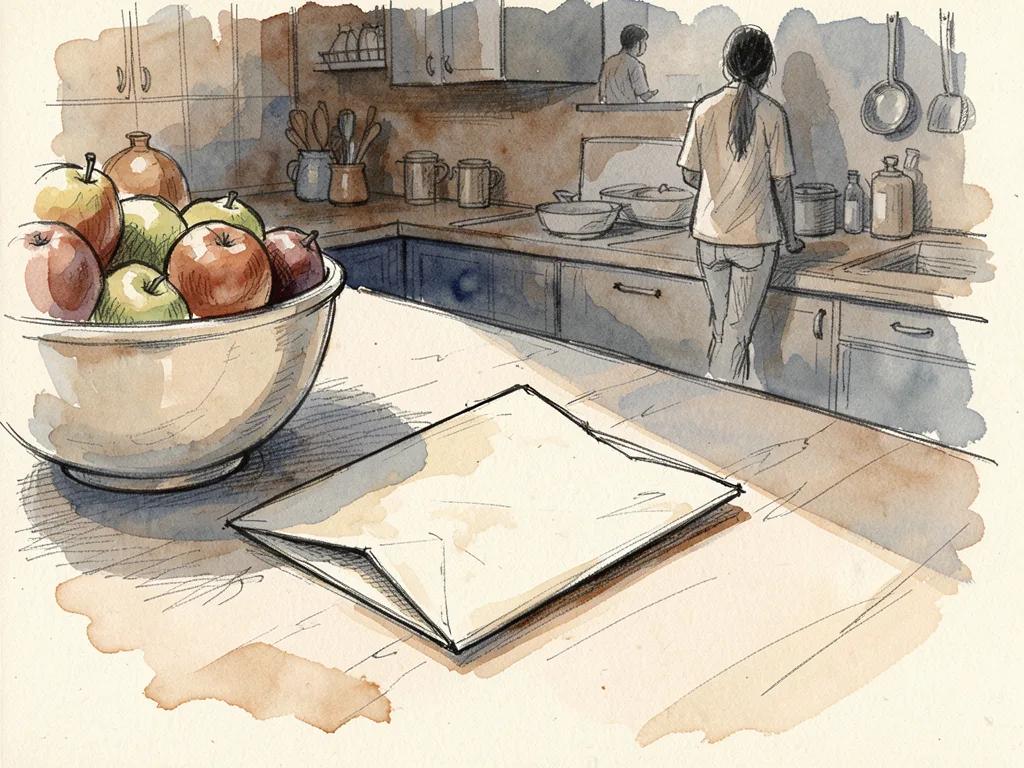
Let’s make that concrete. “Mara placed the unopened letter beneath the fruit bowl. A temporary arrangement, obviously. She would deal with it after lunch, once the day had become less dramatic.” We hear avoidance, but we also hear the argument Mara uses to make avoidance sound sensible.
Sam
And “temporary arrangement” is doing quiet work. A neutral narrator might say she hid the letter. Mara’s version is tidier. She has not hidden it; she has postponed it. She isn’t afraid; the day is dramatic. The narration borrows her terms, and those terms become evidence of what she is trying not to admit.
Alex
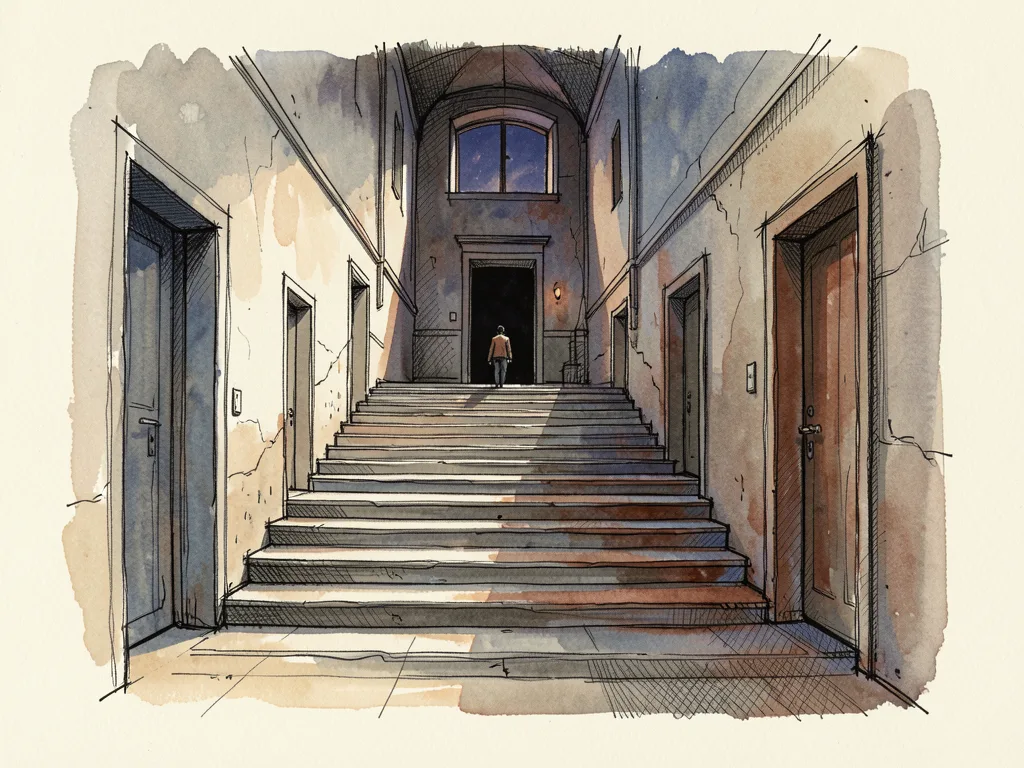
This is one reason the technique feels intimate. It doesn’t merely give us information about a character. It lets the world arrive already processed by that character’s habits, hopes and defences. A staircase can be elegant, threatening, humiliating or blessedly empty depending on who is approaching it.
Sam
But intimacy doesn’t mean total access. Free indirect discourse can preserve uncertainty. We may know that someone calls the room a mausoleum without knowing whether they’re lonely, angry, theatrical or all three. The technique gives us the pressure of a mind without turning that mind into a solved diagram.
Alex
Intimacy Without Total Access
That connects to point of view. Free indirect discourse is most commonly associated with third-person narration, because the narrator’s grammar remains in place while the character’s perspective enters it. But the important issue isn’t a label like “third person”; it’s the relationship between the narrative voice and the consciousness being represented.
Sam
Right. First-person narration is already openly attached to an “I,” so its thoughts don’t usually need this particular blending. A first-person narrator can still distance themselves from an earlier self, but that’s a related effect rather than the standard form of free indirect discourse.
Alex
Free Indirect Discourse Versus Stream of Consciousness
And it isn’t the same as stream of consciousness. Stream of consciousness may follow associations, fragments, sensations or unfinished thoughts in a way that resembles mental movement. Free indirect discourse can be perfectly grammatical and orderly. The mind appears through the angle of the sentence, not necessarily through a messy transcript.
Sam
That distinction saves writers from assuming they must make every interior moment jagged. If a character is anxious, the prose doesn’t have to panic on the page. It might calmly describe the chair as a witness, or the clock as an accusation. The syntax can remain composed while the perception gives the game away.
Alex
Managing Narrative Distance
There’s a practical question here: how close should the narration be? Sometimes a character’s vocabulary floods the paragraph. Sometimes we get one phrase and then a wider, steadier voice. Free indirect discourse can move along that scale rather than switching between “inside” and “outside” like a light switch.
Sam
And distance can change what a moment means. At the start of a story, a narrator may describe a child’s belief with tenderness and a little perspective. Later, the same belief might be rendered in language that has become sharper, because the character now understands more. The technique can register development without announcing, “This person has matured.”
Alex
Avoiding Confusion
Tense also creates interesting effects. In past-tense narration, a character’s present feeling can sit inside a retrospective account. The older narrating position and the younger experiencing position may overlap. That can produce sympathy, embarrassment, or a faint sense that the narrator knows more than the character did at the time.
Sam
Although writers should be careful not to make every sentence perform three jobs at once. If we’re constantly wondering who is speaking, the effect may become confusion rather than productive ambiguity. The reader needs a foothold: a stable situation, a recognisable character, or a pattern of language that teaches us how to listen.
Alex
What the Character’s Wording Avoids
That’s a useful warning. The technique works because the reader can detect a change, even if the change is subtle. If the character has no distinct concerns, preferences or verbal habits, the blended voice may sound like generic narration wearing a borrowed hat.
Sam
A borrowed hat is dangerous in fiction. It can look charming for one sentence and absurd by the fourth. One revision question is: would this description exist in the scene without this character’s particular way of seeing? If the answer is no, good. If the answer is yes, perhaps the character hasn’t entered the prose yet.
Alex
Writing Through Attention and Desire
Another question: what does the character’s wording permit them to avoid? “The meeting had become energetic” might be a polite description of an argument. “Everyone had finally become honest” might be a self-serving description of being cruel. Free indirect discourse makes those evasions audible without requiring a courtroom narrator.
Sam
And it can show desire before the character admits desire. Someone notices every detail of a colleague’s arrival, then calls the attention practical, observational, entirely normal. The narrative hasn’t declared a secret love or a hidden motive. It has let emphasis and phrasing reveal where attention keeps returning.
Alex
That’s where the method becomes more than a decorative voice. It changes what the reader knows and how the reader knows it. We may not receive an explanation, but we experience the character’s priorities operating in real time.
Sam
There can also be tenderness in that operation. A character might describe an old house as inconvenient, embarrassing and much too large, while noticing that one window still catches the evening light. The narration allows their resistance and attachment to coexist. It doesn’t force the character to choose a neat emotional label.
Alex
Interiority Without Endorsement
So if a writer wants to try it, begin with a simple scene. Write it neutrally. Then rewrite it through the character’s attention. What do they notice first? Which objects receive judgement? What metaphor would they use? What would they call a failure, a favour, an accident or a miracle?
Sam
Then read the passage and mark the phrases that belong especially to the character. You don’t need to make every line conspicuous. In fact, a few pressure points may be enough. The surrounding narration gives the reader a surface to move across; the character’s language changes the depth beneath it.
Alex
And listen for the ethical dimension. If we enter a character’s perspective, we don’t have to endorse it. Understanding how someone interprets the world is not the same as declaring their interpretation correct. The technique can offer interiority while leaving responsibility, harm and disagreement fully present.
Sam
That may be its deepest power. Free indirect discourse lets us hear a person’s explanation before we decide whether to trust it. We can feel the comfort of their story, the strain holding it together, and the facts pressing against its edges.
Alex
Which brings us back to that first experience: recognising a mind without seeing it announced. The narrator says, “This is what happened,” while the character quietly adds, “This is what it meant, surely.”
Sam
And the reader gets to hear both. Not as a lecture about psychology, and not as a transcript from inside somebody’s skull, but as a living overlap of event, perception and language. Once you notice it, ordinary sentences start carrying secret weather.
Alex
A useful name for that weather, then: free indirect discourse. A voice between voices, close enough to reveal a character’s world, spacious enough for us to question it.
Sam
And perhaps that’s why the technique stays so recognisable. We all know what it is to describe a situation one way while privately feeling another way. Fiction can place those layers in the same sentence—and let us decide where the boundary lies.
Still open
- Have you ever read a sentence and thought, “I know exactly what this person thinks,” even though the sentence never says, “she thought”?
- Is that the narrator’s judgement, Daniel’s self-congratulation, or a phrase hovering between them?
- How close should the narration be?
- What do they notice first?
- Which objects receive judgement?
- What metaphor would they use?
- What would they call a failure, a favour, an accident or a miracle?