Authority is the repeated reduction of uncertainty, made legible enough to be followed.
Previous · Part 14
The Trust Threshold — How Audiences Feel Safe Following Your Judgement
This builds on Part 14: The Trust Threshold — How Audiences Feel Safe Following Your Judgement
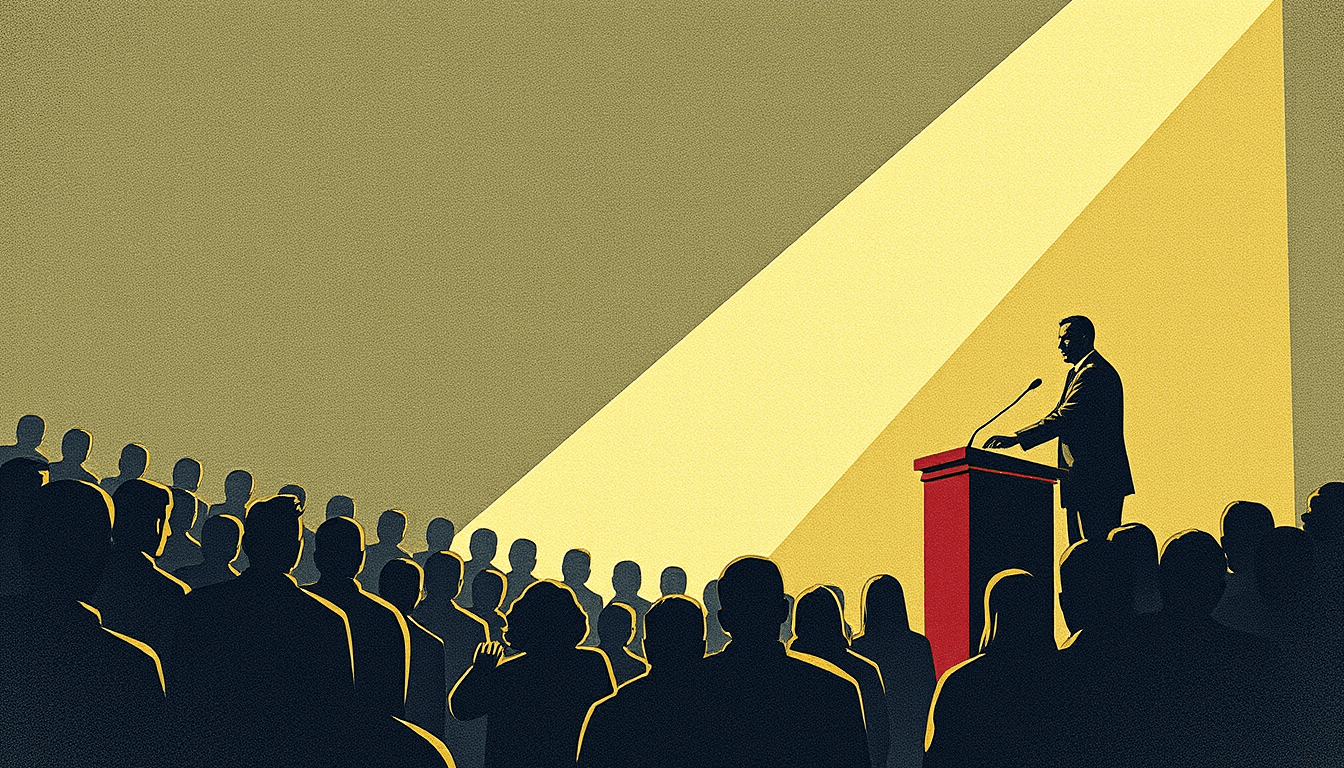
There's a particular kind of person who walks into a room and the room gets quieter. Not because they demand silence — but because everyone senses that the fog is about to lift.
They don't add information. They subtract it. They take the sprawl of competing claims, half-formed ideas, and overlapping options — and compress it into something the group can actually use.
This is not a charisma trick. It's a structural advantage. And it compounds in ways most people never trace.
The Economics of Noise
We live in a surplus economy of everything — content, opinions, products, frameworks, experts. The bottleneck was never access to information. The bottleneck is sorting.
Every market, every conversation, every decision-making body is drowning in inputs. And the cost of that drowning is real:
- Decisions get delayed.
- Attention fragments.
- Trust erodes, because nothing feels definitive.
- People default to whoever feels simplest — or default to doing nothing at all.
This is the landscape. And in this landscape, the person who reliably reduces noise isn't just helpful. They're structurally necessary.
The person who reduces noise holds disproportionate commercial and social leverage — not because they know more, but because they make knowing less expensive for everyone else.
Decision-makers don't pay for information. They pay for compression. Every unnecessary option, vague caveat, or unresolved tension is a cognitive tax — and people will pay a premium to have that tax removed.
- —SaaS founders who simplify a crowded category win loyalty before features do
- —Consultants who narrow the decision set get retained; those who expand it get thanked and ignored
- —Writers who take a clear position get shared; those who hedge get bookmarked and forgotten
- —In hiring, the candidate who makes the hiring manager's job easier advances faster — regardless of raw qualifications
Clarity isn't a nice-to-have. It's a competitive moat that widens every time the environment gets noisier.
Why the Brain Rewards the Filter
This isn't about preference. It's about cognition.
The human brain has a limited budget for active deliberation. Every unresolved ambiguity, every "but what about…", every option that stays open drains that budget. Psychologists call it decision fatigue. Behavioural economists call it choice overload. But the lived experience is simpler: it feels like exhaustion, and it makes people cling to whoever offers relief.
This is why the clearest voice in the room doesn't just get heard — it gets followed. Not because it's the smartest. Because it's the cheapest to process. The brain runs a constant, unconscious audit: What's the cost of listening to this person? When the answer is low — when their framing feels clean, their recommendation feels bounded, their reasoning feels navigable — the brain relaxes. And a relaxed brain is a loyal brain.
The Noise-Reduction Mechanism
Here's how it actually works, step by step:
Diagram: Environment: Overload leads to Noise Reducer enters; Noise Reducer enters leads to Eliminates irrelevant options; Noise Reducer enters leads to Names the real trade-off; Noise Reducer enters leads to Frames the decision clearly; Eliminates irrelevant options leads to Cognitive load drops; Names the real trade-off leads to Cognitive load drops; Frames the decision clearly leads to Cognitive load drops; Cognitive load drops leads to Decision feels safe; Decision feels safe leads to Trust transfers to the reducer; Trust transfers to the reducer leads to Reducer becomes default reference point.
Diagram: Environment: Overload leads to Noise Reducer enters; Noise Reducer enters leads to Eliminates irrelevant options; Noise Reducer enters leads to Names the real trade-off; Noise Reducer enters leads to Frames the decision clearly; Eliminates irrelevant options leads to Cognitive load drops; Names the real trade-off leads to Cognitive load drops; Frames the decision clearly leads to Cognitive load drops; Cognitive load drops leads to Decision feels safe; Decision feels safe leads to Trust transfers to the reducer; Trust transfers to the reducer leads to Reducer becomes default reference point.
The critical move isn't expertise. It's pruning. The noise reducer doesn't add a new option to the pile. They remove five. They don't explain every angle. They name the one angle that matters for this decision, this moment, this audience.
The Social Geometry of Clarity
The commercial case is strong. But the social dynamics are where this gets interesting.
Clear people become nodes. When a group faces ambiguity, they don't collectively reason their way through it. They orient toward the person who seems to already know what the decision actually is. That person doesn't have to be the most senior, the most experienced, or the loudest. They just have to be the first to articulate a frame that reduces the group's collective uncertainty.
Once that happens, something subtle shifts. The clear person is no longer just a participant. They're a reference. People start running decisions through them — not formally, not with org charts, but with mental shortcuts: What would they say about this? Would they agree with this framing?
Frame → Orient → Delegate
- ·The product manager who writes the one-pager that ends the debate
- ·The friend who says "here's what I think you're actually choosing between"
- ·The editor who cuts 80% of a draft and makes it publishable
The environment is noisy, the decision is real, and people are stuck in analysis loops instead of acting.
What Noise Reducers Actually Do
Let's be specific. This isn't an abstract disposition. It's a set of repeatable moves:
The last one is the sharpest tool. When you tell someone what to ignore, you're performing an act of authority that's almost invisible. You're saying: I've already run the cognitive audit on your problem, and this part doesn't matter. That's a gift. And it's one people remember.
The Paradox of Saying Less
Here's what's counterintuitive: noise reducers often know more than the people around them. They've processed more inputs, considered more angles, run more internal simulations. But their output is smaller. Tighter. More compressed.
This is the paradox. The more you've thought about something, the less you should need to say about it. The depth shows up not in volume but in precision — in which details survive the cut and which get discarded without apology.
The people who get chosen first — for projects, for partnerships, for rooms where the real decisions happen — aren't the ones who know the most. They're the ones who can take everything they know and turn it into the three sentences that matter right now.
The Commercial Dividend
Let's make the money case concrete.
When you're the person who reduces noise, three things happen commercially:
Your sales cycle shortens. Not because you're more persuasive, but because the client's internal deliberation gets shorter. You've already done the sorting for them.
Your referrals go up. People don't refer the person who gave them the most information. They refer the person who made them feel smart for choosing correctly. Clarity transfers — when someone recommends you, they're really recommending the feeling of certainty you gave them.
Your pricing power increases. Noise is a commodity. Compression is a craft. The person who can take a five-hour meeting and distil it into a one-page decision document isn't selling time. They're selling resolution. And resolution has no ceiling.
Why This Can't Be Faked
There's a reason this advantage is durable. You can borrow credentials. You can copy frameworks. You can even mimic the cadence of someone who sounds clear. But you can't fake the internal architecture that produces genuine compression.
Real noise reduction requires two things:
-
You've actually processed the complexity. You can't cut what you haven't first understood. Shallow thinkers who try to sound decisive just sound reckless.
-
You've made the hard call about what to leave out. This is an editorial skill, not a knowledge skill. It requires the willingness to be wrong about what you excluded — and the confidence to exclude it anyway.
Together, these create something audiences sense even if they can't articulate it: earned simplicity. The feeling that the person you're listening to has done the hard thinking and is handing you only the result. That feeling is the foundation of trust.
Think about the last time someone's explanation made everything click — a meeting, a conversation, an article.
What did they leave out? That's where the real skill lived.
The Practical Edge
If you want to be the person who gets chosen — in business, in collaboration, in any room where noise is the default — the work isn't to learn more. It's to get better at cutting.
The world doesn't need more voices. It needs more filters — people who've done the thinking and come back with the signal.
Be that person, and the room will find you.
If this resonates, see how to apply it to your own work with the interactive Dispatch agent.
Be first to like this dispatch