True synthesis is not an innate talent, but a rigorous, daily infrastructure of observation and connection.
Previous · Part 4
The Machine That Never Was — Ada Lovelace and the Art of Imagining What Doesn't Exist
Next · Part 6
Between the Synapse and the Symbol
This builds on Part 4: The Machine That Never Was — Ada Lovelace and the Art of Imagining What Doesn't Exist
Continue with Part 6: Between the Synapse and the Symbol
The Enigma of the Fragmented Map
Consider two landscapes. In the first, a Renaissance botanist sketches the spiral of a nautilus shell, notices the same ratio appearing in cathedral floor plans, and begins measuring the distances between planetary orbits — not because anyone asked, but because the pattern insisted on being seen across domains. In the second, a modern researcher spends a decade perfecting a single variable within a single method within a single subfield, publishing papers that fewer than forty people on earth are qualified to read.
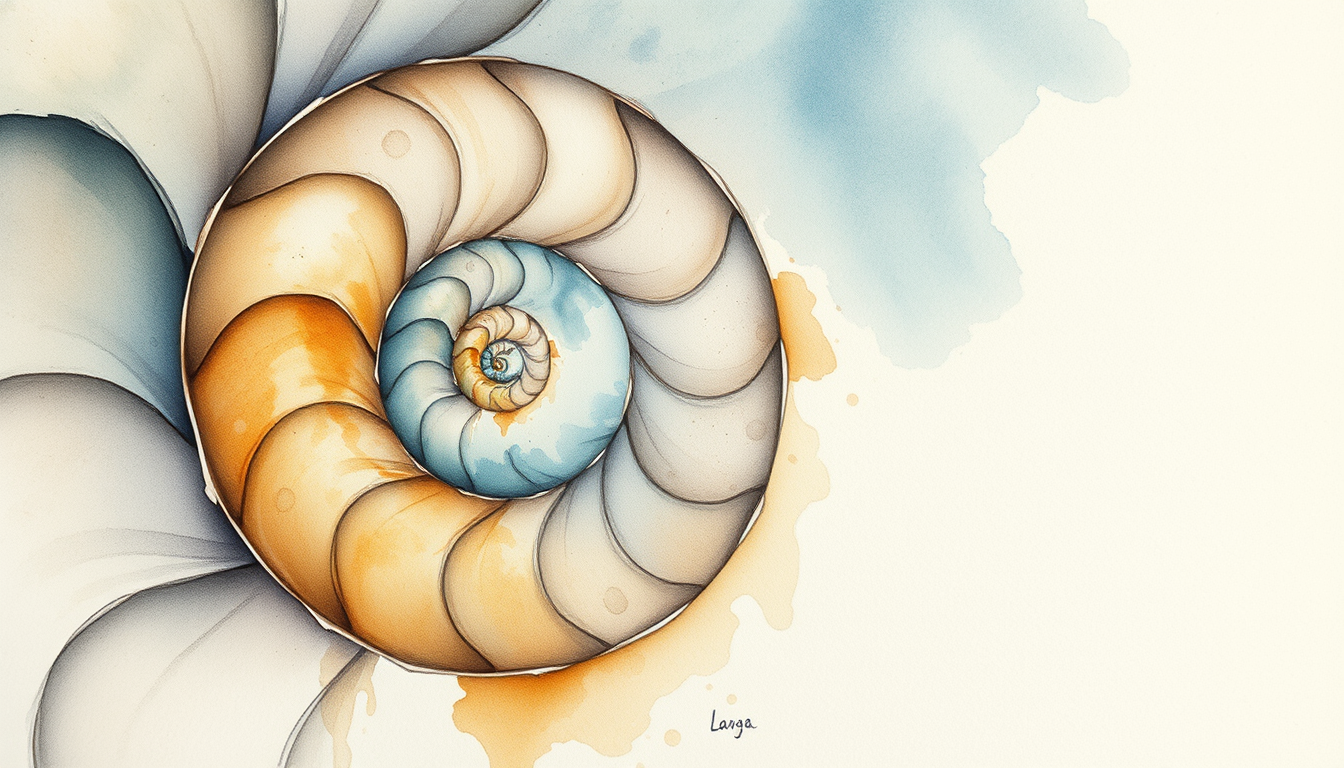
Something happened between these two worlds. Not a catastrophe — more like a slow continental drift that separated territories that once shared a common geology. And the most disorienting part is that most of us never noticed the coastline was changing beneath our feet.
The boundaries between disciplines are not features of the landscape. They are features of the map.
We drew them. We can redraw them.
The central enigma of the modern knowledge worker is not that expertise is valuable — it plainly is — but that the architecture of expertise has been redesigned in ways that make synthesis nearly invisible as a practice. We've built institutions, career ladders, credentialing systems, and information environments that reward drilling a shaft ever deeper into a single vein of rock. The question worth investigating, with the patience of an archaeologist brushing sediment from a buried threshold, is whether something recoverable was lost in the process.
Not romanticised. Not mystified. Recovered — through evidence, through practice, through the disciplined act of looking across instead of only down.
Excavating the Evidence
Three fragments, examined carefully.
Fragment One: The Institutional Stratigraphy. The modern university was not always a federation of hermetically sealed departments. The word university itself derives from the Latin universitas — the whole, the totality. Harvard's original faculty were expected to teach across what we'd now call three or four disciplines. The German research university of the nineteenth century, which became the global model, introduced specialisation as an efficiency measure — a production decision, not a philosophical one. Departments were invented the way factory floors were invented: to divide labour.
Fragment Two: The Career Gradient. Modern professional advancement rewards depth almost exclusively. Tenure requires a narrow publication record. Corporate promotion rewards domain mastery. Even creative fields have tilted toward specialisation — the illustrator who also writes and codes is told to "pick a lane." The incentive structure creates what might be called a depth trap: the deeper you go, the more costly it becomes to look sideways, not because breadth loses value but because the switching costs are now career-structural.
Fragment Three: The Attention Archaeology. How do most people encounter ideas outside their field? Through content — podcasts, newsletters, videos, social media threads. This feels like synthesis but is more accurately described as exposure. Exposure is passive. Synthesis is active. The difference is the difference between walking through a museum and being handed a chisel and a block of marble.
The Method: Triangulation of a Lost Practice
If we want to reconstruct a working practice of synthesis, we need to triangulate — the way an archaeologist uses textual fragments, material evidence, and landscape features to reconstruct something no longer standing.
Diagram: The Lost Practice of Synthesis leads to Textual Fragment:<br/>What polymaths actually did; The Lost Practice of Synthesis leads to Material Evidence:<br/>What they produced; The Lost Practice of Synthesis leads to Landscape Context:<br/>What made it possible; Textual Fragment:<br/>What polymaths actually did leads to Diaries, letters, notebooks<br/>show cross-domain observation; Material Evidence:<br/>What they produced leads to Inventions, artworks, theories<br/>that fused multiple fields; Landscape Context:<br/>What made it possible leads to Environments that permitted<br/>and encouraged breadth; Diaries, letters, notebooks<br/>show cross-domain observation leads to Reconstruction:<br/>A modern practice of synthesis; Inventions, artworks, theories<br/>that fused multiple fields leads to Reconstruction:<br/>A modern practice of synthesis; Environments that permitted<br/>and encouraged breadth leads to Reconstruction:<br/>A modern practice of synthesis; Reconstruction:<br/>A modern practice of synthesis leads to Personal Knowledge Map; Reconstruction:<br/>A modern practice of synthesis leads to Discipline Rotation; Reconstruction:<br/>A modern practice of synthesis leads to Creation Over Consumption.
Diagram: The Lost Practice of Synthesis leads to Textual Fragment:<br/>What polymaths actually did; The Lost Practice of Synthesis leads to Material Evidence:<br/>What they produced; The Lost Practice of Synthesis leads to Landscape Context:<br/>What made it possible; Textual Fragment:<br/>What polymaths actually did leads to Diaries, letters, notebooks<br/>show cross-domain observation; Material Evidence:<br/>What they produced leads to Inventions, artworks, theories<br/>that fused multiple fields; Landscape Context:<br/>What made it possible leads to Environments that permitted<br/>and encouraged breadth; Diaries, letters, notebooks<br/>show cross-domain observation leads to Reconstruction:<br/>A modern practice of synthesis; Inventions, artworks, theories<br/>that fused multiple fields leads to Reconstruction:<br/>A modern practice of synthesis; Environments that permitted<br/>and encouraged breadth leads to Reconstruction:<br/>A modern practice of synthesis; Reconstruction:<br/>A modern practice of synthesis leads to Personal Knowledge Map; Reconstruction:<br/>A modern practice of synthesis leads to Discipline Rotation; Reconstruction:<br/>A modern practice of synthesis leads to Creation Over Consumption.
The textual evidence is clear: Leonardo kept notebooks where anatomy, hydraulics, optics, and painting collided on the same page. Goethe conducted botanical experiments while writing Faust. Ada Lovelace translated mathematical notation into literary metaphor and back again. These were not scattered minds. They were directed minds that refused to let the boundaries of a single field define the horizon of their attention.
The material evidence — what they produced — reveals a consistent pattern: breakthroughs emerged at the intersections, not the centres. The cross-pollinated idea, the metaphor imported from one domain and stress-tested in another, the question that only becomes visible when you stand in two fields at once.
And the landscape context tells us why this became harder: not because human cognition changed, but because the environment did.
The Synthesis Sequence
- ·Leonardo's notebooks (observation → connection → creation)
- ·Darwin's barnacle years (deep expertise → cross-domain pattern recognition)
- ·Buckminster Fuller's "comprehensive anticipation"
- ·Modern examples: biologists using network theory, designers applying systems dynamics
You have accumulated knowledge in multiple areas and need to generate something new from their intersection — not just admire the overlap, but produce from it.
Practice One: Build a Personal Knowledge Map
A knowledge map is not a reading list. It is not a curriculum. It is a living document that tracks what you know, how it connects, and where the gaps are — not gaps in the sense of "things I haven't read yet" but gaps in the sense of connections I haven't tested yet.
The map serves a double function. First, it makes visible the connective tissue that already exists in your thinking — the patterns you've been carrying without realising it. Second, it reveals the specific intersections where original contribution is most likely. This is not abstract advice. It is the mechanism by which interdisciplinary breakthroughs actually happen: someone notices that the structure of a problem in field A is isomorphic to a solved problem in field B, and the translation produces something new.
Practice Two: Rotate Disciplines Deliberately
The rotation is not about dabbling. It is about changing the angle of your primary attention on a structured cycle, so that no single field calcifies into default assumptions.
Think of it as the scholar's equivalent of crop rotation. A farmer who plants the same crop in the same soil year after year will eventually exhaust the soil. A mind that attends to the same problems with the same framework year after year will exhaust its own fertility. Rotation restores nutrients — it forces you to see your primary field through another field's eyes, and in doing so, to notice what your primary field has made invisible.
Spend your first working hour each day in a different domain from yesterday. Monday: your primary field. Tuesday: a science (even a basic one). Wednesday: a craft or art form. Thursday: a historical period or civilisation. Friday: synthesis — connect what you encountered that week.
Practice Three: Create Instead of Consume
This is the keystone. Without it, the knowledge map becomes a museum and the rotation becomes tourism.
The shift from consumption to creation is not a productivity hack. It is a cognitive transformation. When you read about an idea, you hold it. When you use that idea to build something — to write an essay, design a system, solve a problem, compose a piece — you test it against reality. And reality is where synthesis actually happens, because reality does not respect disciplinary boundaries. A building must simultaneously satisfy structural engineering, human psychology, aesthetic sensibility, material economics, and municipal regulation. A piece of writing must navigate rhetoric, narrative structure, audience cognition, and the physical constraints of the medium.
Creation forces synthesis. Consumption permits the illusion of it.
The modern polymath is not defined by the number of fields they know about, but by the number of fields they produce in.
Knowledge that remains in the reading stage never encounters the resistance that reveals its true structure. Only by building — by making the idea do work — do you discover which connections are real and which are merely aesthetic.
- —Leonardo's anatomical drawings changed painting because he painted with anatomical knowledge, not just possessed it.
- —Buckminster Fuller's geodesic domes emerged from the intersection of mathematics, engineering, and philosophy — but only because he was trying to build something.
- —Every cross-disciplinary breakthrough in the history of science was precipitated by someone attempting to solve a concrete problem, not by someone reading broadly.
The practice that matters most is not reading across fields. It is building across fields.
This does not mean you need to become a professional in every discipline you explore. It means you need to make things with whatever knowledge you gather — imperfect, provisional, early-stage things. Write the essay that tries to connect network theory to urban planning. Build the prototype that applies biological principles to interface design. Compose the piece that fuses two musical traditions. The output does not need to be brilliant. It needs to be real — an object in the world that embodies a synthesis you could not have arrived at through consumption alone.
Wide reading across many fields. Rich mental model. Interesting conversations. Few tangible outputs that demonstrate synthesis. A sense of being "almost there" that never resolves.
A visible body of work — however small — that sits at the intersection of two or more disciplines. Pieces that could not have been produced from within any single field. A practice that generates new questions rather than accumulating more answers.
The Recovered Landscape
Let me return to where we began — those two landscapes, the Renaissance polymath and the modern specialist. The distance between them is not a decline in human capability. It is a shift in environment. The environment can be changed. Not by dismantling institutions overnight, but by building a personal architecture that recreates the conditions under which synthesis flourishes.
What two domains in your own knowledge map have the strongest unexplored connection — the junction where you sense something new is possible but haven't yet built anything?
Write them down. Then write one sentence describing what you would make if you forced them together. Don't edit. Don't qualify. Just name the thing.
The cartographer's workshop was never a place where maps were merely studied. It was a place where new maps were drawn — and in the drawing, new territories were discovered.
The next piece in this workshop turns toward the mechanics themselves — how the intuitive mind actually recognises patterns across domains, the role of symbols and pre-verbal cognition, and why the most rigorous scientists often describe their breakthroughs in the language of feeling. The investigation continues.
If this resonates, see how to apply it to your own work with the interactive Dispatch agent.
Be first to like this dispatch