Your life’s direction is set by the horizon you’re silently optimizing.


Previous · Part 5
Time Arbitrage: The Quiet Advantage of Doing the Work Others Refuse Now
Next · Part 7
The Patience Advantage: How Strategic Waiting Beats Constant Action
This builds on Part 5: Time Arbitrage: The Quiet Advantage of Doing the Work Others Refuse Now
Continue with Part 7: The Patience Advantage: How Strategic Waiting Beats Constant Action
Future You Is a Different Operator
Planning is usually framed as a calendar problem.
But most planning fails because it assumes you’ll be the same person on the other side of the decision.
You won’t.
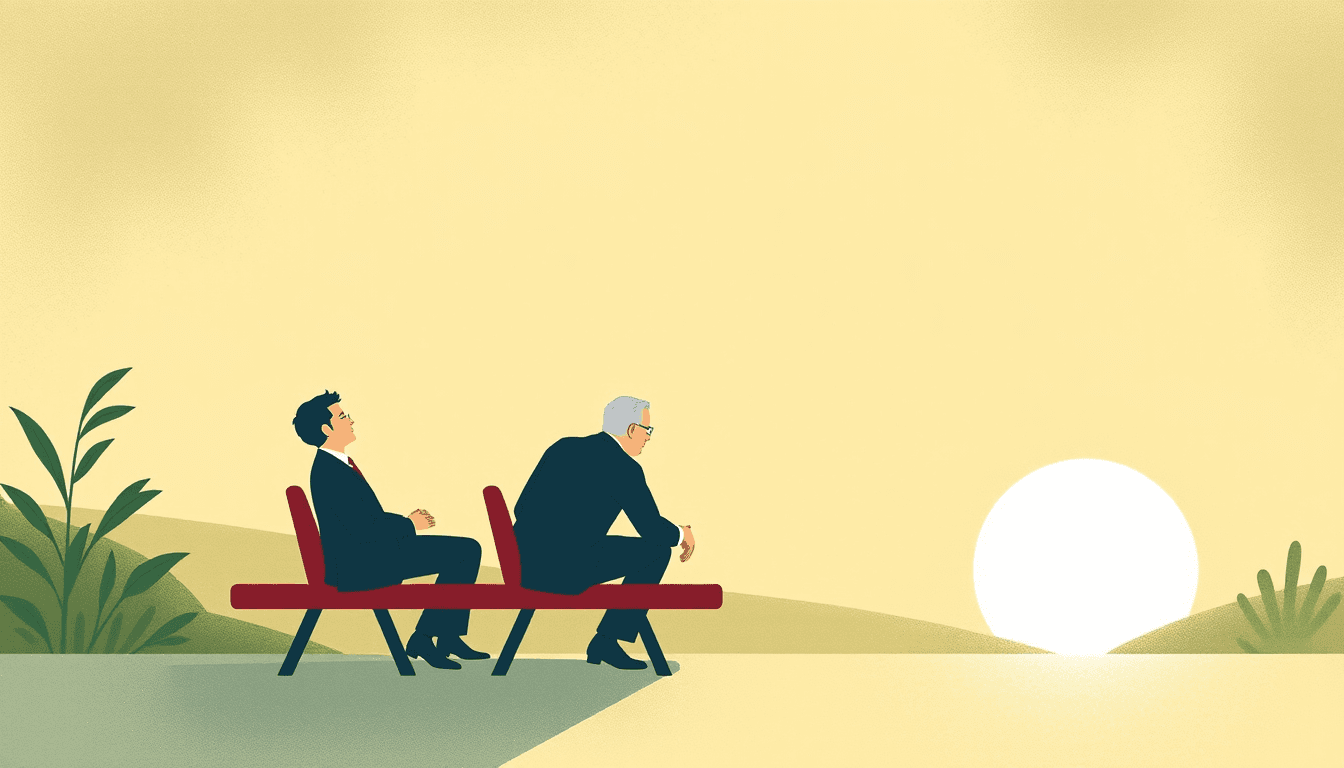
You’ll be older, clearer, more opinionated, more tired, more skilled—or you’ll have burned trust and attention on things that don’t compound. Future you is not a continuation of present you. Future you is a new operating system booting with different constraints, different values, and different energy.
Why “future planning” breaks
When you plan while ignoring who you’ll become, you create three hidden failure conditions:
-
You optimize for a person you won’t be.
Your future schedule is based on current motivation and current interpretation. -
You assume stability where there isn’t any.
You’re treating the next months like a static environment, instead of a changeable one. -
You confuse intention with identity.
You think “I will do X” is enough, when what actually drives behavior is “I am the kind of person who does X.”
The identity gap: where time horizons go to die
A time horizon isn’t just how long you’re willing to wait.
It’s how well your current thinking survives your future transformation.
If your plan is built from assumptions like:
- “I’ll still care about this.”
- “I’ll still have the same energy.”
- “My priorities won’t shift.”
- “I’ll stay the same kind of person.”
…then your plan becomes a brittle contract with your own biography.
The longer the horizon, the larger the identity gap. That’s why the long game feels unreliable to people who plan like nothing inside them will change.
The fix: plan for continuity, not sameness
The goal isn’t to predict who you’ll become.
The goal is to build decisions that remain valid across versions of you.
That means shifting from:
- Plan = specific behaviors
to - Plan = constraints + principles + optionality
Use constraints that “upgrade” with you
Constraints are powerful because they’re compatible with change. A principle can survive a new skill set. A boundary can outlast a different motivation level.
Instead of “Work on the project daily,” use:
- “Protect two deep-work blocks per week.”
- “Never trade health for speed.”
- “Ship something small before I seek certainty.”
These statements don’t require you to remain identical. They require you to remain honest.
Make identity actionable (not poetic)
Identity is often treated like a slogan. But identity only becomes real when it governs trade-offs.
So translate your “who I am” into how you decide:
- When to say yes
- When to say no
- What you refuse to optimize for
- What you’re willing to be bad at longer than feels comfortable
If future you is different, then let future you inherit decision rules—not vibes.
A simple diagnostic: can your plan survive a new you?
Ask this question about your current plan:
If you became 20% more skilled, 20% more cynical, and 20% more selective—would the plan still make sense?
If the answer is no, your plan is tied to temporary psychology.
If the answer is yes, you’ve built something that carries forward.
How to rewrite a plan for the person you’ll become
Quick example (so it’s not abstract)
Brittle plan:
“I’ll write for an hour every weekday.”
Identity-aware plan:
“I’ll protect three writing sessions per week and reduce them only if health requires it. I’ll measure progress by shipped drafts, not time.”
The second plan can survive fatigue, shifting energy, and changing preferences. It’s anchored to the operator, not the mood.
What to do this week
You don’t need to overhaul your life. You need to upgrade one planning artifact: your next decision sequence.
Pick one meaningful goal you’re currently trying to schedule into existence.
Then do one rewrite: turn “what I will do” into “how I will decide” plus “what I will protect.”
What version of you are you planning for—specifically?
Now write one constraint that would still make sense if future you feels different (more tired, more selective, or more ambitious).
Final Takeaway
If planning fails when you ignore who you’ll become, then your job isn’t to guess the future—it’s to design continuity.
That continuity comes from constraints, identity-driven decision rules, and optionality in tactics.
If this resonates, see how to apply it to your own work with the interactive Dispatch agent.
Be first to like this dispatch